Steve Ho
American RustSteve Ho is a young officer in the Buell Police Department whose presence brings the changing character of local policing into focus: he is comfortable with tactical equipment and alert to the dangers of working far from backup. His working relationship with Bud Harris places that outlook beside Harris’s more personal, discretionary approach, particularly as Harris protects Billy Poe while the investigation into a death at the machine shop develops.
Identity and Position
Ho is three years out of the police academy when Harris reflects on the department and describes himself as overjoyed to have Ho on the force. Ho is easy for Harris to work with, and he leaves his radio on even when off duty. That small habit makes him available to the department beyond his scheduled hours, and helps explain why Harris can count on him during an investigation even when he is not being paid to be there.
Ho’s family background is briefly established: his parents came from Hong Kong and own the Chinese Buffet in North Belle Vernon. At the station, he is recognizable by his large build, short stature, black hair, and notably small hands and feet. The narrative gives these concrete details without making them a substitute for his role: Ho is not merely a visual contrast to Harris, but a younger colleague whose ideas about equipment and risk differ from the chief’s.
A Younger Officer in a Strained Department
Ho is associated with a more heavily equipped style of policing. During the vigil at the abandoned Standard Steel Car factory, he sits off duty beside Harris in a black-and-white Ford Explorer, an M4 carbine across his lap. Harris notes Ho’s interest in equipment such as body armor and tactical weapons, and contrasts it with his own habit of rarely wearing a bulletproof vest. Harris’s cowboy boots, ill-suited to running after a suspect, sharpen the contrast: the two officers embody different assumptions about what police work in Buell now requires.
Those assumptions are shaped by the conditions around them. State police backup could be at least half an hour away, Harris observes, while he worries that circumstances in the town are changing. Ho’s preparedness makes practical sense within that account, even as Harris catches himself thinking in a way that places the police on one side and local young people on the other. The narrative thus presents Ho’s equipment not as proof that he is eager for conflict, but as part of a department adapting to perceived risks and limited support.
The department’s budget adds another pressure. Buell’s new city budget cuts its police allocation from $785,000 to $541,000, the largest reduction in the department’s history. Harris anticipates reduced training, the continued use of aging vehicles, and the layoff of three full-time officers—a severe loss for a small force. The passage does not say that Ho himself is laid off or that his position changes, but places his service within an institution facing fewer resources and greater demands.
Ho and Harris During the Investigation
At the factory, Ho accompanies Harris for about three hours after state police, the county coroner, the district attorney, and others have left. From the ridge, they can see the remains of the Standard Steel Car factory, the small machine shop where the body was found, and old boxcars in the field. The place has been reclaimed by vines and given a quiet appearance. Harris thinks of abandoned temples he had seen in Vietnam; Ho, meanwhile, remains beside him with the carbine across his lap. Their vigil links the investigation to the changing landscape of Buell, while showing the different temperaments of the two officers at the same scene.
Ho does not simply defer to Harris. He warns him that protecting Billy Poe could bring consequences, pointing out that the town knows Harris had previously spoken up for Billy. His caution registers the conflict between Harris’s personal loyalty and his public responsibilities. Harris is already wrestling with whether he ought to defend Billy or arrest him; in his own thoughts, he calls the more cautious impulse Even Keel, but rejects it as cowardice and decides to wait and see what happens. Ho’s warning does not resolve Harris’s choice, but makes its professional and communal risks explicit.
Harris later directs Ho to take night-vision goggles and wait in the bushes to watch for anyone else entering the factory premises. The assignment shows that Ho is trusted to assist in surveillance, and that the pair’s work continues through coordination rather than a formal interrogation or arrest at that moment. Earlier, when Harris sees two young men, he says they look fine from where he is and considers giving them a ride home if they promise to stay out of trouble. Ho is part of this scene of police discretion, in which Harris chooses not to treat every encounter as grounds for detention.
Violence, Discretion, and Billy Poe
Ho’s own use of force becomes an issue when he tells Harris about a noise-violation call at the Sparrows Point Apartments. Ho says that he deployed his carbine and fired twelve rounds. Harris worries that a complaint may be made and that there would be no record of Ho shooting a dog with an automatic rifle. Rather than immediately pursue a formal report, Harris says he will think about the matter and asks Ho to bring Dairy Queen for Billy Poe later that night. The episode places Ho’s armed response beside Harris’s efforts to manage the possible consequences, without establishing that a complaint was filed or what ultimately happened to it.
Harris’s concern about Ho’s incident exists alongside his own substantial decisions in Billy’s case. He tells Billy that he needs an account of what happened at the plant and who else was there, framing a possible trial around self-defense. He then lets Billy go home for the night, instructs him to get rid of his shoes and burn any box or receipts, and warns him not to run. Ho is not shown making those decisions; their significance for his character is that he works within the same department as a chief who blends enforcement, protection, and concealment in response to a case involving someone close to the community.
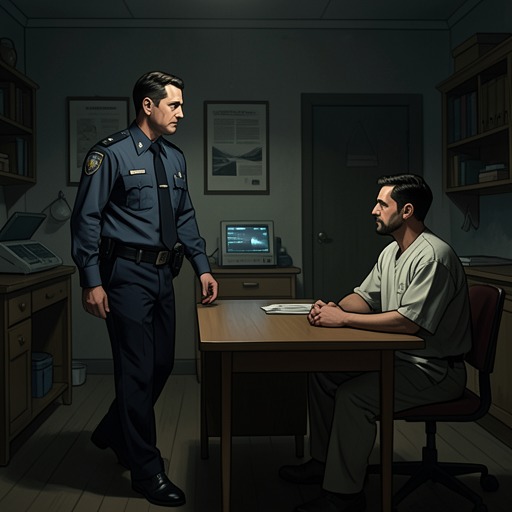
Ho’s presence at the station continues after Harris has left Billy in a cell overnight. When Harris later brings Billy into the building, Ho is at the same desk, apparently still there after the intervening day. The repeated image of the officer at his post reinforces his reliability and availability, but also places him within the ordinary machinery of detention as Harris’s exceptional handling of Billy proceeds.
Narrative Role and Significance
Ho serves as a counterpoint to Harris without becoming a simple emblem of a younger generation. His carbine, interest in tactical gear, and attention to the dangers of delayed backup distinguish him from Harris’s less armored, more improvisational manner. Yet he also works off duty, keeps his radio on, performs surveillance when asked, and remains present through long hours. The contrast is therefore not between a dutiful officer and a negligent one, but between different habits of policing under pressure.
His exchanges with Harris expose the gap between formal law and local judgment. Ho raises the risk that Harris’s favor toward Billy could compromise him; Harris, in turn, handles both Billy’s case and Ho’s use of force through judgments that are not reducible to routine procedure. The department’s shrinking budget and deteriorating equipment make those choices part of a broader institutional strain. Ho’s role is modest but consequential: through his warning, his armed response, and his continued service, he helps show how Buell’s police force negotiates danger, scarce resources, and the demands of personal loyalty.