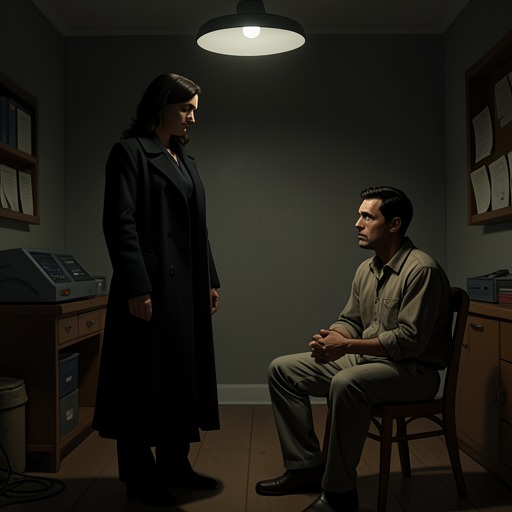
The sibling relationship between Isaac and Lee English
American RustThe sibling relationship between Isaac and Lee English is the novel’s portrait of a close childhood bond strained by bereavement, unequal escape, and the responsibilities left behind in Buell. Lee’s departure for Yale gives her a life beyond the valley, while Isaac remains with their disabled father in the family home. Their separation produces resentment and misunderstanding, but memories of their shared childhood—and Lee’s decision to help Isaac after the fatal factory confrontation—show that the bond has not disappeared.
Childhood Closeness and Diverging Paths
Isaac and Lee were regarded as the two smartest children in town and, in Isaac’s estimation, perhaps in the whole valley. He admired his older sister and imagined her success as a rising tide that might lift him too. Lee went to Yale, where she found a place that felt like it belonged to her; Isaac stayed in Buell, still considering whether he might one day follow her. By the time he is twenty, he is planning to leave for California, but his ambitions in astrophysics and his former hope of joining her world have become uncertain.
Their early intimacy was not merely a matter of family proximity. Isaac remembers a period when the two could finish each other’s thoughts and each seemed to know what the other was doing, even in a different part of their large brick house. When he had a bad day, he went to Lee’s room and sat while she read or worked. He went to her before he went to their mother. Lee, looking back, recalls that most of the childhood memories in which she felt happy involve Isaac; when she once thought she could know where he was, she understood that she knew his routines, not that their connection was magical.
Their mother’s suicide altered the family’s balance. Lee left for Yale, while Isaac remained with their father, Henry English, whose spinal injury and declining health made the household increasingly difficult to manage. Lee’s departure was also an escape from the loneliness she had felt growing up, but she later recognizes that leaving placed Isaac in a life from which she had already found her own way out. Her guilt is sharpened by the sense that she took too long to return and intervene.
Separation, Resentment, and Misunderstanding
Isaac’s view of Lee mixes admiration with a sense of abandonment. He knows she has built a new life, including a husband in Connecticut whom neither Isaac nor Henry has met. When Lee comes back to the family home, Isaac sees her Mercedes and assumes she may know he took money from their father. He tells himself that she has done worse by leaving him there, but even he cannot clearly define the wrong he believes she has done. The grievance rests less on a single act than on the distance between her departure and his continued life in Buell.
On that visit, Isaac hears Lee come upstairs to his room, but pretends to be asleep rather than speak to her. Lee pauses at the door and leaves without waking him. The silence contrasts with their former ease: Isaac’s hurt prevents him from receiving her approach, while Lee cannot tell whether he is unwilling to see her or simply asleep. The memory of their closeness remains, but it no longer gives either sibling reliable access to the other.
Lee’s understanding of the family’s unequal burdens is conflicted. She worries that Isaac is isolated and eccentric, and decides that he should not continue living in the house with Henry. She considers arranging nursing care for their father and believes both children need to leave, but recognizes that Henry has been willing to sacrifice Isaac’s future. She is also forced to admit her own part in allowing that arrangement to continue. Her plan to return for the family is therefore both practical and morally uneasy: she wants to help, but knows she has not been present as Isaac needed.
Love, Loyalty, and Difficult Recognition
The siblings’ relationship is affected by their separate ties to Billy Poe. Isaac and Poe are close friends, and Lee’s former romance with Poe complicates what Isaac sees and hears at home. After Lee and Poe spend time together, Isaac tells her that he heard her say she loved Poe. Lee tries to explain that the relationship is old and over. Their exchange exposes how little certainty remains between brother and sister: Isaac has heard enough to feel betrayed, while Lee’s account cannot undo the impression he has formed.
Lee also understands that Isaac has struggled to find a place among people his own age. She remembers that others often misread his generosity as condescension, because they assumed he judged them by the exacting standards he set for himself. A former boyfriend of hers, Todd Hughes, recognized Isaac’s ability and offered to help with college applications. Lee later regrets that she did not preserve that connection for Isaac’s sake. By contrast, Simon, whom she later married, formed little impression of Isaac when they met. These recollections show Lee seeing both Isaac’s intellectual promise and the social isolation that separated him from the life she entered.
Crisis and Renewed Responsibility
When Lee learns that Isaac killed a man while trying to rescue Poe, she recognizes the act as a consequence of the loyalty and courage she has long known in her brother. She does not treat his involvement as abstract trouble: she understands that he went back into danger for his friend despite the risk to himself. That recognition brings pride, but also guilt and fear about what will happen to him. Her memory returns to the two of them as children on warm rocks by a ravine, Isaac watching for birds while she watched beside him.
Lee decides she must find Isaac and secure legal help, even though doing so will require telling Simon the full story and asking for help from his family. She considers whether Isaac’s strong academic record might make his situation easier for them to understand, but does not want his worth to depend on that achievement. She is prepared to use her own credit cards if necessary. Her decision marks a change from worried observation to active responsibility: rather than wait for the crisis to resolve itself, she will search for her brother and work to protect him.
Later, as she drives along the river, Lee stops at a place overlooking the water, rests her head on the steering wheel, and closes her eyes to think about Isaac. The landscape does not repair their estrangement or answer what he will do next. It gives the relationship a final, quiet shape in the available account: after distance, anger, and missed chances, Lee’s attention returns to the brother whose presence had once been part of the ordinary map of her life.