Comradeship and dependence
American WomanComradeship and dependence are intertwined in Jenny and Pauline’s relationship: their bond offers a form of safety and shared purpose, but it also becomes a powerful attachment that shapes what each can imagine doing alone. The novel traces this connection from the unequal, tense relations of the revolutionary cadre to a closeness built through daily life, political argument, and mutual reliance. When Jenny and Pauline are separated, the bond remains both a source of meaning and a cause of grief, even as Jenny begins to recover a sense of herself beyond it.
Comradeship inside the cadre
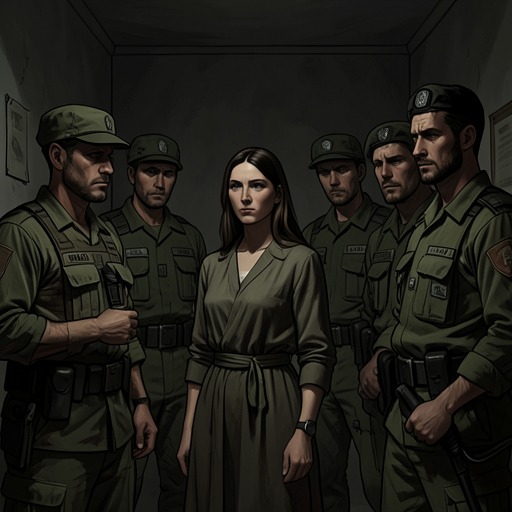
The cadre’s language of collective struggle does not erase differences in authority or feeling. Jenny first hears Yvonne speak during a private argument about a bandolier and the deaths of their comrades. Yvonne challenges Pauline’s account of responsibility, saying that Pauline had been expected to provide cover and had acted too slowly. Pauline denies blaming Juan, then says she is sad. Yvonne’s response shifts from accusation to caretaking: she quiets Pauline and attends to her distress. The scene presents comradeship as a mixture of accountability, hierarchy, and solicitude rather than uncomplicated solidarity. Jenny also notices that the women would not have spoken this way with Juan present, suggesting that even within the group, who can speak openly depends on who is there.
A later proposal that Jenny join a war game makes the unevenness of belonging visible in another way. Juan frames her participation as useful to the revolution and pairs her with Pauline, but Jenny watches Pauline’s tense reaction rather than treating the invitation as a simple gesture of inclusion. The group can invite someone into an activity and still leave unresolved what that invitation means to the person being included. The episode anticipates Jenny’s later uncertainty about whether she belongs with the group or stands outside it.
Shared life and women’s knowledge
Pauline’s temporary hearing loss gives Jenny a close view of the group’s intimacy. Juan, Yvonne, and Pauline pass notes, tease one another, and turn communication into a shared game. They offer Jenny paper and pencil, but she has nothing she wants to say to all three of them; the heart of the game, as she understands it, is that the three act as one. Jenny recognizes in this exclusion a condition Pauline may have experienced while moving from captive to comrade: neither fully inside the group nor wholly outside it. The comparison makes belonging less a matter of formal membership than of having a shared language and place in an attachment.
When Pauline recovers, the group returns to work on its political book. Their effort to establish even an opening claim expands into arguments about the premises and history required to support it, from the war in Vietnam and French colonial rule to postwar borders and the rise of the nation-state. Jenny learns that the book takes so long partly because its writers cannot state a claim without trying to prove every foundation beneath it. Their collective project thus displays both intellectual seriousness and a difficulty in turning shared analysis toward the present.
Later, Jenny and Pauline’s circle of women develops a different form of shared learning. Pauline proposes teaching other women about firearms, while Jenny is wary of guns and violence. They begin with technical study: identifying parts, considering ballistics and the uses of different categories of gun, and taking apart and cleaning a 12-gauge shotgun with Sandy, Joanne, and Lena. For Jenny, the pleasure lies not only in acquiring knowledge but in learning without embarrassment. The women recognize how often they have presented themselves to men as more knowledgeable than they are, privately struggling to catch up with a culture of presumed prior understanding. Their study offers comradeship as a space where uncertainty can be admitted and knowledge made together, rather than performed for approval.
That practice also changes how Jenny thinks about revolutionary leadership. The women conclude that women have commonly followed in movements across the world, including movements remembered through prominent women who served men more celebrated than themselves. Pauline records their resolution that women must assume leadership roles. She interprets the cadre’s armed seizure of her as an expression of masculine violence, and extends that judgment to William’s methods. Jenny resists turning gender into destiny: she argues that explaining conduct as an inevitable consequence of being born a man resembles treating women’s domestic work as natural. Their disagreement shows their closeness as a place for political challenge, not simply agreement.
Intimacy, writing, and distance
As Jenny’s view of political violence changes, she also reconsiders her past with William. She recoils inwardly when Mike Sorsa suggests meeting new comrades, recognizing that others might see her as hardened and eager for action. Although learning about weapons has made her and the women around her feel more capable, she can also see how they might appear from outside: violent and courting destruction. Increasingly, she understands revolution less as force sufficient to overthrow a system than as the difficult work of changing individual minds. Pauline takes a narrower view of William’s past methods, while Jenny objects to reducing his choices to his gender. Their debate marks a growing distance between Jenny’s changing political judgment and the earlier convictions that bound her to William.
Jenny increasingly directs her thoughts to William in letters, neglecting her journal. She recognizes guilt in this habit and is unsure whether she can see him again. William remains a point by which she can orient herself, and a person to whom she can confess, yet she fears that meeting him could unsettle her fragile sense of self. She also wonders whether she still loves him. This uncertainty contrasts with the closeness she has found with Pauline: Jenny describes their mistakes as things they made together and their remorse as something they could share.
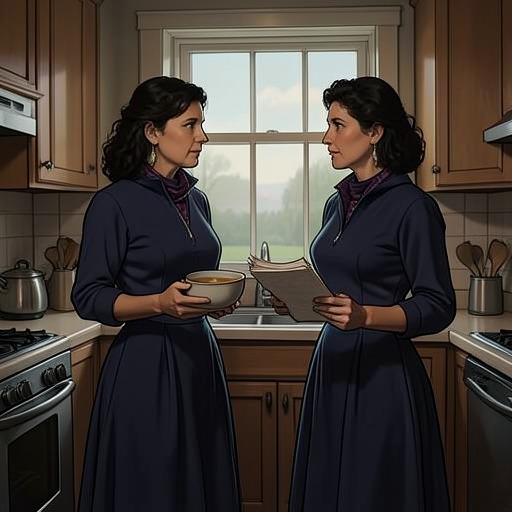
Their intimacy is not the same as complete knowledge of one another. They speak at length about Pauline’s kidnapping and the cadre, about Juan, Yvonne, Tom Milner, Sandy, and Frazer, about women’s power, money, the news, and William. Yet they do not carefully recount their separate histories. Their bond seems so complete that each assumes the other already knows the past; raising the gaps might feel like casting doubt on their union. After they part, Jenny briefly reverses that assumption, believing that she must have failed to explain herself and that saying more might have prevented the end of their friendship. Writing becomes a means of addressing Pauline as well as a way of recovering herself.
Their nights together carry both closeness and separation. Jenny and Pauline stay up talking until they are exhausted, then observe a silence before sleep and listen to each other breathe in the dark. Jenny understands that neither wants to fall asleep first and be left alone. They share awareness not only of lost lives and acquaintances but of lost attachments. Even in the same room, silence opens a small distance between them; their dependence is expressed in the effort to make that distance bearable.
Choosing the bond, facing its end
The bond becomes most consequential when Jenny looks back on the day on the hill with Pauline and the hawk. Jenny had chosen to believe Pauline was in danger and to move toward a possible rescue, rather than merely accepting the belief as certain. She understands that she did not want to be left behind, and that Pauline did not want that either. When Pauline reached for her, Jenny took her hand and felt relief in giving up the option of escape. She later interprets that decision as binding herself to Pauline and to the uncertain course that Pauline’s choices would set in motion. In this recollection, dependence is not simply imposed from outside: Jenny recognizes her own part in choosing the attachment because being bound to another person offered its own kind of salvation.
Jenny’s account of the bond does not make it a perfect alternative to the cadre or to her earlier life with William. She remembers the cadre’s comradeship as a farce and her relationship with William as one in which she struggled to retain his approval, still surprised by his interest in her. With Pauline, she did not feel she was competing for approval in the same way. Yet the shared closeness could not prevent change, disagreement, or separation. Jenny also comes to understand Pauline’s departure from the cadre as a decision shaped by exhaustion and distrust: Pauline says that the group used her as her parents had, and that she is finished with it, without promising to return to her former life.
After the separation, Jenny writes to William more often while spending long nights talking with Pauline. The letter she and Pauline labor over becomes a shared composition that they still have not mailed. Their domestic life includes a productive garden, vegetables given to friends and acquaintances, meals made together, flowers, and a cloth Jenny found at a thrift store. Jenny questions whether these pleasures are merely bourgeois indulgences; Pauline challenges the idea that wanting happiness is selfish. Such ordinary practices do not cancel their political history. Instead, they show the two women trying to make a life in which care and pleasure can count as more than distractions from struggle.
Separation and unequal consequences
Once Jenny and Pauline are apart, Jenny’s attachment takes the form of longing, guilt, and anger. She sends Pauline a loving letter but receives no reply. When evidence and newspaper accounts make betrayal harder to dismiss, Jenny alternates between trying to excuse Pauline and wanting to hold her accountable. She begins writing accusations, then recoils from the intensity of her own anger. Looking back at the hill, she still understands why she forgave Pauline’s lie: she believed it disclosed something true about Pauline’s desire not to be abandoned, and it answered Jenny’s own need for a bond with a comrade. She remembers their closeness as a kind of comradeship she could not find in the cadre or in her earlier relationship with William, even while preparing to face the consequences alone.
The legal aftermath makes clear that attachment does not produce equal outcomes. Pauline is convicted of bank robbery, but serves less than two years before her sentence is commuted; the novel describes her as emerging from prison with her class privilege largely intact, the experience treated as something endured rather than a lasting degradation. Jenny receives the minimum sentence for the selective-service recruitment-center bombings and is transferred to work release after a year for good behavior. Yet the leniency brings its own shame: she feels marked as a model minority, praised as unusually well behaved and treated as an example in relation to others like her. The two women are tried and sentenced for acts committed before they met, and no one is charged with Mr. Morton’s murder. The legal record therefore fails to register the shared life that has mattered so profoundly to Jenny, while imposing different social meanings on their punishments.
Jenny’s eventual recovery does not erase her attachment. In retrospect, she understands that Pauline may have recognized that their adventure was over and that her place in the world was assured if she accepted it. Jenny allows that she may be wrong about Pauline’s reasons, but knows that her own youth has ended. The story’s account of comradeship is therefore neither a celebration of dependence nor a dismissal of it. Shared life lets Jenny and Pauline act, learn, and endure together; its ending leaves Jenny to distinguish the value of what they had from the belief that the bond could keep them together or settle what their lives meant.