George Elson
American WomanGeorge Elson is Jenny’s lawyer during the proceedings that follow her arrest, a practical intermediary between her cell and the outside world. He helps her navigate the uncertainty of bail and possible charges, but his role extends beyond legal strategy: as a community of supporters gathers around Jenny, he urges her to accept care from the people closest to her rather than retreat further into isolation.
Identity and Legal Role
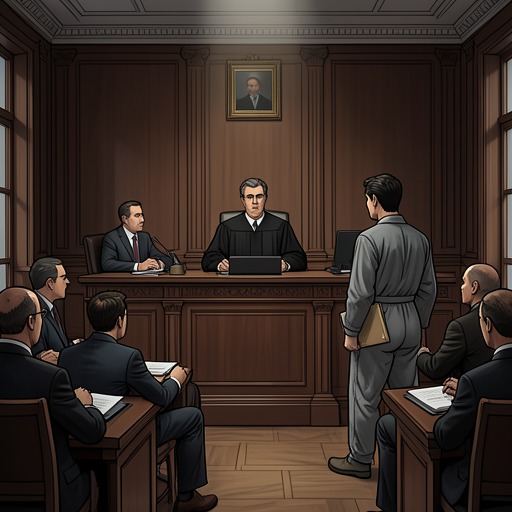
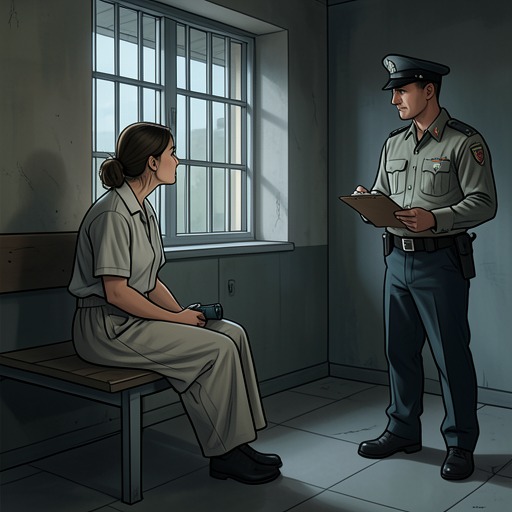
Elson represents Jenny while she is detained and facing pretrial proceedings. After a second motion for bail fails, Jenny writes Pauline a nearly fifteen-page letter about the case and her own account of what happened. Elson visits her in her cell while she is rereading its ending. He brings a folding chair, waits until the matron leaves, and listens as Jenny asks him to mail the letter. The scene places him in the small, consequential routines of her confinement: legal communication, correspondence, and the uncertain passage of news.
His work takes place against a case whose evidence and public visibility are entangled. A newspaper item names Jenny, Juan, and Yvonne and identifies the make of a gun. Elson has circled the report and sets the paper beside Jenny’s unsealed letter. The revelation reaches her through an ordinary object placed on her cot, abruptly shifting the encounter from the letter she is preparing to send to the possibility that her situation has become public.
Counsel and the Limits of the Case
Elson responds by drawing a firm boundary around what Jenny should say: “Not another word,” he tells her, until and unless charges are brought. He predicts that charges will not come soon and explains his assessment: the authorities have nothing besides Pauline’s statement, which he believes will not be enough because she lacks credibility. His advice is cautious rather than triumphant; it recognizes both the danger of speaking and the weakness he sees in the available evidence.
The court’s decisions do not settle the larger moral and historical account of Jenny’s actions. The narrative later distinguishes the sentences Jenny and Pauline receive from the full history of what happened between them: they are tried and sentenced only for acts committed before they met, while no one is charged with Mr. Morton’s murder. Jenny receives the minimum sentence for her participation in the selective-service recruitment-center bombings and is transferred to work release after a year. These outcomes expose the limits of the legal record, though the text does not attribute them to any particular action by Elson.
The Community Around Jenny
Jenny’s name appears only fleetingly in the news, but those brief mentions draw an unexpected group of people to Elson’s small Oakland law office. Filipino-, Chinese-, Korean-, and Japanese-American Californians arrive to speak with him: truck farmers and small-business owners, a few left-wing college students, and a Japanese Unitarian minister. Many have kept away from politics and have little money, yet they bring concerns, suggestions, and complaints, and insist on donating to Jenny’s defense.
The support grows from one visitor to five and then to a church congregation. Elson’s secretary receives almost nine thousand dollars, and students and the minister begin organizing a fundraising campaign. Elson tells Jenny that people treat her like a sister or granddaughter and that they are angry he is not Asian, even as they hope she will win. Their response makes Jenny’s case more than a private legal matter: her name has awakened a sense of kinship among people who do not necessarily share her politics but recognize her as someone for whom they feel responsible.
Personal Concern and Narrative Significance
Elson sees that Jenny is withdrawing even as others organize on her behalf. He asks whether she has eaten since his last visit, nudges her lunch tray, and presses her to answer. When he tells her that her father is still waiting to see her, she has already used the legal pads and pens he supplied not to complete her statement, but to prepare Pauline’s bail motion and then the long letter. Elson points out the discrepancy without pretending that paperwork is the only thing keeping her from her father; Jenny knows she has not truly been focused on the statement.
His insistence—“You look thin,” followed by “Your father’s still waiting to see you. Enough of this, Jenny. Say yes.”—is blunt, but it is also an appeal to let someone care for her. In a story where Jenny and Pauline’s bond has become a source of both solidarity and pain, Elson represents a different, less dramatic kind of relation: professional duty joined to attention to the person in the cell. The community’s donations and the unanswered question of a father’s visit reveal the supports available to Jenny, while her difficulty accepting them shows how little legal advocacy alone can repair.