Jim Shimada
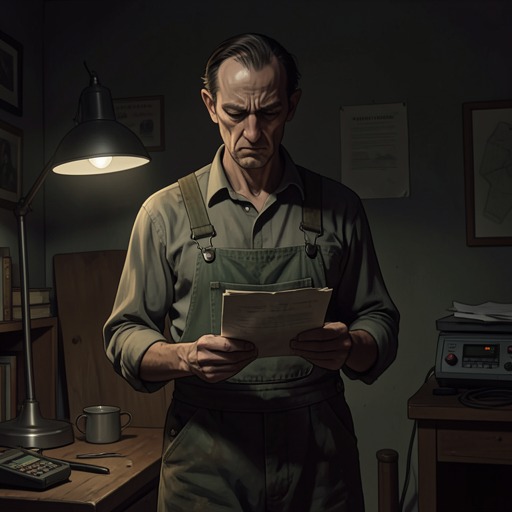
American WomanJim Shimada, Jenny’s father, is a Japanese American whose life is redirected by wartime incarceration and its aftermath. A promising baseball player with a scholarship to UCLA and plans to make Westerns, he is barred from enlisting because of his Japanese ancestry, confined at Manzanar, and later imprisoned for refusing the draft. The novel follows those events beyond their immediate consequences: Jim’s experiences become a source of enduring guilt and suspicion, while his story—more fully documented in state records than Jenny’s—offers a history that the public account of his daughter’s fugitive life leaves at its edges.
Identity and Early Life
Jim is the only child of Japanese immigrants who make their living through truck farming. By the late 1930s, his parents have saved enough to open a small produce stand in Los Angeles. Jim excels at baseball and earns a scholarship to UCLA. He intends to study filmmaking and make Westerns, a future that seems within reach until the government’s treatment of Japanese Americans changes his course.
After Pearl Harbor, Jim tries to enlist, as some of his friends do, but is refused because of his Japanese ancestry. He is still seventeen. In the fall of 1942, instead of beginning university, he and his parents are sent to Manzanar War Relocation Center, where Japanese Americans living in California are confined by the federal government. His personal ambitions are overtaken by a policy that treats ancestry as grounds for exclusion, even when he has tried to serve the country.
Incarceration and Resistance
At first, camp life does not distinguish Jim from the other young people held there. That changes in 1943, when the government administers a loyalty questionnaire asking whether internees would serve in the United States Army if permitted and whether they would renounce loyalty to Japan. The questions create fear and confusion, particularly because some internees believe that answering yes to the second could be used as evidence of prior loyalty to Japan. A small, violent pro-Japan faction exploits the unrest, while hostile commentators use it to cast Japanese Americans’ loyalty as a façade. Jim, previously not politically engaged, is caught in the conflict over how to answer.
During a beating by members of the pro-Japan gang, Jim is taken by an administrative security detail and transferred away from his parents to the Camp for Incorrigibles, a prison established in the northern part of the state. Unlike Manzanar, it has no family groups or the limited communal amenities that had developed there. Its cellblocks are converted horse stables without heat or hot water. Jim suffers from bronchitis through much of his fifteen months there and endures repeated violence and abuse. The account presents his illness and injuries as part of the camp’s harsh conditions, not as an isolated interruption to an otherwise stable life.
Draft Refusal and Release
As the war continues, the government first invites Japanese American men to leave camp by enlisting in segregated battalions, then extends the draft to men over eighteen in all camps. Jim refuses. He argues that the government should return his parents’ home and produce stand, reimburse them for income lost while they were confined and unable to work, and allow the family to go home; only then, he says, would he consider service. The demand makes the material losses of incarceration central to his refusal. He is tried and convicted of draft evasion, then transferred to federal prison. In 1947, President Truman pardons the Japanese American draft resisters, and Jim is released.
Before the draft and trial, a riot at the Camp for Incorrigibles gives him another abrupt passage toward freedom. A dispute associated with the evening meal spreads through the camp; guards respond, and a truck breaks through the front gate as people flee into the night. Jim, then eighteen and still affected by bronchitis and recent violence, runs with them. The narrative does not establish his precise route or immediate outcome from the escape. His later conviction and imprisonment, however, show that the jailbreak did not end his confinement or resolve the conflict with the government.
Family, Guilt, and Return to Manzanar
After his release, Jim briefly marries a young woman who bears Jenny and then dies. He takes his daughter to Japan, the country of his parents, but later renounces it as well and returns to the United States penniless and defeated. The account gives no simple resolution to this repeated rejection of national belonging: Japan, like the United States, fails to become a lasting home for him.
Years later, Jim’s daughter asks why they know no Japanese people in California. He dismisses Japanese Americans as sheep, then recognizes that he has behaved similarly himself. His answer exposes the contradiction in his outlook: he rejects people he associates with passivity, yet knows that fear and shame have shaped his own conduct. He describes a lifelong, blameless guilt after incarceration, including disgust directed at his parents and at others who were wrongly accused. The guilt persists despite his innocence of the charges that made him a prisoner.
Months before learning that Jenny has been arrested, Jim grows increasingly sensitive to possible surveillance. He dislikes calling it paranoia but fears that it may be just that—or guilt. Though he files his taxes on time, he still expects FBI agents to appear at his door. While working in his greenhouse and sorting unsold bulbs, he notices slow movement on the road and recalls a dark sedan with two men that had paused near his home days earlier. He goes outside after the car has begun to recede. The novel leaves the incident uncertain: it establishes Jim’s watchfulness and the return of old fears, not that the men are definitively government agents.
When Jenny brings him to a Manzanar reunion, the site appears as a patch of green in the desert, watered for the camp’s former crops. Cars, a makeshift stage, food tables, and people preparing the gathering occupy the ground beneath the Sierra Nevada. Jim gets out of the car and looks around; a young man welcomes them and offers help setting up, but Jim seems not to notice him. The welcome comes from someone about the age Jim was when he was brought to Manzanar. The contrast makes the reunion more than a return to a place: it sets a new community’s gathering beside the history of Jim’s forced removal.
Narrative Significance
Jim’s history expands the novel’s frame beyond Jenny’s fugitive years. State records contain more about him than about his daughter, yet his life remains peripheral to the public story that seeks to explain her. His interrupted scholarship, the loss of his parents’ livelihood, the camps, and the draft conviction show how political decisions enter family life and persist long after release. His recurring guilt and suspicion are not evidence of wrongdoing; they are consequences of having been treated as suspect while blameless. At the reunion, the old camp is at once a physical site and a fragment of a history that cannot be reduced to the story of the next generation.