McCloud Estate
American WomanMcCloud Estate is a remote retreat in the wild Cascades, remembered for its delicate cottages, timbered lodge, and fast-running river. More than a secluded country house, it was a hidden private world shaped by its owner’s wealth and family secrets. Its beauty draws Anne Casey into imagining the place, while gaps and distortions in the surviving account make that imagined estate inseparable from the history it may conceal.
Setting and Architecture
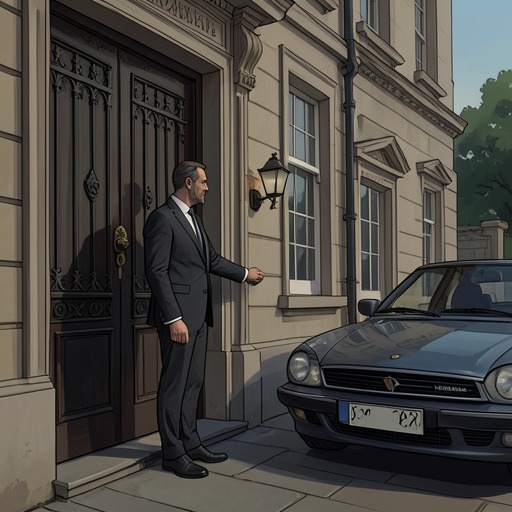
Unlike Casa Mare, a vast imitation of the Alhambra, and Big Red, a mock cattle ranch set beside rare rivers, McCloud was not one of Pauline’s grandfather’s family houses. It was his sacred retreat, built among the Cascades as a secluded village of cottages and a large, heavily timbered lodge. Its vines, gingerbread shutters, and cold, swift river give it an intimacy and delicacy distinct from the more conspicuous displays of wealth represented by the other estates.
The approach made secrecy part of the property’s design. Visitors were blindfolded for the last leg of the journey, setting out from beneath Mount Shasta, whose imposing presence seemed to guard the gates. Apart from the servants, nobody was said to know McCloud’s location; a rumor even claimed that the military was barred from its airspace. The estate thus appears at once as a physical place and as a space held apart from ordinary access, visible to outsiders only through partial glimpses and stories.
Ownership and Hidden History
Pauline’s grandfather lived at McCloud with his mistress, who, according to the account Anne encounters, ruled there like a queen. The arrangement was an open secret from his wife and children. The mistress welcomed blindfolded visitors with champagne before they could see the estate, turning the revelation of the landscape into a staged entrance. The account makes this private household part of the estate’s character: McCloud offered its owner not merely isolation, but a separate domestic life shielded from his family.
That history is uncertain, however. Anne’s picture of the mistress and her life there comes from the woman’s memoirs, which the family’s attorneys had picked almost clean. The book presents the grandfather as a harmless old man and omits both his wife and children. It also leaves out his death and the children’s eventual expulsion of the mistress, which came only after their father was safely buried. Anne suspects that the estate may have been erased or exorcised before Pauline, still very young, was taken there; the evidence does not settle what Pauline knew. The memoir’s suppression and omissions make McCloud’s history feel less like a complete record than a contested inheritance.
Anne’s Reconstruction
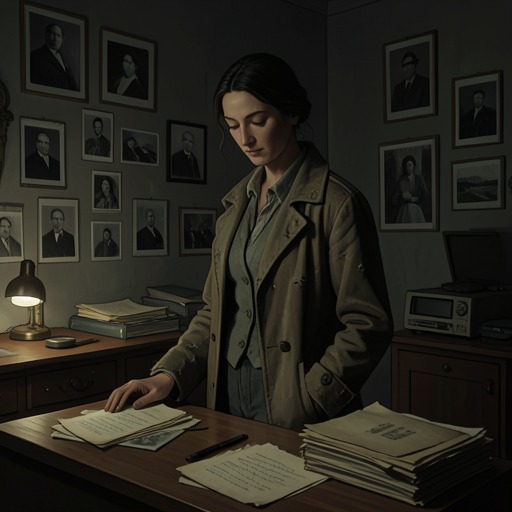
Anne is captivated by McCloud’s beauty, not by its secrecy or the power it signifies. The photographs she has are old, black-and-white, and badly focused; unlike Casa Mare and Big Red, McCloud does not appear in the large picture books. The few visible details—the vines around the shutters and the river caught at the edge of a frame—are enough to make the estate her favorite of Pauline’s grandfather’s properties. Their partialness matters: Anne’s longing grows from images that reveal the place while withholding its full form.
The memoir itself had been ignored and conspicuously left unreviewed, and its vivid author later died, forgotten, from alcoholism at barely fifty. Anne had first borrowed it as a distraction, then became absorbed by the mistress’s robust vulgarity and casual racism. The estate reaches her through this damaged chain of representations: a memoir shaped by omission, neglected photographs, and a woman whose account has largely disappeared from public view. McCloud’s allure is therefore inseparable from the question of whose version of its past survived.
The Camp and the Imagined Threat
Anne tests one of the memoir’s most dramatic memories against a map of Story’s California. She traces the McCloud River and locates the long-ago Camp for Incorrigibles beside a small lake. The camp and McCloud were almost fifty miles apart, separated by twelve-thousand-foot peaks and untamed wilderness. That distance rules out the possibility that Jim Shimada could have reached the estate during the escape Anne has been reading about.
The remembered jailbreak nonetheless illuminates the difference between McCloud’s reality and its imagined vulnerability. During the escape, guards, gunfire, tear gas, and a stolen truck marked a chaotic breach of the camp; the escaping men then dwindled into small groups on a freezing winter night, aware that they had nowhere to go. Pauline’s grandfather’s newspapers described the escape as a murderous rampage, while the memoir’s mistress recalled fearing that the incarcerated men were coming to murder everyone at McCloud. Anne suggests that the hysterical headlines may have served the mistress’s pleasure in imagining a threat to her protected refuge. The men never stood at its gates: the estate’s danger was a story told from within a place whose distance and secrecy kept its occupants apart from the camp’s actual events.