Oakland
American WomanOakland is a practical and communal center in the aftermath of Jenny’s arrest: Jim goes there hoping to reach his daughter, and George Elson’s small law office becomes a gathering point for people organizing support for her. The city’s significance lies less in a single public event than in these converging acts of seeking, advocacy, and collective attention.
A Search for Contact
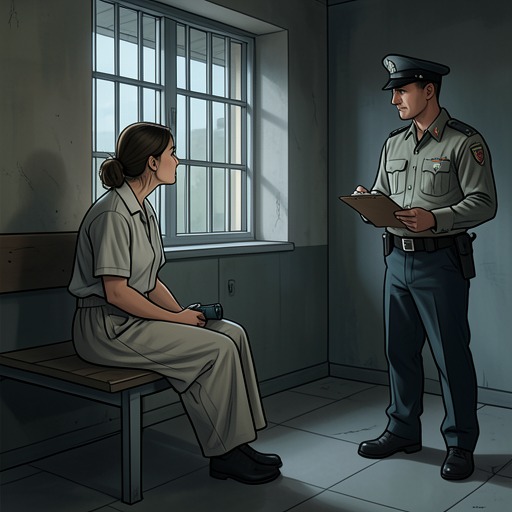
After seeing Pauline’s arrest on television and learning the next morning that Jenny had also been arrested, Jim takes a bus to Oakland. By the time he arrives, Jenny has already met with her court-appointed lawyer, so Jim speaks with the lawyer rather than with his daughter. The lawyer tells him Jenny is frightened and does not want to talk, and asks him to return after she contacts him. Jim stays for the week, but nothing changes; he leaves his number with the lawyer and takes the bus back to Stockton. Oakland thus marks an attempted reconnection that remains unresolved, not a reunion.
Elson’s Office and Local Support
Oakland is also where Jenny’s case begins to draw an unexpected constituency. As Pauline’s hearings and psychiatric examinations receive extensive coverage, Jenny’s name appears only fleetingly. Even those brief mentions reach people who recognize something of their own background in hers. People of Filipino, Chinese, Korean, and Japanese Californian American backgrounds begin making their way to George Elson’s small Oakland law office, first singly, then in growing numbers, until a church congregation joins them.
The visitors include truck farmers and small-business owners who have generally kept out of politics, a few left-wing college students, and a Japanese Unitarian minister. They bring concerns, suggestions, and sometimes complaints, but they also insist on contributing money. They call Elson around the clock with advice about how he should help Jenny; his secretary receives almost nine thousand dollars. The support is not presented as a ready-made political movement: it gathers gradually from people who had largely avoided public involvement and who now treat Jenny’s case as a matter of personal concern.
A Quiet Counterweight
The contrast between the city’s law office and the wider news coverage gives Oakland a particular narrative function. Public attention centers on Pauline’s condition and the arguments made by her lawyers, doctors, and family, while Jenny remains marginal in the reporting. In Elson’s office, however, her sparse visibility prompts a widening response. Oakland becomes the place where the story’s overlooked figure acquires a community of advocates, even as Jim’s visit shows that advocacy cannot by itself restore private contact. The city holds these two developments together: a father’s unsuccessful effort to reach his daughter and a network of strangers’ determined effort to help her.