Vietnam War
American WomanThe Vietnam War shapes the political world of the novel and the moral vocabulary through which Jenny understands her past. It gives urgency to her and William’s antiwar actions, becomes a point of comparison in arguments over political violence and legal responsibility, and returns in Jenny’s reflections after the war’s apparent conclusion. The change from an identifiable war to a more diffuse sense of injustice does not resolve her convictions; it leaves her questioning whether she had confused moral purpose with anger, and whether luck rather than righteousness kept her actions from causing greater harm.
War as the Context for Protest
The war enters the story as both an international conflict and a force acting on ordinary political life. At Berkeley, students become newly conscious of the university’s role in producing weapons used in Southeast Asia, as well as its accommodation of Central Intelligence Agency recruiters. A dispute over access to a campus gymnasium helps trigger student action, but the protests soon widen beyond the building and gather questions about the university, race, and the war. In this setting, Vietnam is one of the larger forces students are trying to understand; the nearby gym becomes a more immediate and tangible focus for action.
Jenny and William respond to the war through clandestine bombings of government targets, mostly draft offices. They act at night and intend not to kill anyone. Jenny later recognizes that they had believed violence would command attention and that the justice of their opposition would be self-evident because they understood themselves to be acting to save lives. Their confidence depended, however, on a narrow audience: they had known people who shared their views, not the broader population they hoped to persuade. Jenny’s later life at Wildmoor places her among people outside the political world she and William had imagined addressing, exposing the gap between their hope of persuasion and the limited reach of their actions.
Cease-Fire and the Distance of Public Accounts
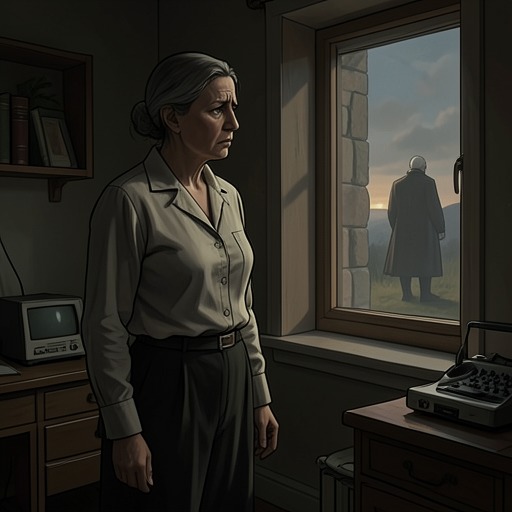
While living under the assumed name Iris Wong, Jenny follows the news through papers she collects in Red Hook. At first she checks the national pages anxiously for any mention of herself; over time, the ritual becomes a quieter part of her life at Wildmoor. In early February 1973, she reads a January 28 report that the Paris cease-fire agreements have been signed to end the Vietnam War. The newspaper’s account includes descriptions of the officials’ clothing, and the formal, composed presentation of the negotiations strikes Jenny against the background of her fugitive life and William’s imprisonment.
She considers keeping the article as a memento, but eventually throws it away. The decision marks the gap between public closure and her private sense of unresolved consequence: the war has been announced as ending, yet the article feels empty to her rather than commemorative. The news does not restore the world she had imagined her actions might help change, nor does it give meaning to the danger and separation that have shaped her life. The cease-fire is a historical turning point, but it arrives in a form that cannot answer the questions Jenny carries.
Competing Claims About Violence and Law
The war remains a point of contention when Jenny discusses her case with a young lawyer. She argues that her actions cannot be separated from the reasons for them while the war itself is stripped of its moral context and treated as a legitimate undertaking. The lawyer distinguishes legal judgment from ethical argument: Vietnam, he says, is governed by a distinct body of law, while Jenny’s case will be decided in the justice system. Their disagreement reveals a conflict the novel does not settle by equating the two forms of violence. Jenny insists on historical and political context; the lawyer emphasizes that context does not determine the legal outcome.
The same distinction complicates Jenny’s response to a revolutionary cadre’s kidnapping of Pauline. The group demands a large-scale distribution of food to poor and socially marginalized residents of California before ransom talks begin. Its political rationale is met with public skepticism: left-leaning commentators characterize a one-time food distribution as impractical and paternalistic, comparing it to gestures by the United States government in places it has helped damage. Pauline’s family answers the demand with a careful public calculation, estimating that the food could cost half a billion dollars, then says it will do what it can. The cadre accepts that response in a subsequent recording. These competing accounts show how a political appeal can be presented as solidarity by its authors and as incoherent or self-righteous by its audience.
The cadre’s broadcast after the Los Angeles violence brings the war more directly into its rhetoric. Yvonne delivers a sequence of particular facts about the operation and its consequences; Juan then turns from those particulars to broader accusations, invoking Vietnam as he condemns murder and greed. The shift from incident to political indictment resembles the movement from a concrete grievance to a claim about a larger system, but the broadcast does not make the violence easier for Jenny to accept. Pauline’s later section of the eulogy recalls the dead comrades as individuals and as people with whom she had formed intimate bonds. The contrast between sweeping political language and personal remembrance helps expose what abstract claims can leave out.
Jenny’s Reassessment of the War’s Legacy
After the war’s conclusion, Jenny reads a report that declares it over but thinks of it as unfinished in a deeper sense. The war remains present in the political arguments around her, even as its immediate role as a focus for protest begins to fade. In prison, she confronts the possibility that the careful reasoning behind her earlier actions had also contained anger: anger at the destruction of war, but also at her own powerlessness and at the failure of powerful people to answer for the harm they caused.
Jenny had believed that violence could force attention onto suffering, much as the image of a monk’s self-immolation had once shocked and transformed her. She now doubts that a passion for justice, by itself, made her methods right. Her intended precautions had depended on luck, she realizes, just as she had depended on luck during her year with Pauline. The belief that a building would be empty at night did not guarantee that no one would be there; her intention to prevent deaths could not control every outcome. Her retrospective comparison between her own bombings and the bombing of places believed to contain only an enemy makes the danger of that reasoning stark without making the acts identical in scale or circumstance.
This reassessment also alters how Jenny understands the death of Mr. Morton. She had wanted to attribute it to Juan’s motives, but comes to see that bad luck, rather than a simple distinction between pure and impure intentions, may have been decisive. Her recognition does not erase the difference between political causes or acts; instead, it weakens her confidence that noble intentions alone can determine moral worth. She begins to judge actions by their consequences as well as by the purposes claimed for them.
From a Defined Enemy to Diffuse Injustice
The loss of the war as a clear focus for public opposition intensifies Jenny’s sense of political powerlessness. She had once been able to identify a palpable evil and direct protest toward it. Later, she sees inequity not as an exception that can be removed but as part of the system’s continuing operation, with no simple remedy remaining to her. Her disillusionment is therefore not merely a reaction to the end of a particular conflict: it follows from recognizing how little her earlier certainty had changed the conditions she opposed.
The Vietnam War’s narrative importance lies in this change of scale. It first furnishes Jenny with an urgent cause and a moral framework for action; then its reported ending exposes the distance between political closure and private consequence. Finally, as Jenny reconsiders her own violence, the war becomes part of a broader reckoning with abstraction, responsibility, and luck. The conflict recedes from the headlines, but the questions it raises about the justification and consequences of resistance continue to shape her understanding of herself.