the lost year
American WomanThe lost year names the stretch of Pauline’s disappearance that news coverage compresses into a convenient blank. The expression does more than mark time: it shows how public narratives can acknowledge that something is missing while leaving the people and experiences within that absence unrecorded. For Jenny, whose hidden life overlapped with Pauline’s, the label makes the disappearance legible at the cost of making her easier to omit.
Coining and Scope
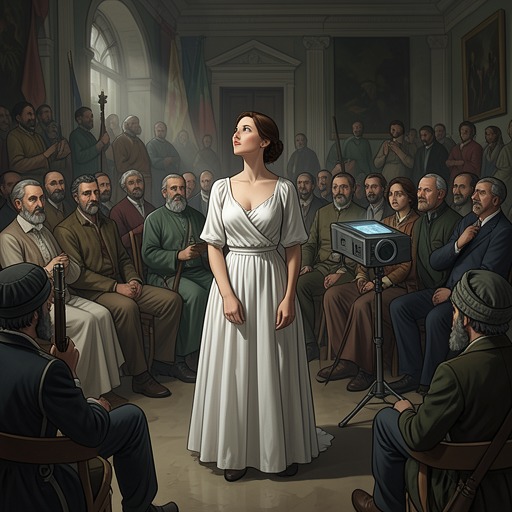
The phrase is attributed to television newsmen describing Pauline’s invisibility and Anne Casey’s confused search. The account presents it as a ready-made label, produced by reporters who move quickly from uncertainty to a name for uncertainty. Calling the interval a lost year gives a scattered sequence of sightings and unanswered questions the appearance of a single, bounded episode.
Its apparent clarity carries an erasing implication: if the year is simply lost, no one need find it. The phrase can thus sound like a summary while functioning as a dismissal. It records that Pauline was absent from view, but does not itself recover what happened during that absence or distinguish the lives caught inside it.
Evidence and the Bail Motions
The label enters legal argument as well as television coverage. After a judge denies Pauline bail, her lawyers submit a second motion supported by an unnamed person who claims to have known her during what is now being called the lost year. The witness describes Pauline as malnourished, drugged, brainwashed, and unwillingly held, presenting the missing period as evidence for her defense.
Jenny recognizes herself as the unnamed witness. Her statement attempts to turn private knowledge into legally useful testimony, but it does so through deliberate lies: she writes that Pauline had always been a captive and that Jenny herself had been among her captors, arguing from that premise that Pauline’s participation in criminal acts could not have been voluntary. The judge rejects the statement as a cynical ploy. The phrase therefore marks a period whose meaning is contested: for the defense it is evidence of captivity, while the court does not accept Jenny’s account as proof.
Jenny Outside the Story
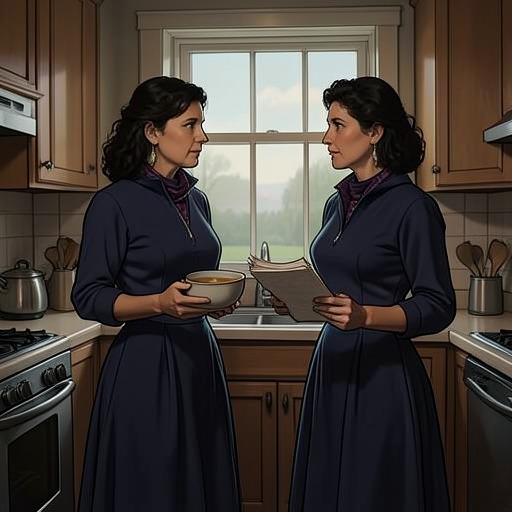
The phrase’s omissions become especially sharp when Anne reaches San Francisco after five days of driving and learns that Jenny Shimada was with Pauline. Anne knows the truth, yet sees that Jenny is not considered part of the story. Before the arrests, reports had been so numerous and inconsistent that Pauline was said to be in Tibet, riding a Harley, or traveling with someone named Jenny Shimada. The FBI could not reliably separate a useful lead from rumor; Anne, too, had checked Jenny’s status as a known fugitive and left it there.
Anne understands that Jenny’s exclusion is not corrected simply because one person has discovered the facts. She suspects she will eventually file Jenny away with other compelling but unusable material. Her private pursuit matters precisely because she believes no one else will pursue Jenny’s story. The lost year thus names not only a gap in knowledge about Pauline, but the narrative mechanism by which Jenny can remain absent even after her presence is known.
Public Time and Private Histories
The novel places this media label beside other conflicts between public accounts and private experience. While living underground at Wildmoor, Jenny reads a report on the Paris cease-fire agreements, presented through descriptions of the officials’ clothing. The war that she and William had tried to oppose appears calmly concluded in the newspaper, while William is imprisoned and Jenny remains a fugitive. She considers keeping the article as a memento, then throws it away because it seems empty. The scene does not define the lost year, but it echoes its central tension: public language can announce an ending without accounting for the lives still shaped by what it declares finished.
The phrase also sits within a novel attentive to history that survives unevenly in records and family memory. Anne discovers that California holds far more extensive records about Jenny’s father, born in 1924, than about Jenny herself, born in 1949. Those records reach back to his wartime incarceration at Manzanar after he was barred from enlisting because of his Japanese ancestry. Against that documented history, Jenny’s relative absence from the archive is another form of lost time. The expression’s significance lies in this contrast: an interval can be named in public, and even invoked in court, while the people who lived it remain only partially visible.