
The False Trail of D
An Officer and a SpyThis thread follows the uncertain letter identifying a traitor as “D” and Picquart’s discovery that it referred to a printer rather than Alfred Dreyfus.
increasing Bearing strength in each event
 decreasing
Bearing strength in each eventdecreasingA Letter from the Embassy
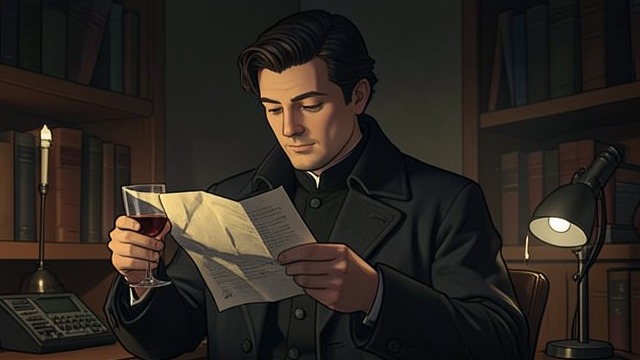
A Letter from the Embassy
Ambiguous initial
An intercepted message refers to a lowlife identified only as “D,” who supplies military plans. The letter’s fragments leave the identity uncertain.
A suspect made to fit
Investigators connect the initial to Alfred Dreyfus, whose position and background seem to satisfy their assumptions. The ambiguity invites a conclusion before the facts are established.
Henry’s Account
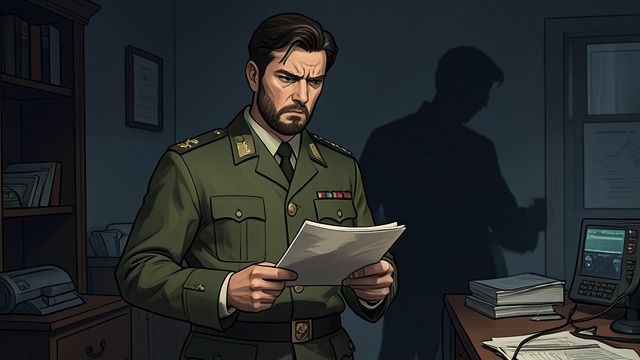
Henry’s Account
A reported warning
Hubert-Joseph Henry attributes warnings about a spy on the General Staff to a Spanish military attaché, relayed through Guénée. He later uses the claim to accuse Dreyfus in court.
Authority substitutes for verification
The story sounds powerful when presented as intelligence, but the source and wording are not independently tested. Its vagueness becomes part of the secret file’s apparent weight.
Picquart Questions Guénée
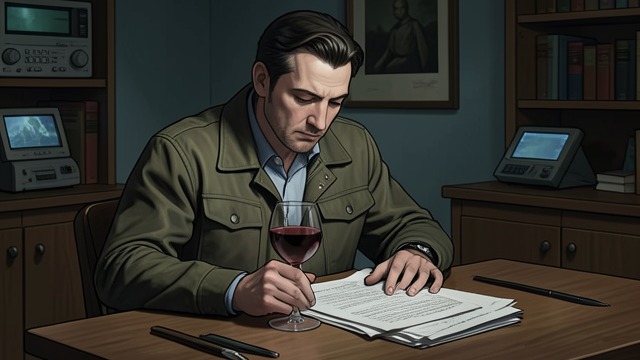
Picquart Questions Guénée
A shaky memory
Georges Picquart asks François Guénée whether the Spanish attaché really gave the reported warning. Guénée hesitates and cannot confidently substantiate the account.
The file’s foundation weakens
Picquart sees signs that the testimony may have been manufactured or embellished. The question is no longer simply who “D” was, but whether the supposed intelligence source ever existed.
The Archive Search
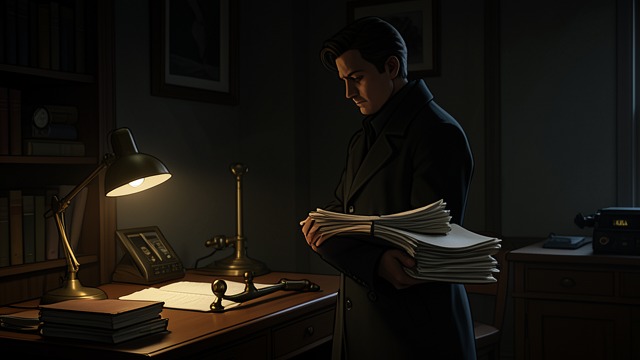
The Archive Search
A hidden source checked
During a clandestine search of the Statistical Section’s archive, Picquart finds reports describing Jacques Dubois, a printer with access to publicly available plans.
The initial is reinterpreted
A later note offering smokeless-powder information is signed “Dubois.” The evidence shows that “D” need not mean Dreyfus and that the intelligence was not necessarily secret.
A Proven Mistake
A Proven Mistake
The inference collapses
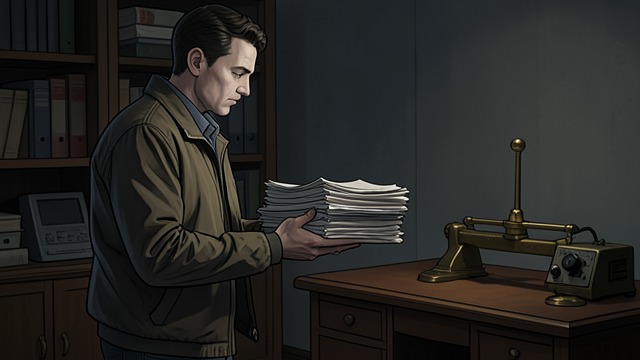
Picquart finds Henry’s own report describing Dubois as a fantasist whose plans were publicly available. The supposed “D” evidence does not establish Alfred Dreyfus’s guilt.
A wider implication
The discovery suggests that the original investigators had encountered a plausible alternative and failed to pursue it. The false trail exposes the prosecution’s habit of turning initials into certainty.
1893–1894
1894
Autumn 1896
September 1896
Autumn 1896
