
Evidence, Error, and Revision
An Officer and a SpyThis thread explores the novel’s movement from unreliable evidence and premature certainty toward the slow, imperfect labor of correction.
increasing Bearing strength in each event
 decreasing
Bearing strength in each eventdecreasingThe Bordereau
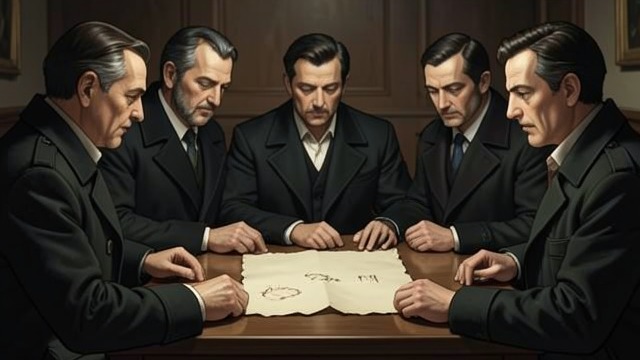
The Bordereau
A small document, large verdict
The torn bordereau lists fragments of military information and becomes the central physical evidence against Alfred Dreyfus. Its authorship is uncertain, and experts disagree over the handwriting.
Interpretation fills the gaps
The document does not speak for itself. Investigators and judges supply a theory of guilt that transforms ambiguous details into a complete story.
The Dossier’s Authority
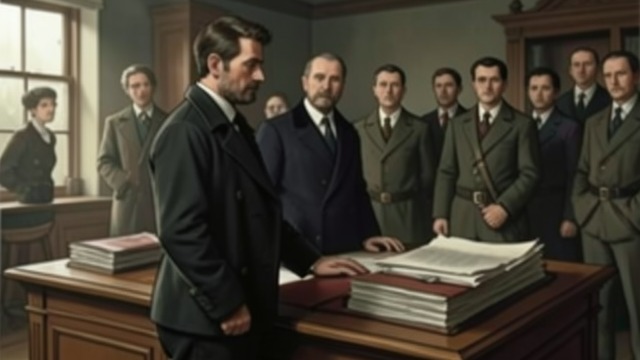
The Dossier’s Authority
Claims beyond the record
The secret file adds rumors, indirect reports, and foreign correspondence to the case. The defense cannot inspect any of it.
Evidence insulated from correction
Because the material is hidden, weak claims gain the force of privileged knowledge. The procedure makes it difficult to distinguish genuine intelligence from inference or fabrication.
Esterhazy’s Hand
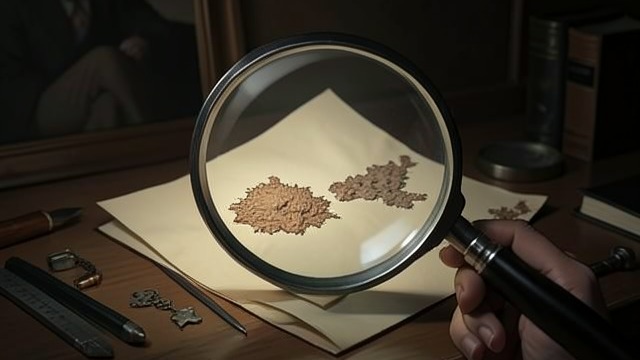
Esterhazy’s Hand
A comparison changes meaning
Esterhazy’s transfer letters match the bordereau, according to Alphonse Bertillon. The comparison undermines the prosecution’s central attribution of authorship.
Experts are not final
The same expert who once defended the original conclusion now confirms a different one. The moment demonstrates that expertise can correct error, but only when institutions allow its findings to matter.
A Forgery Found

A Forgery Found
Material evidence matters
A simple examination under strong light reveals that the “absolute proof” letter combines paper from different documents. Its physical construction contradicts its official presentation.
Confidence collapses
The discovery forces Henry to confess and proves that classified documents are not automatically authentic. Verification, not status, determines evidentiary value.
Slow Correction
Slow Correction
Repeated review
Political speeches, an administrative inquiry, and judicial examination return to facts that had been ignored or suppressed. The correction requires repeated comparison rather than a single dramatic confession.
The cost of delay
The final legal reversal validates the evidence but comes after years of imprisonment and exile. The narrative insists that factual truth alone is insufficient unless institutions agree to test it.
September 1894
December 1894
August 1896
August 1898
1903–1906
