1896 forged letter
An Officer and a SpyThe 1896 forged letter was a fabricated piece of evidence that military leaders presented as “absolute proof” of Alfred Dreyfus’s guilt. Its force depended on the authority attached to a document said to have come from a foreign intelligence source; its undoing came from the material evidence of how it had been assembled. When an examination under a strong electric lamp revealed that its sections were on differently ruled paper, the supposed proof became evidence of a military cover-up instead.
A document presented as proof
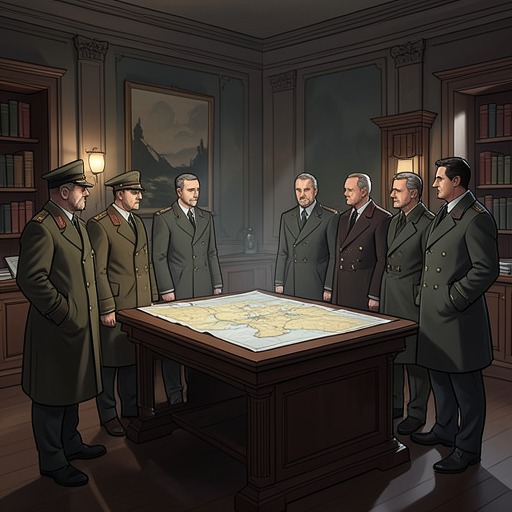
The letter entered the public argument through claims about its origin and evidentiary weight. During Émile Zola’s trial, General Pellieux said that proof of Dreyfus’s guilt had reached the Ministry of War in November 1896. He described a document whose origin, he insisted, could not be contested, and read its crucial allegation: “A deputy is going to ask questions about the Dreyfus case. Never admit the relations that we had with that Jew.” Pellieux declared that he had seen the document and appealed to Raoul le Mouton de Boisdeffre to support his testimony.
Pellieux’s intervention turned the document into a performance of military authority: he invoked his honour and the inaccessible evidence behind his assertion, while the defence demanded that the evidence itself be produced and discussed openly. Charles-Arthur Gonse confirmed Pellieux’s account but drew the opposite practical conclusion about disclosure. He said the army did not fear the light, yet maintained that real and absolute proof of this character could not be made public. The letter thus served not only as an alleged argument against Dreyfus but as a justification for keeping the argument beyond public scrutiny.
The document’s public life widened when the new Minister of War, Godefroy Cavaignac, read intercepted messages to the Chamber of Deputies. He presented three items from the intelligence files: a message referring to twelve master plans of Nice, another saying that Dreyfus had brought many interesting matters, and the passage Pellieux had called absolute proof. The third text read: “I have read that a deputy is going to ask questions about Dreyfus. If someone asks in Rome for new explanations, I will say that I have never had any dealings with this Jew. If someone asks you, say the same, for no one must ever know what happened to him.” By publishing it as part of this sequence, Cavaignac made the alleged proof appear to complete a body of incriminating evidence.
The physical evidence of fabrication
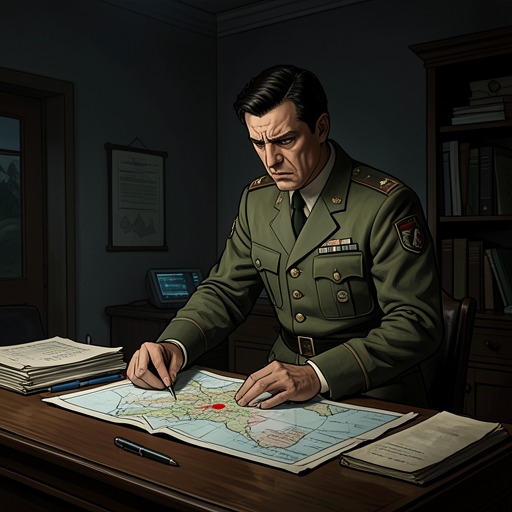
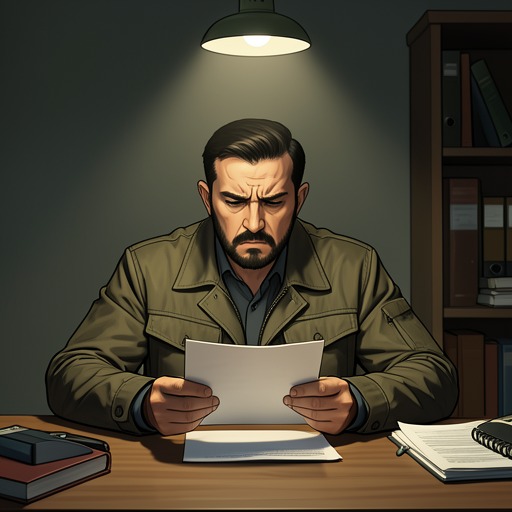
Cavaignac had ordered the entire Dreyfus file checked for authenticity after Picquart accused the army of using a forgery. The file had grown to 360 items. During this review, an officer examined the “absolute proof” under a strong electric lamp, making visible a discrepancy concealed by the document’s apparent unity: the heading, “My dear friend,” and the signature, “Alexandrine,” were on squared paper with bluish-grey lines, but the body of the letter was on paper with mauve lines.
The mismatched paper showed that the text had not arrived as a single intact letter. A genuine letter, assembled earlier in June 1894, had been taken apart and given a fabricated central section. The physical construction therefore contradicted the claim that the document’s origin was beyond dispute. What had been treated as a single, authoritative communication was instead a composite whose parts carried different evidentiary histories.
The interrogation of Henry made the implication explicit. At first, when Cavaignac accused him of joining fragments from one letter to another, Henry denied forging papers. When pressed, he acknowledged that the two parts had been fitted together. Cavaignac then stated the sequence he understood: Henry had received an envelope in 1896 containing an insignificant letter, suppressed that letter, and fabricated another. Henry answered, “Yes.” The confession established that the purported proof had been manufactured within the intelligence apparatus, not simply misread by its critics.
From political weapon to exposure
Before the physical examination, the letter had helped sustain public confidence in the accusation. When Cavaignac presented the messages to the Chamber, the assembly rose in acclamation, believing the affair settled. Deputies even ordered 36,000 copies of the evidence printed and posted in every commune in France. That response gave the document a reach far beyond the closed military process in which the original case against Dreyfus had been shaped.
The reversal was sharp: the minister who meant to end the controversy by displaying proof instead made the contested document’s authority testable. Under close inspection, its paper revealed the construction that official assertions had obscured; Henry’s admission confirmed the significance of that discovery. The letter did not merely fail as proof. Its exposure showed that the institution defending the conviction had altered evidence and then presented the result as conclusive.
That reversal belongs to a wider contrast in the case between claims made in the name of authority and facts capable of surviving examination. Alfred Dreyfus had been publicly degraded before the Paris garrison, while he continued to proclaim his innocence and spectators answered with antisemitic taunts. Later, the forged letter was invoked to defend the judgment against him; its disassembly and Henry’s confession helped undermine the military narrative that had treated the conviction as settled. In 1906, after the Supreme Court of Appeal quashed the Rennes verdict and exonerated Dreyfus, the Chamber of Deputies voted to restore him to the army and award him the Legion of Honour. The forged letter’s significance lies in that reversal of evidentiary meaning: the document meant to close the case became a material trace of the deception that kept it open.