74th Infantry Regiment
An Officer and a SpyThe 74th Infantry Regiment is the French Army unit garrisoned at Rouen whose connection to Major Charles Ferdinand Walsin Esterhazy turns a suspicious name in an intelligence inquiry into a question rooted inside the army. The regiment is also where Georges Picquart seeks out his old comrade Albert Curé. In the narrative, its importance lies less in a history of the unit than in this convergence: Esterhazy’s recorded military affiliation, Curé’s local knowledge, and Picquart’s attempt to determine what the evidence means in practice.
Identity and Garrison Setting
The available account identifies the 74th Infantry Regiment as an infantry regiment stationed in Rouen. When Picquart asks Captain Lauth to check whether there is a Major Esterhazy in the French Army, Lauth reports that Major Charles Ferdinand Walsin Esterhazy is listed with the regiment. The entry supplies a specific unit and location for a man whose possible connection to espionage had until then been pursued through documents and intelligence channels. Picquart recognizes the designation because he has a friend in the regiment, which is garrisoned at Rouen.
The regiment’s physical setting comes into view when Picquart travels there. After taking the Normandy train from Gare Saint-Lazare, he walks from the station through a garrison district toward the Pélissier barracks. The regiment occupies three large, three-storeyed buildings of alternating red brick and grey stone, enclosed by a high wall. From outside, Picquart observes, the complex could be mistaken for a factory, an asylum, or a prison. Its appearance gives the military establishment a closed, impersonal aspect before he passes through its gate on credentials.
Inside the grounds, the account follows Picquart across the parade ground, past its flagpole, tricolour, plane trees, and water troughs, to the administration building. These are not details of battle or ceremony but of a working garrison. The regiment is presented through its buildings and routines, a place where the inquiry must be pursued in person rather than treated as an abstract exchange of reports.
Officers and Conditions of Service
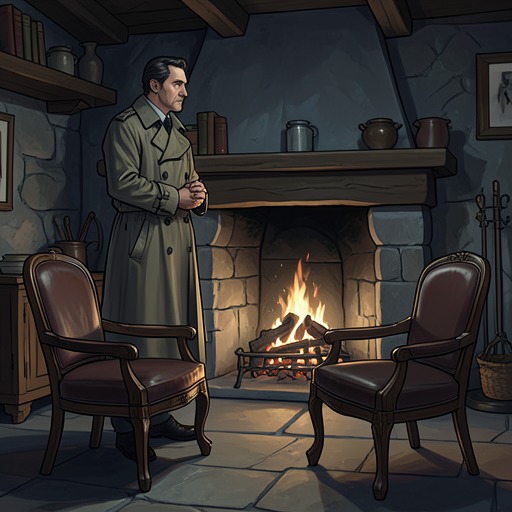
The regiment’s two named officers occupy sharply different positions in Picquart’s investigation. Albert Curé, a major with the unit, is Picquart’s old comrade from Tonkin. Picquart sends him a telegram asking to visit, and Curé replies that he will be delighted. Their prior association gives Picquart a personal route into the regiment, but the visit itself is framed as a meeting between officers: Picquart arrives with credentials and waits in Curé’s office while Curé is away conducting a kit inspection.
Esterhazy’s connection to the same regiment is less reassuring. When Picquart asks Curé what sort of officer Esterhazy is, Curé answers that he is the worst. He says Esterhazy neglects his duties entirely and that the colonel has stopped giving him anything to do. The exchange supplies a local assessment of Esterhazy’s military conduct, distinct from the intelligence evidence that first brought his name to Picquart’s attention. It does not establish every detail of Esterhazy’s service or explain the regiment’s disciplinary arrangements; it does establish that a fellow officer describes him as derelict and effectively without assigned work.
The conversation also raises Esterhazy’s presence at the regiment as a question. Picquart asks whether he is ever there, but the available exchange provides no answer. That unanswered point matters to the boundaries of what the account establishes: the regiment is his listed unit, while his actual attendance remains unresolved in this passage. The distinction prevents the official affiliation from being mistaken for proof that he regularly performed service there.
The Regiment in Picquart’s Inquiry
The unit’s role begins with a short administrative check. After an address prompts Picquart to ask whether a Major Esterhazy serves in the French Army, Captain Lauth says that he has already checked with Gribelin and identifies Esterhazy’s listing in the 74th Infantry Regiment. The discovery sharpens the inquiry: the suspected name belongs not simply to a foreign source or a ciphered message but to a French officer attached to a regiment. Picquart immediately connects the designation with his friend in Rouen, and the exchange turns toward the possibility that the affair involves another traitor.
Picquart’s journey to Rouen follows that lead into the regiment’s everyday environment. He does not arrive at a courtroom or headquarters but at a garrison where a kit inspection is under way, soldiers move between buildings, and the ordinary sounds of military life carry across the grounds. While waiting for Curé, he hears horses’ hooves from the stable block, a company marching in from the road, and a band rehearsing farther away. He recognizes the setting as familiar from earlier military postings; its sameness is precisely what attracts him. The scene places an exceptional investigation inside a routine institution, without implying that the regiment as a whole knows of or participates in Esterhazy’s suspected activities.
Narrative Significance
The 74th Infantry Regiment serves as a practical hinge between evidence and verification. A listing in the unit leads Picquart from the intelligence office to Rouen; the regiment’s officers then supply a firsthand judgment of Esterhazy’s professional conduct. Neither step alone resolves the case. The record establishes affiliation, while Curé’s assessment describes neglect of duty; the question of Esterhazy’s presence at the unit remains open in the cited exchange. Together, these limits show how the inquiry proceeds by testing separate kinds of information rather than treating a single clue as conclusive.
The regiment’s depiction also counterpoints the distant political and military anxieties surrounding the Dreyfus affair. Its walls, parade ground, inspection, horses, marching company, and rehearsal make the army tangible as a place of repeated work and discipline. Yet the information Picquart seeks concerns an officer whom Curé says has been given nothing to do. The contrast is not presented as a verdict on the regiment itself; it concentrates attention on the gap between an officer’s formal place in the army and his reported conduct within it. The unit’s narrative function is therefore specific: it anchors the inquiry in a recognizable military setting and makes the suspicion against Esterhazy answerable to people and routines on the ground.