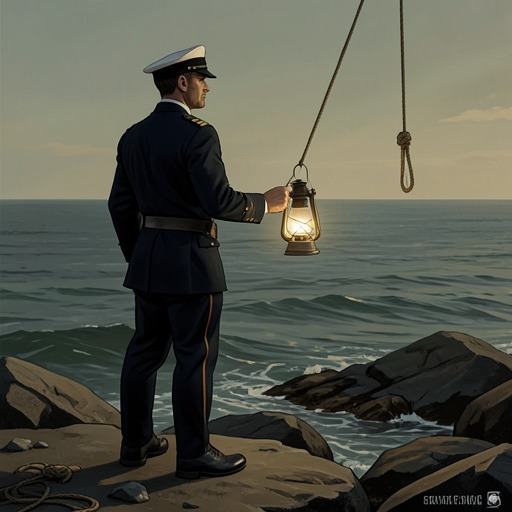
Alfred Dreyfus’s imprisonment on Devil’s Island
An Officer and a SpyAlfred Dreyfus’s imprisonment on Devil’s Island was both a punishment imposed on a convicted officer and the continuing human consequence of a case built on concealed evidence and prejudice. The narrative presents his isolation against the French army’s public insistence that the matter was settled: even as Dreyfus endured exile, the grounds for his conviction were being challenged, and the institution that had condemned him resisted reopening the case.
From accusation to exile
The atmosphere surrounding Dreyfus’s case is marked by antisemitism before his imprisonment becomes the central measure of its cost. When he was a student at the École Supérieure de Guerre, Georges Picquart regarded him through stereotypes about Jewish wealth and social ambition. Dreyfus directly asked whether his low mark was because he was Jewish; Picquart replied that he was scrupulous about keeping personal prejudice out of his judgment. The exchange establishes that the question of bias was present even in their earlier relationship, rather than appearing only after the case became a public controversy.
At the military hearing, Hubert-Joseph Henry presented the accusation as the conclusion of an unnamed informant’s warning that a traitor served in the Second Department, then pointed to Dreyfus as that traitor. Dreyfus rose in anger and demanded the informer’s name, but the presiding officer ordered him to sit. In the account of his later degradation, an official from the Foreign Ministry treated Dreyfus’s submission to humiliation as evidence against his innocence and speculated that it reflected a Jewish trait. Jean Sandherr answered with a sweeping denunciation of Jews as lacking patriotism, honour, and pride. These episodes show how prejudice could shape the interpretation of Dreyfus’s conduct: neither quiet endurance nor protest was allowed to count straightforwardly in his favour.
Isolation as punishment and public argument
By the time Dreyfus was entering his fourth year on Devil’s Island, his separation from other people had become a central image in Émile Zola’s account of his plight. Picquart reads that Dreyfus has been cut off not only by the ocean but, in Zola’s description, by eleven guards forming a human wall around him day and night. The details make the isolation more than a distant location: the sea and the guards together become barriers between Dreyfus and ordinary human contact.
That image also exposes the gulf between the prisoner’s circumstances and the language of official certainty. During a debate in the Chamber of Deputies, the Prime Minister invoked the principle of res judicata to deny that there could be a Dreyfus case at all. The army’s position was then restated in absolute terms: Dreyfus had been rightly and unanimously condemned, and was guilty. Picquart sets these declarations beside the account of a man enduring years of isolation. The contrast is not merely between opposing opinions; it is between the finality claimed by public authority and the unresolved vulnerability of the person kept far from the proceedings that determined his fate.
The case reopens
The acquittal of Charles Ferdinand Walsin Esterhazy intensified the sense that the army’s response had closed off rather than resolved the case. The verdict was accompanied by applause and cheers for the army, while Picquart and Mathieu Dreyfus left amid jeers and insults. Picquart concluded that Alfred Dreyfus was worse off than before, now having been condemned a second time through the public vindication of another man. Against this reversal, Dreyfus’s continuing imprisonment represented the practical force of a verdict the institution still defended.
A decisive change came when the Supreme Court of Appeal ordered the army to bring Dreyfus back for a retrial. The court cited two grounds drawn from Picquart’s evidence: the “lowlife D” letter did not refer to Dreyfus and should not have been shown to the judges without informing the defence; and facts unknown to the original court-martial tended to show that Dreyfus could not have written the bordereau. The ruling did not erase the years already spent in exile, but it challenged both the use of secret material and the evidentiary basis for the original conviction.
Return to France and the limits of vindication
Dreyfus could not be brought back to Paris for the new trial because the government considered that too dangerous. He was instead landed at night on the coast of Brittany and taken under cover of darkness to Rennes, three hundred kilometres west of Paris. The government announced that the new court-martial would be held there, with its opening fixed for Monday, 7 August. His return therefore ended one form of enforced distance without restoring an ordinary freedom: it placed him back in France, but under secrecy and with the retrial still to come.
For Picquart, Dreyfus’s survival and his own freedom had become intertwined. As he lay with Pauline Monnier, he thought of Dreyfus on Devil’s Island and wondered whether the guards still manacled him to his bed at night. Picquart understood their destinies as mutually dependent: if Dreyfus endured, so would he; if Picquart walked free, Dreyfus would too. This connection gives the imprisonment a consequence beyond the prisoner’s immediate suffering. It becomes the measure of whether the army’s account can withstand scrutiny—and of how long both men must wait before the case can move toward justice.