Antisemitism in the French Army
An Officer and a SpyAntisemitism in the French Army is presented not merely as a collection of private insults but as a habit of interpretation that helps direct suspicion and shield an institutional verdict from challenge. Alfred Dreyfus’s Jewishness is repeatedly treated as evidence of disloyalty: his speech, family, money, and supposed social character are made to signify foreignness before any proof of treason is established. The narrative’s force comes partly from the contrast between those racial assumptions and the official procedures that give them authority, from his placement on the General Staff to his public degradation and the later defense of his conviction.
Personal prejudice and professional judgment
Georges Picquart first describes Alfred Dreyfus as a student at the École Supérieure de Guerre, where Picquart taught topography. Dreyfus appears to him thin, pale, solemn, and short-sighted, but Picquart’s account quickly moves from those observations to a set of inherited stereotypes. His mother’s phrase for a supposedly typical Jew associates Jewish identity with new money, pushiness, social climbing, and expensive display. Dreyfus’s comfortable home, wealthy wife, servants, horses, and interests in hunting and collecting are consequently not left as details of an affluent officer’s life: Picquart reads them through a prejudice that makes wealth look like a mark against him.
The bias also enters an explicitly professional exchange. After Picquart gives Dreyfus a lower cartography mark than he expected, Dreyfus asks whether the grade reflects hostility to Jews. Picquart insists that personal prejudice cannot affect his judgment, but then admits that he does not particularly like Jews while claiming he would never discriminate in an official matter. The distinction is revealing but unstable: Dreyfus has already encountered a teacher whose dislike shapes his view of him, and the assurance of impartiality rests on Picquart’s own authority to define what counts as discrimination. After the exchange, Dreyfus makes no further private approaches or invitations.
A place on the General Staff
The wider institutional setting makes Dreyfus’s identity consequential. Graduates who placed highly at the École Supérieure de Guerre received a two-year attachment to the General Staff, rotating through its four departments. Dreyfus had finished ninth in his year and was entitled to the attachment; Picquart was responsible for deciding his initial placement. He would be the General Staff’s only Jewish officer, at a time when antisemitic agitation in the army was being amplified by La Libre Parole, which alleged that Jewish officers received preferential treatment.
Picquart says that, despite his personal antipathy, he tried to protect Dreyfus from the worst of the hostility. He consulted his friend Armand Mercier-Milon, whom he considered free of prejudice, and arranged for Dreyfus to begin in the Fourth Department. Dreyfus then rotated through the First, Second, and Third Departments, completing his General Staff placement in July 1894. The arrangement shows both the practical force of discrimination and the limits of Picquart’s intervention: an officer’s professional path could be negotiated as protection against a climate of suspicion, while his Jewish identity remained conspicuous within the institution.
From an investigative clue to a racialized suspect
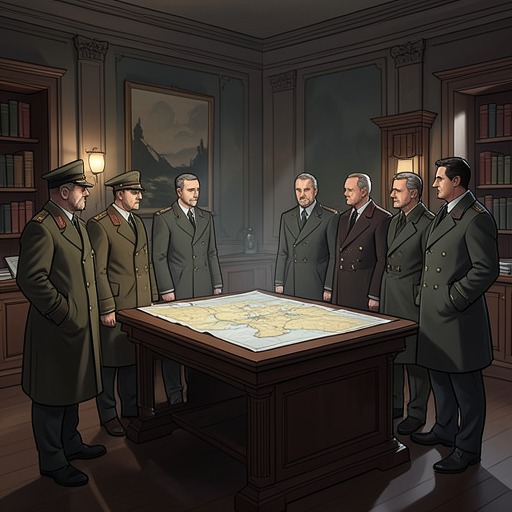
When the search began for the author of the bordereau, suspicion spread across the General Staff. Officers examined one another’s handwriting, and a theory emerged that the culprit might be one of the stagiaires, who had recently passed through all four departments and could therefore know information from each. Among eight artillery captains in that group, Alfred Dreyfus was the only Jew. The further details used to single him out—that he spoke French with a German accent, had relatives living in the Kaiser’s Germany, and had money to spend—did not establish that he had passed secrets. Instead, they joined Jewishness and perceived foreign connections to an investigative profile, so that identity helped make the conclusion seem obvious before the evidence had done so.
The prejudice becomes still more explicit when the army considers how to arrest him. Jean Sandherr argues against a straightforward arrest, claiming that Dreyfus’s detention would mobilize an imagined Jewish power on his behalf. He urges that Dreyfus disappear quietly and be kept beyond outside intervention. The episode places an antisemitic conspiracy theory inside deliberations about state procedure: fear of supposed Jewish influence becomes a reason to isolate the accused rather than a reason to examine the accusation with greater care.
At the court-martial, Hubert-Joseph Henry identifies Dreyfus as the traitor, saying that an informant had placed the traitor in the Second Department. Dreyfus demands to know the informant’s name, but the accusation is delivered as a dramatic revelation rather than a claim he can test at that moment. The surrounding discussion likewise shows how the authority of military testimony and the standing of the accused were unequally distributed. Auguste Mercier objects to the idea of calling civilian witnesses, including family friends, a businessman, a doctor, and the Chief Rabbi of Paris; his response invokes Germany’s supposed ruthlessness as a contrast with French restraint. The episode makes visible how the prospect of hearing from people associated with Dreyfus can itself be treated as absurd, while an unsupported accusation from within the military establishment is presented as decisive.
The public body and the racialized crowd
The degradation ceremony turns the conviction into a spectacle before four thousand soldiers. After the formal verdict and sentence, the presiding officer tells Dreyfus that he is unworthy to bear arms and declares his degradation in the name of the French people. The language of civic authority makes the punishment appear to speak for the nation, while the condemned officer’s Jewish identity becomes a target for the crowd as he is marched around the parade ground in his torn uniform. He repeatedly declares his innocence; spectators answer with cries of Judas, traitor, and death to the Jew.
An officer from the Foreign Ministry wonders aloud how Dreyfus can endure such humiliation and still claim innocence, speculating that his submission might be a Jewish trait. Jean Sandherr answers by describing Jews as lacking patriotism, honour, and pride, and as betraying the people among whom they live. These exchanges expose the circular logic at work: Dreyfus’s endurance is not allowed to count as evidence of innocence, because prejudice can reinterpret even his conduct as proof of a supposedly racial character. The parade makes that logic public, coordinating military order, official ceremony, and popular abuse around a man who is required to embody the verdict against him.
Defeat, persistence, and the later reckoning
The narrative connects this suspicion to the older national wound of France’s defeat in 1870 and the loss of Alsace and Lorraine. Picquart recalls witnessing the bombardment of Strasbourg as a boy and describes how that experience drew him toward military service. He also characterizes Auguste Mercier, Raoul le Mouton de Boisdeffre, and Charles-Arthur Gonse as members of a generation haunted by the defeat and fearful of Germany. Their repeated comparison of German and French populations and military spending condenses that anxiety into a pessimistic calculation. The history of national humiliation does not by itself explain antisemitism, but it helps show why fears of German espionage could be so readily joined to claims that a Jewish officer was foreign in loyalty.
Even after the case has become a public controversy, Auguste Mercier continues to use antisemitic conspiracy claims in defending the prosecution. At the Rennes trial he alleges that millions of francs have been raised in England and Germany to free Dreyfus, repeats a claim about Dreyfus’s attitude toward Alsace that Dreyfus has denied, and revives the story of a confession before the degradation. He also offers an elaborate account of the danger of war with Germany to justify having shown secret material to the court-martial judges. The scene shows the persistence of the original prejudice: challenges to the conviction are recast as evidence of a vast Jewish and foreign campaign, while the methods used to convict Dreyfus are defended as patriotic necessity.
The later restoration of both Alfred Dreyfus and Georges Picquart to the army provides a concrete reversal of the public punishment and Picquart’s own dishonourable dismissal. On 13 July 1906, the Chamber of Deputies votes to restore Dreyfus as a major and award him the Legion of Honour, 432 votes to 32; a separate motion restores Picquart by 449 to 26. The votes do not erase the years in which Jewish identity was treated as evidence, but they mark an official break with the institutional verdict that prejudice had helped sustain. The concept’s significance lies in that whole sequence: bias narrows the field of suspicion, gives conspiratorial assertions the appearance of explanation, and turns a contested judgment into a public ritual before the later legal and political reversal.