Basel meeting with Richard Cuers
An Officer and a SpyThe Basel meeting with Richard Cuers was a French intelligence operation intended to extract information about a German agent. Georges Picquart chose not to attend personally, instead sending a carefully arranged team to meet Cuers in Basel on 6 August. The interview yielded only scattered claims and no name for the agent; its greater consequence was Picquart’s conviction that Major Henry had ensured it would fail.
Background and Decision to Send a Team
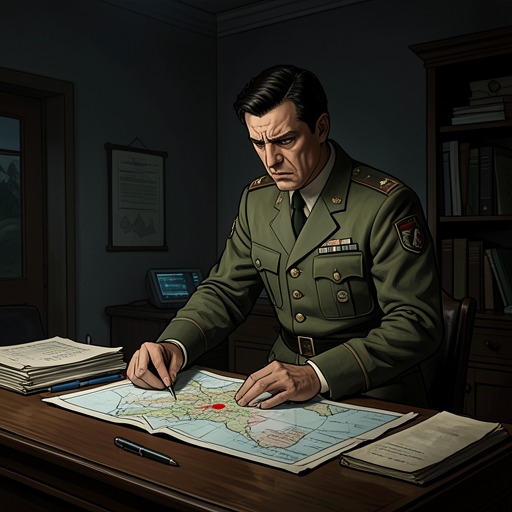
Two nights after receiving the offer, Picquart received a cipher telegram from Colonel Foucault in Berlin saying that Cuers was willing to meet French representatives in Basel on Thursday, 6 August. Picquart’s first instinct was to go himself, and he consulted the railway timetable. He then considered the risks of crossing into a city that, in his account, felt much like a German city: Basel stood near the border, its population spoke German, and its Gothic, half-timbered buildings seemed to surround him with unfriendly faces. After more than a year in post, he also had to reckon with the possibility that Berlin had identified him as Jean Sandherr’s successor. The danger he emphasized was not principally personal. If he were recognized, the rendezvous could be compromised, with consequences for the intelligence operation.
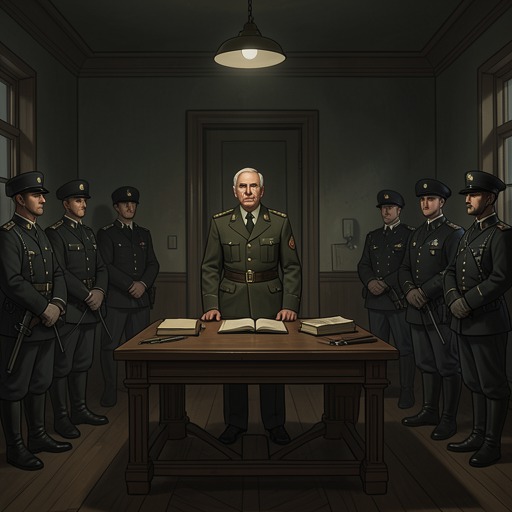
On Monday, 3 August, Picquart summoned Major Henry and Captain Lauth to his office, placing the Benefactor file before them at a conference table. On the day he received Raoul le Mouton de Boisdeffre’s summons to meet, Picquart held a final planning meeting with Lauth and Tomps. The proposed team included Inspector Vuillecard, police commissioner in Vassy, whom Tomps had selected as his assistant. Their departure was set for the following night aboard the sleeper train from Gare de l’Est, with arrival in Basel at six on Thursday morning. Picquart instructed Lauth to obtain every possible scrap of information, even if the interview continued into the next day.
The Rendezvous Plan and Its Disguise
The plan divided the team across Basel’s two railway termini and the place where Cuers was expected to arrive. Lauth would wait in a private room at the Schweizerhof Hotel, next to the station. Tomps would watch the Badischer Bahnhof, across the Rhine, for passengers arriving on the German trains. Vuillecard would take position at Münsterplatz, in front of the cathedral, where the initial meeting was scheduled for nine o’clock. Tomps, who knew Cuers by sight, was to check that he was not being followed from passport control and then shadow him to the square. Vuillecard would carry a white handkerchief as a signal. A prepared French exchange, using the name Lescure, was intended to identify Cuers and lead him to Lauth at the hotel.
At five o’clock the following afternoon, the expedition assembled in a hotel lobby in walking boots, high socks, sports jackets, and knapsacks. Their cover story cast them as four friends taking a hiking holiday in the Baselbiet. Henry’s broad-check jacket and feathered felt hat made him stand out: red-faced and grumpy in the heat, he looked to Picquart like a Tyrolean innkeeper. Picquart teased him about the disguise, and Tomps, Vuillecard, and Lauth joined in the laughter. Henry remained sullen, an early sign of the tension that would shape Picquart’s reading of the mission. Picquart told Lauth to send a coded telegram from Basel reporting how the meeting went and when the party would return. He walked the men to their cab, waited for it to disappear, and then set off on foot for his own rendezvous.
What Cuers Reportedly Disclosed
When Henry and Lauth returned, Picquart asked what had happened. Henry did most of the recounting. He said that he and Lauth had gone from the station to the hotel for breakfast, then waited in the room until 9:30, when Vuillecard brought Cuers in. According to Henry, Cuers seemed nervous and shifty, repeatedly moving to the window to check the square outside the station. Much of what he wanted to discuss, Henry said, was whether the French could guarantee that the Germans would never learn what he had done for them.
The information attributed to Cuers concerned four documents that he said he had personally seen, arriving through Maximilian von Schwartzkoppen. Henry identified their subjects as a gun, a rifle, the layout of the army camp at Toul, and the fortifications at Nancy. These details suggested that the material touched on French arms and military installations, but the report offered no identification of the agent who supplied it. Cuers’s claimed knowledge remained second-hand in the interview account: he had seen the documents, but could provide neither the agent’s name nor another clue to his identity.
The one further claim was that the German General Staff had decided the agent could not be trusted and had ordered Schwartzkoppen to end the relationship. The agent, Cuers reportedly said, had never been very important and was no longer active. Lauth told Picquart that the conversation began in French and switched to German in the afternoon. Cuers left at six to catch the train back to Berlin. The account thus combined potentially significant document subjects with an unresolved identity and an assertion that the source had already been discarded.
Failure, Suspicion, and Consequence
Picquart was exasperated by the outcome. Cuers had travelled seven hundred kilometres to meet intelligence officers from another country, yet, according to the returning men, said almost nothing—and less than he had already disclosed in Berlin. Henry suggested that Cuers had changed his mind or had been less guarded while drinking at home than among strangers. Picquart challenged the team for not making an effort to know Cuers better, including by taking him out and getting him drunk. Neither man answered the criticism directly; Lauth looked down, while Henry stared ahead. Picquart cut off their protests and dismissed them, telling them to reserve their excuses for their report.
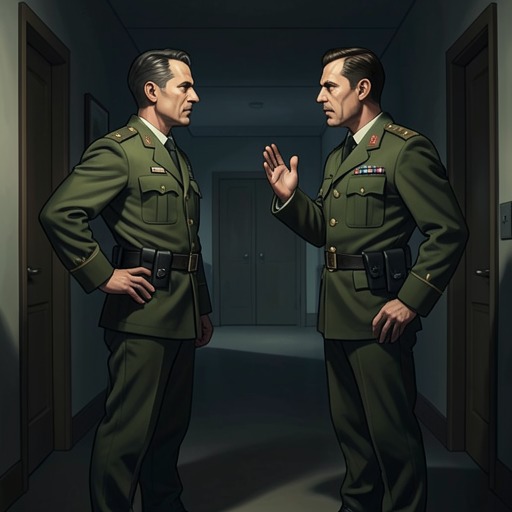
At the door, Henry declared that no one had questioned his professional competence before. Picquart answered with sarcasm. After the men had gone, he leaned forward and put his head in his hands, recognizing that a decisive moment had arrived both in his relationship with Henry and in his command of the section. He did not claim certainty about every part of the account: Cuers might truly have clammed up once inside the hotel room. But Picquart was certain that Henry had travelled to Switzerland intending to wreck the meeting and had succeeded. In his judgment, if Cuers had told the French little, it was because Henry had willed that result. The mission therefore failed to identify the agent or develop Cuers’s fragments into a fuller account, while turning a disappointing interview into an open crisis of trust within Picquart’s own intelligence section.