Confession and arrest of Hubert-Joseph Henry
An Officer and a SpyHubert-Joseph Henry’s confession and arrest turn a concealed forgery into an official admission, breaking the evidentiary façade built around Alfred Dreyfus’s guilt. The episode is narrated retrospectively by Georges Picquart: confined in his cell, he pieces together reports of the interrogation and imagines the scene he could not witness. Its central reversal is material as well as legal. A document treated as absolute proof is exposed as an altered letter, and the officer who made the alteration is taken into custody.
Background: accusation and evidence
The confession strikes at a case already marked by the difference between accusation and proof. During Dreyfus’s court-martial, Henry had pointed to him as the traitor in the Second Department, presenting the accusation as information conveyed by an honourable source. The claim had dramatic force in the courtroom, but the secret file Picquart later examined contained circumstance and insinuation rather than a document or witness directly naming Dreyfus as a traitor. Its nearest approach was an initial attached to the phrase “that lowlife D.”
That gap matters to the later interrogation. Henry’s authority as an officer had helped give the accusation weight, while the paperwork assembled around it could not independently establish Dreyfus’s guilt. The confession reveals that a piece of supposed corroboration had itself been manufactured. It therefore does more than discredit one document: it exposes how a forged item could reinforce an accusation whose underlying file was already weak.
The forgery is detected
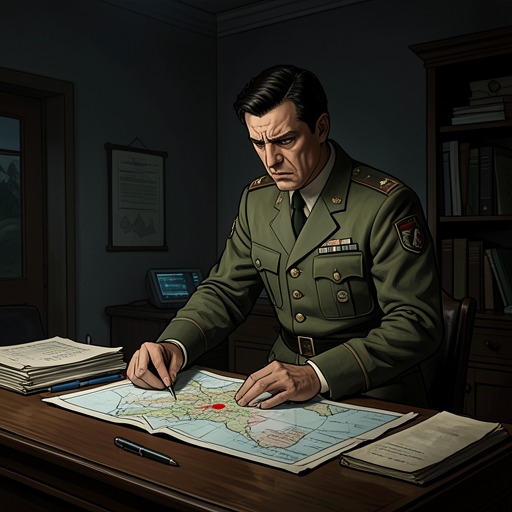
The immediate cause of Henry’s confession, as Picquart understands it, is an authenticity check ordered by Cavaignac, the new Minister of War. After Picquart had accused the military authorities of forgery, Cavaignac directed an officer to examine the entire Dreyfus file. The review took time because the file had swollen to three hundred and sixty items. In the course of that examination, an aide held the document called the absolute proof under a strong electric lamp, a simple test that revealed what an extended military inquiry had failed to notice.
The letter’s heading, “My dear friend,” and its signature, “Alexandrine,” were on paper ruled in bluish grey; its body, containing a reference to a deputy who was going to ask questions about Dreyfus, was on paper ruled in mauve. The difference showed that the document was not a single, continuous letter. A genuine letter assembled earlier, in June 1894, had been taken apart and fitted back together with a forged central section. The concealed alteration was legible in the paper itself: what had appeared to be one piece of evidence was physically composed of incompatible parts.
This discovery also changes the significance of Henry’s earlier conduct. His courtroom assertion that Dreyfus was the traitor had seemed to carry the backing of intelligence knowledge. Now the supposed proof could be traced to manipulation within the institution that had relied on it. The file’s size had not made it more reliable; it had given the altered letter a place among hundreds of items until a close examination brought its construction into view.
Interrogation and admission
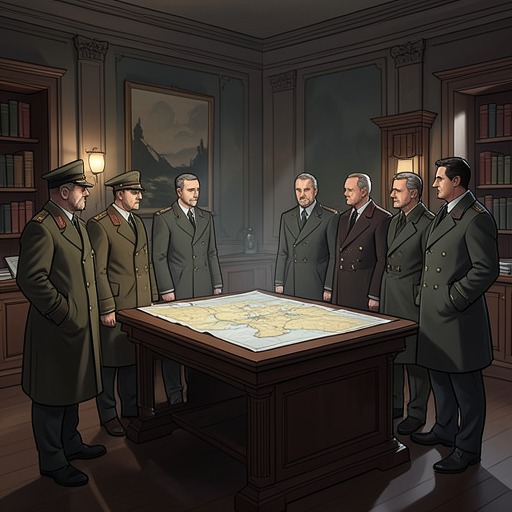
Summoned to explain the document in the presence of Raoul le Mouton de Boisdeffre and Charles-Arthur Gonse, Henry at first tried to defend himself. The surviving account presented to Picquart records Cavaignac pressing him to explain what he had done, rather than accepting his evasion. Henry initially insisted, “I have not forged papers.” When Cavaignac put the joining of the fragments directly to him, Henry hesitated, then admitted, “Well, yes, because the two things fitted admirably, I was led to this.”
The exchange distinguishes between Henry’s first denial and the narrower account he eventually gives. He says he joined the pieces because they seemed to fit, but the interrogation does not leave the act as an innocent mistake: Cavaignac’s questioning identifies a suppressed letter and a fabricated replacement. Asked whether he had received an insignificant letter in an envelope in 1896, suppressed it, and made another, Henry answers, “Yes.” He also denies making the envelopes. His admission confirms the central act while leaving that particular question unresolved in the account.
Henry gives his motive as service to his country: “I did it in the interest of my country. I was wrong.” The statement brings patriotic justification and acknowledged wrongdoing into the same answer. It does not undo the forgery or make the evidence trustworthy; it shows the rationale under which Henry says he acted. Picquart’s account presents the admission as the end of Henry’s resistance once the physical evidence has made denial untenable.
Arrest and the limits of Picquart’s account
Henry’s arrest follows directly from the confession. In the account released by the government, Henry admits in the Minister of War’s office that he was the author of the document of 1896 naming Dreyfus. Cavaignac orders his arrest immediately, and Henry is taken to Mont-Valérien. This public statement supplies Picquart with the basic fact while he is imprisoned; he learns it from Fernand Labori, who speaks to him from behind the grille. The news reaches him not as an eyewitness report but as a government announcement delivered through another person.
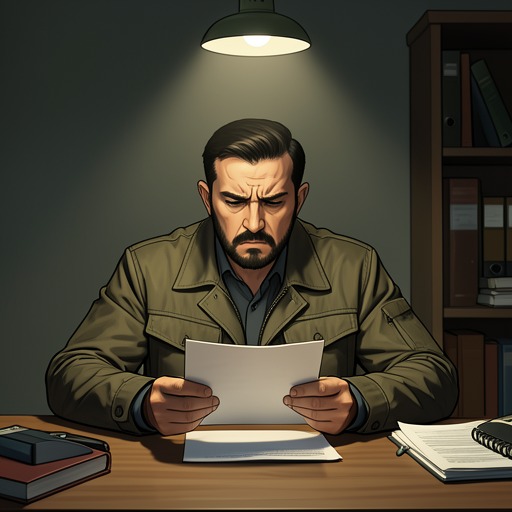
Picquart later fills out that bare announcement with the interrogation transcript, reports in the newspapers, and gossip Labori gathers on the legal circuit. He expressly cannot claim complete access to what happened. The transcript may not be accurate, he considers, though he believes Henry’s voice comes through it; the details of Henry’s death remain uncertain to him as well. The narrative thus separates an established admission and arrest from the imprisoned narrator’s reconstruction of the scene and its participants.
Within that reconstruction, Boisdeffre and Gonse are present while Henry is questioned, but Picquart can only imagine their responses. He pictures Gonse’s hand trembling as he smokes and Boisdeffre staring out of the window; he imagines Henry looking to his chiefs for help while they remain silent. These images belong to Picquart’s retrospective imagining, not to an observation he made in the room. Their narrative force lies in the contrast between Henry’s appeal to national interest and the isolation he faces when his superiors do not intervene.
The confession and arrest make the concealed document a point of institutional crisis: the officer who supplied it acknowledges that he fabricated its central section, and the Minister of War orders him detained. For Picquart, the episode is also a delayed confirmation of the doubts raised by the secret file. The evidence that had been used to sustain the accusation against Dreyfus is revealed as a construction, while the full circumstances of Henry’s motives, his superiors’ knowledge, and the interrogation remain bounded by what the imprisoned narrator can learn and infer.