Court of Cassation
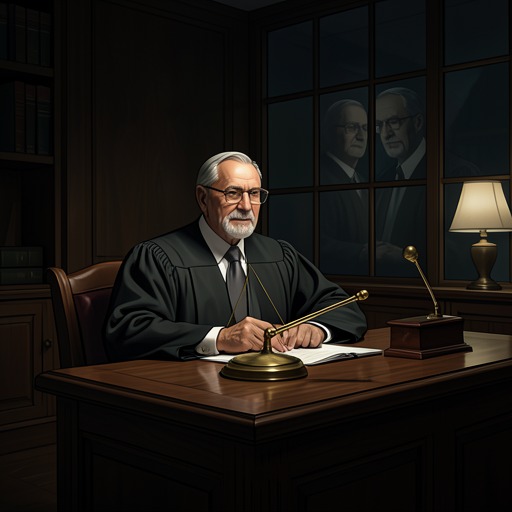
An Officer and a SpyThe Court of Cassation is the civilian appellate court whose intervention breaks the military hold over the Dreyfus case and makes a new trial possible. Its June 1899 order draws on Georges Picquart’s evidence to identify defects in the original conviction: a document had been shown to the judges without the defense being informed, and facts unavailable to the original court-martial pointed away from Alfred Dreyfus as the author of the bordereau. The ruling orders a retrial, not an immediate acquittal, but it changes the case from a closed military judgment into a matter that must be heard again.
Judicial Authority and the Limits of Military Inquiry
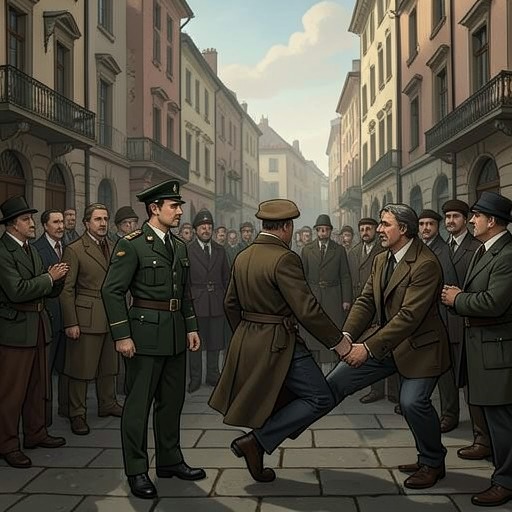
The Court’s significance emerges against a background in which national defense was repeatedly invoked to limit scrutiny. At Dreyfus’s trial, prosecutor Brisset asked for the hearing to be held in private because the evidence allegedly involved matters of national defense; defense counsel Edgar Demange objected that Dreyfus had the right to be treated like any other accused person. The passage records the dispute over access to the proceedings, not the court’s response to the request, but it establishes the secrecy surrounding the conviction that the later review would challenge.
That same narrowing of scrutiny appears in the inquiry into Picquart. When Picquart asked whether he would be questioned about the case’s central facts, including Esterhazy’s matching handwriting and falsified material in the dossier, he was told these matters fell outside the inquiry’s scope. Earlier, Charles-Arthur Gonse had told him to investigate Esterhazy if he wished, but to forget about the bordereau. Against those efforts to separate the suspected author from the evidence that had convicted Dreyfus, the Court of Cassation offered a judicial route back to the central questions.
Evidence Carried into the Review
Picquart’s claims about the secret documents reached a wider political audience after Minister of War Cavaignac quoted three of them in the Chamber of Deputies. With Fernand Labori’s help, Picquart drafted an open letter to Prime Minister Henri Brisson, arguing that the two documents dated 1894 could not be applied to Dreyfus and that the document dated 1896 showed evidence of forgery. He maintained that the Minister of War had been misled, along with those who accepted the documents’ relevance and authenticity. The letter made explicit the distinction between the documents’ official presentation and what Picquart said he could establish before a competent tribunal.
In November, Picquart again set out his evidence before twelve senior judges of the Criminal Chamber as they began considering whether the verdict against Dreyfus was safe. The eventual ruling would rest on two findings drawn from that body of evidence. First, the letter used to implicate Dreyfus did not actually refer to him and should not have been shown to the original judges without the defense being informed. Second, the Court identified facts unknown to the original court-martial that tended to show the bordereau could not have been written by Dreyfus. The ruling did not itself declare Esterhazy guilty; its force lay in showing that the original conviction could no longer stand without renewed examination.
The Retrial Order and Its Immediate Effects
On Saturday, 3 June 1899, Labori brought Picquart the news in prison: the Court of Cassation had ordered the army to bring Dreyfus back for a retrial. The legal reasons mattered as much as the result. The Court recognized that the defense had been kept uninformed when the letter was presented and that evidence unavailable at the first court-martial undermined the attribution of the bordereau to Dreyfus. It also meant that the army could not appeal the order, and that Dreyfus would return for a new court-martial rather than remain condemned under the old judgment.
The order transformed Picquart’s own position. On the Friday when Dreyfus was disembarked from Devil’s Island and began the voyage back to France aboard the Sfax, Picquart was released from prison and all charges against him were dropped in light of the Court’s ruling. His release did not erase the months of detention, but it shifted the public meaning of that detention: the army’s attempt to contain the investigator now stood beside the Court’s decision to reopen the case he had pursued.
Retrial, Not Acquittal
The Court of Cassation’s intervention reopened the legal process; it did not settle Dreyfus’s innocence by itself. That distinction remained consequential when the possibility of a pardon arose. Picquart objected that accepting one would amount to an admission of guilt, while a statement drafted by Jean Jaurès for Dreyfus declared that freedom meant nothing without honor and pledged to continue seeking the overturning of the judicial error. The contrast clarifies the Court’s role: its order secured a new hearing and brought Dreyfus back from exile, but the demand for vindication continued beyond the decision to retry him.