Desvernine
An Officer and a SpyDesvernine is a resourceful intelligence collaborator whose fieldwork helps Georges Picquart turn suspicion of Major Esterhazy into a sustained investigation. He gathers details about Esterhazy’s debts, arranges clandestine surveillance near the German Embassy, and presents photographs of Esterhazy leaving its gates. His contributions are practical and carefully staged: he supplies information, recruits access, and brings evidence back to Picquart, while the investigation itself remains directed by Picquart.
Identity and Introduction
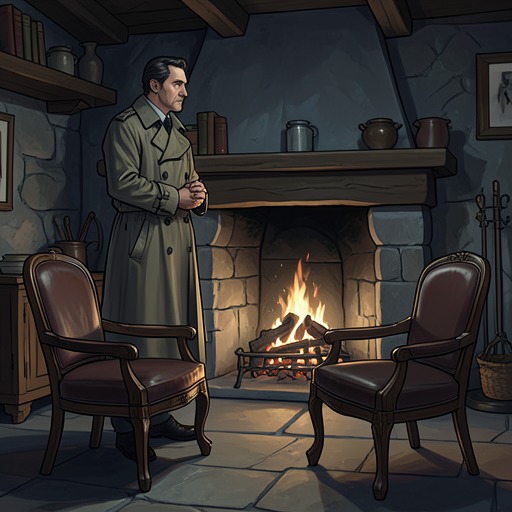
Desvernine first appears in the evidence as a discreet contact who meets Picquart at a crowded café in Gare Saint-Lazare. The setting suits a confidential exchange: the café is noisy, its entrance visible from their table, and Desvernine arrives with a small black notebook. Rather than offering a general impression of Esterhazy, he produces a list of debts spread across Rouen and Paris. He reports that gambling accounts for much of Esterhazy’s spending and identifies a place on boulevard Poissonnière where he plays.
The same account records Esterhazy’s mistress, Marguerite Pays, aged twenty-six, who was registered in Pigalle and used the nickname Four-Fingered Marguerite. Desvernine’s report thus ranges beyond formal military connections to the personal and financial circumstances that may explain Esterhazy’s vulnerability. The information establishes his method: assembling particulars from different parts of a subject’s life and delivering them to Picquart in a usable form.
Building Operation Benefactor
Desvernine becomes central to the practical arrangements for Operation Benefactor, Picquart’s code name for the surveillance effort targeting Esterhazy. Picquart recruits Germain Ducasse, gives him six hundred francs for an apartment deposit and four hundred francs in advance, and instructs him to keep the assignment secret. Desvernine then visits Ducasse under the assumed identity of Houdin to explain the work. His role connects Picquart’s plan to the person who will occupy the rented apartment and carry out its daily requirements.
The apartment is at number 101 rue de Lille, opposite the German Embassy at number 78, Hôtel de Beauharnais. The operation equips it with optical and photographic apparatus and the chemicals needed for a darkroom, delivered in sealed packing cases by workers from the technical department of the Sûreté. These preparations make the surveillance more than a watching post: they give the team a means of documenting who enters and leaves the embassy. Desvernine’s visit to Ducasse is one link in a larger arrangement that depends on secrecy, specialized equipment, and proximity to the target.
The Chimney-Sweep Access and Embassy Listening
In mid-May, Desvernine reports a way to place listening tubes inside the embassy building. A friend of his wife’s brother knows a chimney sweep who is willing to help the Republic. The man had served in the same regiment of dragoons as Desvernine when Desvernine was a sergeant; his father had been killed in 1870. Desvernine presents these connections as the route by which the plan becomes possible, rather than as a formal intelligence resource.
The sweep gains entry by announcing himself at the ground-floor apartment as a chimney cleaner while the Germans are drinking before lunch. He then makes repeated trips between the apartment and the first floor, lowering and securing the tubes under cover of the work. The Germans do not challenge his presence; one even tips him when he leaves his card. The method turns an ordinary service call into concealed access, relying on the plausibility of the worker’s visit and the occupants’ lack of suspicion.
Desvernine also sets out the limits of what the installation can provide. The tubes pick up most clearly when a speaker is near the fireplace; more generally, they convey the sense of a conversation. His report is therefore useful but qualified: the equipment offers access to speech without guaranteeing a complete or perfectly intelligible record. That distinction keeps the surveillance from becoming an all-knowing device and makes Desvernine’s assessment part of the evidence Picquart must interpret.
Photographs and Investigative Function
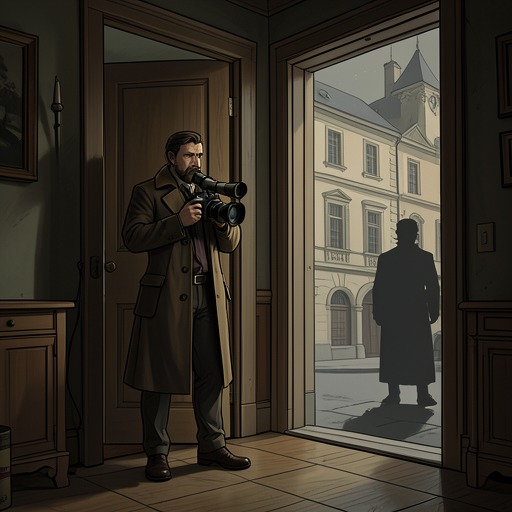
Desvernine brings Picquart an embassy photograph in an envelope, together with a magnifying glass. The image measures ten by thirteen centimetres and was taken just after three o’clock the previous afternoon. At first the moving figure leaving the gates is difficult to distinguish; even magnified, the photograph requires close examination. The shadow is sharper than the man, but the distinctive round eyes and extravagant ram’s-horn moustache allow Picquart to identify him as Esterhazy. Desvernine has supplied a visual clue that becomes persuasive through specific features, not through the image’s initial clarity.
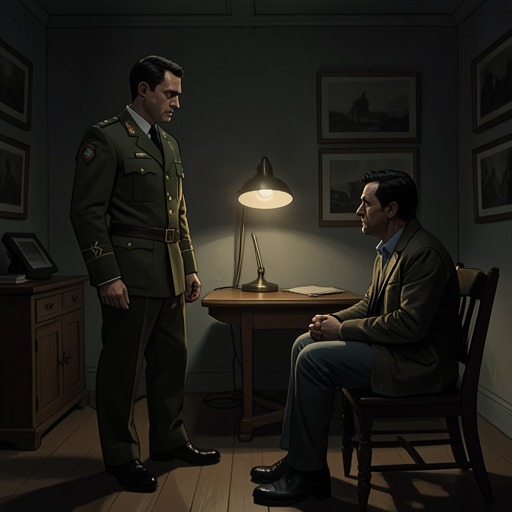
After Picquart has been away for ten days travelling with Raoul le Mouton de Boisdeffre, Desvernine arranges another evening meeting at the Gare Saint-Lazare café. This time he has a beer waiting for Picquart and produces a second photograph, placing it face down on the table before sliding it across. The image needs no magnifying glass: it is sharp enough to resemble a studio portrait. Esterhazy appears in a grey bowler as he comes through the embassy gates, his face showing what Picquart reads as a half-smile. The contrast with the earlier, blurred photograph makes the later image a stronger record of the same kind of movement.
Across these episodes, Desvernine’s importance lies in converting access into information Picquart can assess: a ledger-like account of debts, a covert means of listening, and photographic records of Esterhazy at the embassy. He does not deliver a complete solution to the case; his reports have limits, and the photographs still require identification. But his work repeatedly brings the investigation closer to a testable connection between Esterhazy and the German Embassy.