Dreyfus Correspondence Censorship Regime
An Officer and a SpyThe Dreyfus Correspondence Censorship Regime governed the few channels through which Alfred Dreyfus and Lucie Dreyfus could communicate during his imprisonment and deportation. It was more than a ban on discussing the case: it regulated visits, restricted the subjects and timing of letters, delayed delivery, and subjected correspondence to repeated copying and scrutiny for possible codes. The system kept the couple apart while turning their permitted private words into material for the state to examine.
Restrictions on Visits and Letters
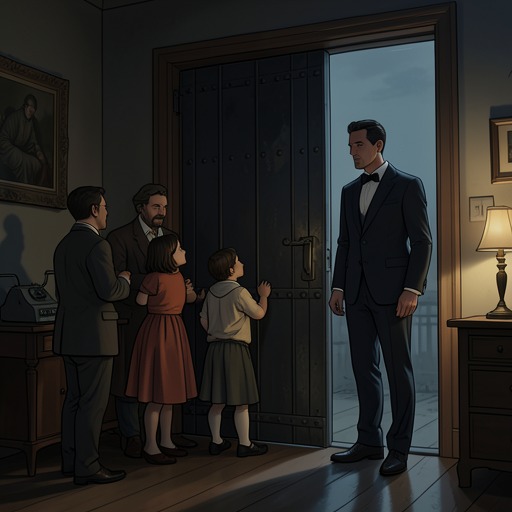
The controls were already stark when Lucie sought permission to see her husband on the Île de Ré before his departure. Her request was granted for 13 February, but only under a prescribed arrangement: Alfred Dreyfus had to stand between two guards at one end of the room, while Lucie sat at the other with a third guard beside her and the prison governor between them. They could not discuss anything connected with the trial, and physical contact was forbidden. Lucie offered to have her hands tied behind her back if that would allow her to approach him more closely. The request was refused. The rules thus controlled not only what the couple could say but also their positions in the room and whether they could touch.
The meeting produced a small exchange of letters that recorded what the restrictions had left unsaid. Alfred Dreyfus wrote that the moments together had been joyful, although he had been unable to tell Lucie everything in his heart. She described the shock of seeing him again as he was being taken farther away; he later praised her devotion and character. Hours after their brief reunion, he was aboard the warship Saint-Nazaire, bound across the Atlantic. The visit’s tight rules and the letters that followed make the separation tangible without suggesting that the correspondence could restore ordinary intimacy.
Surveillance Across the Atlantic
Once Alfred Dreyfus was at Devil’s Island, correspondence remained subject to controls on both writer and recipient. Lucie could not mention the case or related events in her letters. She had to deposit each month’s letters at the French Colonial Ministry by the 25th, where officials carefully copied and read them. Copies went to relevant officials in the French Colonial Ministry and the Ministry of War (France), and also to Étienne Bazeries, chief of the cipher bureau in the French diplomatic ministry, for examination for encoded messages. Bazeries scrutinized Alfred Dreyfus’s letters to Lucie as well. The process made intimate correspondence part of an intelligence apparatus: messages could be read for their ordinary contents and tested for concealed ones.
That scrutiny also controlled when a letter could arrive. The first batch from Lucie reached Cayenne at the end of March, but was sent back to Paris for another check. Alfred Dreyfus received no word from home until 12 June, after four months of silence. In her letter, Lucie described anxious days and frightening nights, and her resolve to raise their children according to his wishes. Its arrival mattered not simply because it conveyed affection, but because administrative review had held even this permitted reassurance back for months.
Alfred Dreyfus’s own surviving letters describe the conditions in which he wrote: an unheated cell on an exposed upper deck during the voyage, armed warders watching him day and night, and guards on the island forbidden to speak to him. He wondered whether his letters reached Lucie and described his isolation as a kind of living burial. These details show the regime operating alongside physical and social isolation. Letters carried news and attachment across distance, but censorship restricted their subject matter, delayed their passage, and left their writers uncertain whether the words had reached their destination.
Surveillance as an Intelligence Method
When Georges Picquart handled the Dreyfus correspondence file, he remarked that the degree of censorship was extraordinary and questioned whether such drastic restrictions were necessary. Major Henry suggested that Picquart might have a more tender heart than his colleagues. Picquart rejected that framing and made a strategic argument instead: if Lucie were allowed to tell her husband what she was doing, the authorities would not need to discover it independently; if Alfred Dreyfus could say more about his case, he might make a mistake and reveal something unknown to them. Picquart’s answer did not propose ending surveillance. It treated communication as a possible source of intelligence and challenged a system whose prohibitions might prevent the authorities from learning anything useful.
That exchange exposes the regime’s double purpose. It guarded against information passing out of official control, including the possibility of coded messages, while also imagining private correspondence as a channel from which information could be extracted. The system’s reach therefore extended beyond censorship in the narrow sense: it converted letters into monitored evidence while limiting the writers’ ability to speak freely to one another. Picquart’s reasoning marks a contrast between suppressing communication and trying to make surveillance productive, not between surveillance and privacy.
The Private File and the Public Case
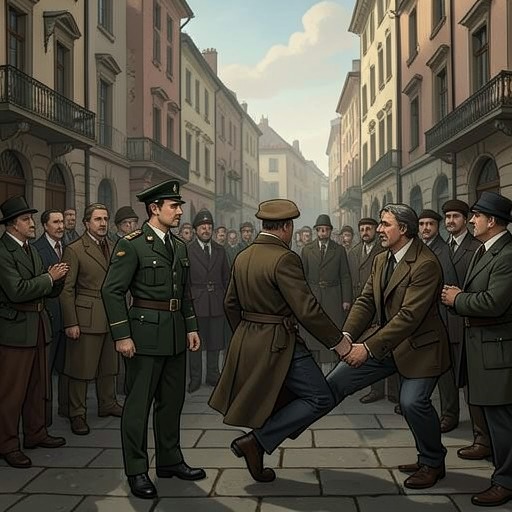
The correspondence appears within a wider world of controlled records and restricted knowledge. At Alfred Dreyfus’s military degradation, the condemned man was publicly displayed before soldiers and spectators; the later letters, by contrast, were privately written but copied and read by officials. Public ceremony made the army’s judgment visible, while censorship governed what the separated couple could communicate beyond official view. The two forms of control were different, but both shaped how the case and its central figure could be seen.
The later investigation into the secret file offers another relevant contrast. When Georges Picquart examined its contents, he found that it contained circumstance and insinuation rather than a document or witness directly identifying Alfred Dreyfus as a traitor. He also secretly searched the intelligence archives and found a report identifying the agent called D as Jacques Dubois, not Dreyfus. These discoveries do not establish that correspondence censorship caused the wrongful case against Dreyfus; they show the broader stakes of a system in which officials controlled access to information and its interpretation. The correspondence regime’s distinctive cost was that even a husband’s and wife’s letters were not simply theirs: their permitted words could be delayed, recopied, and inspected before either could know what the other had said.