Esterhazy's transfer application letters
An Officer and a SpyEsterhazy's transfer application letters turn an ordinary personnel request into evidence against the conviction of Alfred Dreyfus. Submitted to the War Ministry in August, the two letters asked for a transfer to the General Staff; their handwriting led Picquart from suspicion to a direct comparison with the covering note that had helped convict Dreyfus. When an expert declared the writing on the letters and the note identical, a central prop in the case against Dreyfus was put in doubt by the very kind of evidence that had supported it.
Contents and Submission
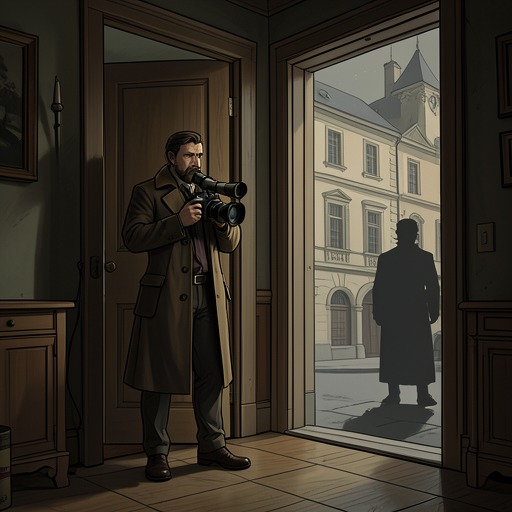
On the 27th, Picquart received a message from Captain Calmon-Maison, an orderly serving Billot, inviting him to see a document the minister thought relevant to his inquiry. In the ministerial secretariat, Calmon-Maison produced a handwritten letter from Major Esterhazy, dated in Paris two days earlier and addressed to him. It requested a transfer to the General Staff. The setting mattered: the request had arrived through the minister’s own office, and Billot permitted Picquart to use the letters in his inquiry.
Calmon-Maison then disclosed that Captain Thévenet had received a similar appeal. The second letter asked for an immediate transfer from the headquarters of the 74th Infantry Regiment in Rouen and presented its author as qualified for General Staff work. It cited service in the Foreign Legion and experience as a German translator in an intelligence department, and asked that the request be passed to the appropriate authority. The nearly identical appeals thus gave Picquart two examples of Esterhazy’s writing, not merely one.
The ministry had sent a holding response saying that the request was under consideration by the minister. That administrative pause left the letters available for Picquart’s investigation. He returned to his office with both documents, where the official request for a posting took on a different significance from the one its writer had presumably intended it to have.
From Personnel Request to Suspicion
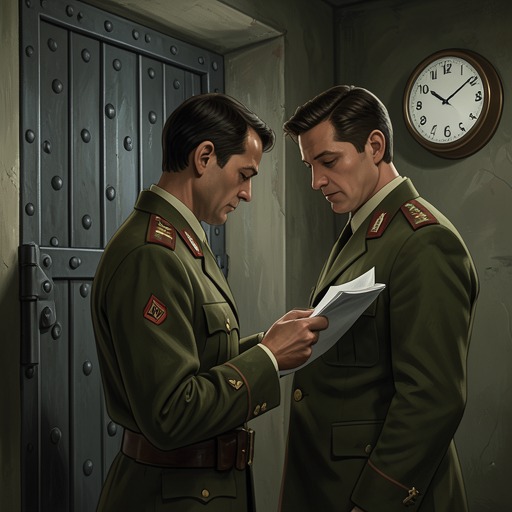
Picquart first noticed that the writing was neat, regular, and well spaced. Because he had spent many hours studying Alfred Dreyfus’s correspondence, he initially wondered whether that familiarity explained the resemblance. Then he remembered the covering note retrieved from Schwartzkoppen’s waste-paper basket, the document used to convict Dreyfus of treason. The letters’ importance came not from what they requested alone, but from the possibility that their handwriting connected Esterhazy to the document attributed to Dreyfus.
A photograph of a draft Field Artillery Firing Manual, dated 14 March 1894, supplied a further point of comparison. Its final paragraph concerned restrictions on officers keeping the manual and offered either to collect it after the reader had taken what interested him or to copy it verbatim. The leading handwriting expert in Paris had sworn that the draft was written by Dreyfus. Picquart placed its photograph between the two Esterhazy letters and examined the writing more closely. He concluded that the handwriting was identical.
That recognition was consequential, but Picquart did not treat it as permission to rush straight to the minister with an accusation. Recalling his earlier caution over the petit bleu, he followed his four principles: proceed one step at a time, remain dispassionate, avoid a premature judgment, and confide in nobody until hard evidence existed. The letters supplied a strong lead; establishing their meaning required an examination that could withstand scrutiny.
Expert Comparison
Picquart later brought photographs of the two letters to a handwriting expert and asked for an assessment. The expert did not offer an instant judgment. Instead, he retrieved a thick green folder bound with black ribbon, containing a photograph of the covering note and other papers and charts. He placed the note and the two letters in a row, overlaid each with identical squared transparent paper, and examined them under a lamp with a magnifying glass, making rapid notes as he worked.
His conclusion was emphatic: the three documents were identical in handwriting. The expert agreed to sign an affidavit to that effect. This result gave Picquart something stronger than his own visual recognition: a finding by the expert whose earlier opinion had attributed the handwriting of the artillery-manual draft to Dreyfus. The comparison did not merely add another suspicion to the investigation; it brought the attribution of the incriminating writing into direct conflict with the evidence connecting Esterhazy to the same hand.
Evidentiary Significance
The letters were not themselves a confession or proof of what Esterhazy intended to do if transferred. Picquart interpreted the request as an attempt to gain access to secret material that could be sold, but the application’s stated content was a request for General Staff service supported by claims about military and language experience. The distinction between what the document said and what Picquart inferred from it is essential: its most demonstrable evidentiary force lay in its handwriting and in the comparisons that followed.
Their significance therefore exceeded the fate of Esterhazy’s posting request. Two routine letters, preserved within the ministry’s administrative process, offered specimens of writing that could be tested against the document used against Dreyfus. The comparison reversed the direction of the handwriting evidence: instead of making the case against Dreyfus more secure, the match pointed toward Esterhazy and weakened the conviction’s central attribution. In the investigation, these applications became a bridge between a bureaucratic request and the possibility that the wrong man had been convicted.