Felix Gribelin
An Officer and a SpyFelix Gribelin is the French General Staff intelligence section’s elusive archivist, a minor official whose keys and command of its files place him at the threshold between evidence and secrecy. In the novel’s account, he is both custodian of the archive and a discreet presence within the investigation that exposes the case against Alfred Dreyfus as unsupported by the secret dossier.
Identity and Position
Gribelin works among locked cabinets in the intelligence section’s archive, apart from the officers who conduct its investigations. At Alfred Dreyfus’s public degradation ceremony, he had watched through binoculars; later, Georges Picquart finds him upstairs in a large room filled with cabinets, where he instinctively conceals what he is reading when Picquart appears. The author’s note describes the book as a novelistic retelling of real events: its characters are not wholly fictional, but personal details have been dramatized or invented. Gribelin belongs to this cast of historical figures recast within that acknowledged imaginative frame.
Discretion and Administrative Service
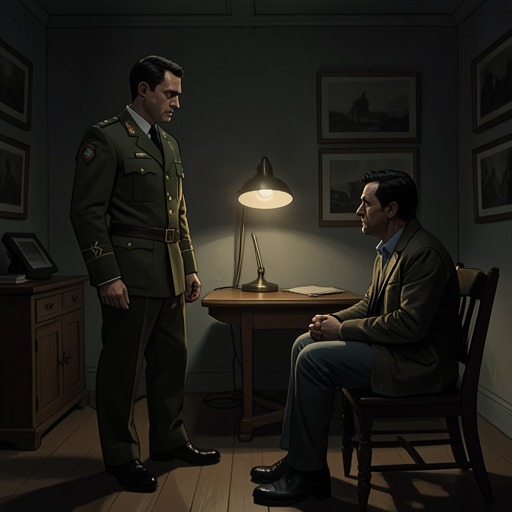
When Georges Picquart asks for a list of the agents recently used by the section, together with their addresses and service histories, Gribelin returns half an hour later with a dozen names. Asked which he recommends, he declines to distinguish among them, offering no reason and asking none about Picquart’s purpose. Picquart chooses Jean-Alfred Desvernine, but Gribelin’s refusal to probe makes the exchange possible: his service consists not only in maintaining records but in keeping his own knowledge contained.
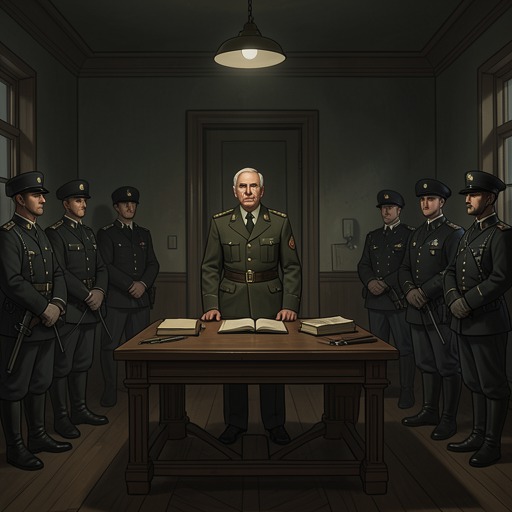
The novel presents that discretion through a deliberately spectral portrait. Gribelin is described as an almost lifeless bureaucrat, thin and dressed in black, usually secluded in the upstairs archive; when he does appear, he moves close to the wall, with the keys at his waist the rare sound that announces him. The image makes him seem less an investigator than an extension of the files he guards: present throughout the intelligence section, yet difficult to read and unwilling to intrude upon the work of others.
The Archive and the Case Against Dreyfus
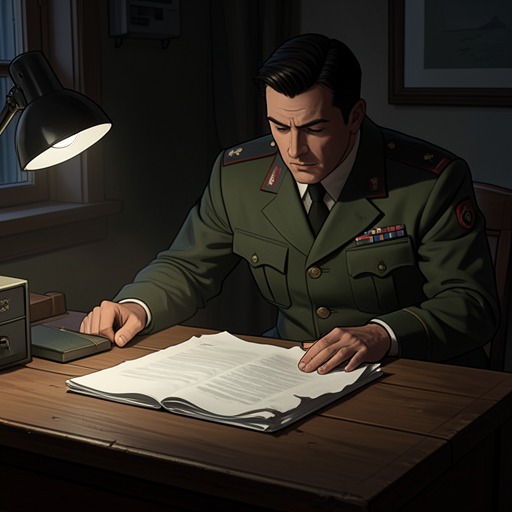
Gribelin’s files become more consequential than his silence. When Picquart opens the envelope containing the secret dossier used against Alfred Dreyfus, it holds five documents, but none directly identifies Dreyfus as a traitor. The case rests on circumstance and insinuation, with its closest link a reference to an initial, D. Gribelin is also named among those who knew about the secret file, placing the archivist within the circle that handled knowledge withheld from the defense.
Later, Picquart uses Gribelin’s keys to search the locked cabinets for material concerning Agent Auguste. Following a cross-reference, he finds an April 1894 report by Henry that identifies D not as Dreyfus but as Jacques Dubois, a printer with no access to classified material whose plans were publicly available. The discovery turns the archive’s arrangement against the accusation it had helped preserve: a trail through the files reveals that the identifying letter at the heart of the suspicion points elsewhere. Picquart returns the papers to their exact places and puts Gribelin’s keys back in his desk, leaving the archivist absent from the search but making his custody of the archive central to the revelation.
Narrative Role and Historical Frame
The author’s note distinguishes the historical people and events from the novel’s invented documentary frame. Robert Harris states that Georges Picquart never wrote a secret account of the Dreyfus affair and never placed one in a Geneva bank vault to remain sealed for a century after his death. Gribelin’s presence therefore belongs to a novelistic reconstruction in which real figures and broadly historical events coexist with dramatized or invented personal details; the portrait should not be mistaken for independent historical testimony about the archivist.
Within that frame, Gribelin is seen chiefly through Georges Picquart’s encounters with the files and the people who control access to them. He is not given an independent account of the case: his significance emerges through the archive he tends, the keys he keeps, and the information Picquart can recover there. That restricted perspective makes him part of the book’s larger distinction between possessing records and understanding what they establish.