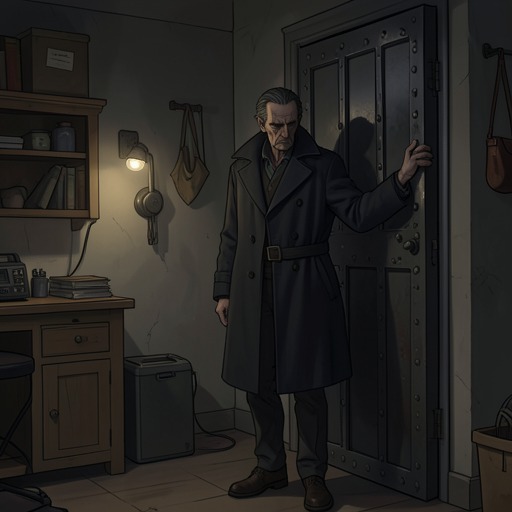
Fernand Labori
An Officer and a SpyFernand Labori is the lawyer whose work connects the defense of Émile Zola and Georges Picquart with the effort to overturn the case against Alfred Dreyfus. At the Rennes trial, brought in by Mathieu Dreyfus to strengthen the attack on the army, he confronts the prosecution’s secret-file claims directly. A shooting interrupts that work but does not end it: Labori returns to court while still recovering, and continues to press a combative strategy even as it strains his partnership with the veteran defense lawyer Edgar Demange.
Identity and Role
Labori is identified as attorney to Émile Zola, Georges Picquart, and Alfred Dreyfus. His involvement in the Dreyfus proceedings at Rennes comes after Dreyfus’s return to France: among the four outsiders permitted to see the prisoner, Labori is one of the two lawyers, alongside Edgar Demange. Mathieu Dreyfus has brought him in to sharpen the attack on the army, while Demange, who defended Alfred Dreyfus at the first court-martial, represents continuity with the earlier defense.
The contrast between the two lawyers becomes important. Labori is portrayed as an exceptionally aggressive cross-examiner, prepared to challenge the military account in public and to pursue witnesses on the secret dossier. His legal role is not confined to the courtroom, either. He also helps Georges Picquart prepare a public letter to Henri Brisson, giving Picquart a route to state what he believes about the documents after the Minister of War has discussed them in the Chamber of Deputies.
The Rennes Trial and the Secret Dossier
The trial’s proceedings place the dispute over secret evidence at the center of Labori’s work. When the prosecutor asks for a private hearing on the grounds that the evidence concerns national defense, Edgar Demange objects that Alfred Dreyfus should receive the same treatment as any other accused person. The request nevertheless establishes the conflict that Labori will later pursue: military secrecy is invoked to control which evidence can be examined openly and challenged by the defense.
The most immediate opening comes during Auguste Mercier’s testimony. Mercier speaks for three hours, producing documents from a black leather case, including the so-called lowlife D letter and fabricated Guénée reports. He continues to present the letter as evidence against Dreyfus, while leaving out the name Val Carlos from the account of an alleged spy in the intelligence department. Labori recognizes that introducing secret-dossier material in open court gives the defense an opportunity to question it. The prosecution’s attempt to display its case thus creates a vulnerability: documents treated as authoritative can now be tested before the court.
After Mercier’s testimony is regarded as a serious failure by his own side, Labori prepares to cross-examine him. On the Sunday before the questioning, Georges Picquart visits Labori at his lodgings and supplies background on Mercier’s role: he had confined the spy-hunt to the General Staff, ordered Alfred Dreyfus’s solitary confinement, and ordered the secret dossier compiled. Labori takes notes and identifies these three matters as lines of challenge. Picquart also breaks the remaining bounds of his oath of confidentiality, reasoning that Mercier has himself discussed national-security matters in court. Their preparation joins a lawyer’s adversarial method to an insider’s knowledge of how the case was constructed.
The Shooting and Return to Court
On the way to court, Labori is shot by a man carrying a revolver. Georges Picquart sees the attack and runs after the gunman, while Edmond remains with the injured lawyer. Picquart does not catch the assailant. The attack removes Labori from the immediate proceedings at a moment when his cross-examination is expected to challenge Mercier, and makes his continued participation uncertain.
Labori’s condition is serious, but he survives. While he is being helped after the attack, he is reported to have reassured Edgar Demange that Alfred Dreyfus remains safe. Labori’s recovery continues with the bullet still lodged in the muscles of his shoulder. In the middle of the following week he returns to court accompanied by Marguerite Labori, where the audience greets him with applause. He walks to a large armchair, his left arm stiff and difficult to move; Alfred Dreyfus stands and warmly shakes his uninjured hand.
The return demonstrates determination, but the narrative does not present it as an uncomplicated triumph. Georges Picquart doubts that Labori is fit to resume his duties: he remains in pain, sleeps poorly, and appears unsettled when strangers approach or footsteps hurry behind him. Labori’s courtroom presence is restored before his recovery is complete. The injury therefore becomes both a practical disruption to the defense and a continuing strain that he refuses to let dictate whether he takes part.
Strategy and Conflict
Labori’s forceful approach also divides the defense. Georges Picquart agrees with his view that the army will not respond to diplomacy and must be met with pressure. But Labori goes further by telegraphing the Emperor of Germany and the King of Italy, without first consulting Edgar Demange, to request that Maximilian von Schwartzkoppen and Alessandro Panizzardi come to Rennes to testify. The German Chancellor, Count von Bülow, rejects the request as impossible. The episode shows Labori willing to reach beyond the courtroom and make an international appeal, while also exposing the costs of acting without agreement from his co-counsel.
The disagreement deepens when Labori refuses to deliver a closing speech because he does not believe in the defense strategy Demange has chosen. Mathieu Dreyfus defends Demange’s standing, pointing out that he has loyally served the family for five years and has earned the right to direct their approach. Labori’s conviction that pressure is necessary does not erase that history or the practical authority it gives Demange. Their conflict is not simply a difference in temperament: it concerns who should set the course of a defense involving both an established lawyer’s long service and a newer counsel’s demand for a more confrontational response.
Labori’s work with Georges Picquart extends that same pressure beyond the trial. With Labori’s help, Picquart drafts an open letter to Henri Brisson rather than addressing the Minister of War. The letter states Picquart’s position that the two documents dated 1894 cannot be applied to Dreyfus and that the document dated 1896 shows signs of forgery. This public appeal makes Labori part of Picquart’s effort to contest the official account through a political channel as well as through cross-examination.
Narrative Significance
Labori’s importance lies in the way he turns legal representation into an active challenge to the institutions defending the conviction. He presses the secret dossier into open scrutiny, helps Picquart prepare a public accusation about the evidence, and treats the case as something that must be fought rather than delicately managed. The shooting tests whether that role can continue; his return shows that the interruption has not displaced him from the defense.
At the same time, his disagreements with Edgar Demange reveal that opposition to the army does not produce a single, unified strategy. Labori’s aggressive methods give the defense new possibilities, but his unilateral appeal to foreign rulers and his refusal to deliver a closing speech heighten tensions among those trying to defend Alfred Dreyfus. His arc therefore combines persistence with conflict: he remains a formidable advocate, yet the same insistence on force that shapes his public challenge also places limits on cooperation within the defense.