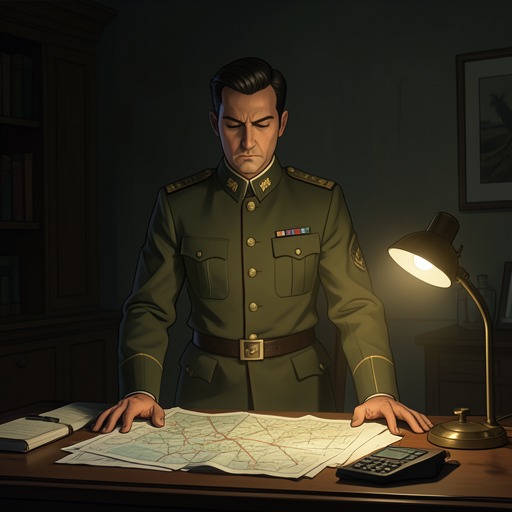
Flavian-Uband Savignaud
An Officer and a SpyFlavian-Uband Savignaud is a young orderly in Sousse whose duties bring him close to Georges Picquart while Picquart is serving with the 4th Tunisian Rifles. Picquart suspects that Savignaud has been sent to spy on him, but the orderly’s bungling turns surveillance into an awkward daily routine. His eventual arrest removes that familiar presence and leaves Picquart with a more capable, less visible replacement.
Identity and Introduction
Savignaud is a musician in the regimental band as well as an orderly, described as a pretty boy with a rough, street-urchin manner. He arrives in Sousse a few days after Picquart. The colonel is already isolated from his brother officers, who keep their distance while treating his rank with deference; against this background, the young orderly’s regular appearance with the afternoon post becomes a conspicuous feature of Picquart’s days.
Suspected Surveillance
Picquart is fairly sure that the Statistical Section dispatched Savignaud to watch him, acting on orders from Hubert-Joseph Henry or Charles-Arthur Gonse. The suspicion is specifically Picquart’s: the narrative does not independently confirm who sent the orderly. What Picquart regards as especially telling is the clumsiness of the work. He believes someone has searched his belongings without returning them to their original arrangement, and that his mail is being intercepted. On two occasions, he says, he has followed Savignaud and watched him hand the letters directly to a post-office official rather than put them in the usual box.
At the Military Club, Savignaud stops beside Picquart’s chair, salutes, and offers the day’s mail, asking whether the colonel has anything to send. Picquart says not yet. Savignaud then asks whether there is anything else he can do, in a remark Picquart reads as suggestive. The exchange gives the suspected surveillance an uncomfortable personal edge, but Picquart does not accept the overture: when Savignaud asks whether he will be back for dinner, Picquart tells him to go away. Savignaud hesitates, salutes, and leaves.
Departure and Disappearance
Picquart expects that Savignaud has gone to telegraph Paris with news of his planned trip to Tunis. An hour later, Picquart waits for the train in Sousse’s central square, checking over his shoulder for anyone following him. The account does not confirm whether Savignaud actually reports his departure; it presents that possibility as Picquart’s suspicion, consistent with the orderly’s perceived role.
By Friday, 29 October 1897, Savignaud is no longer in Sousse. Picquart learns that he has been arrested for immoral conduct with a local olive-oil trader, sentenced to nine days’ detention, and sent away to an unknown destination. The abrupt explanation replaces the unresolved question of surveillance with a mundane disciplinary fate, without clarifying whether Picquart’s suspicions about Savignaud’s assignment were correct.
The Replacement and Picquart’s Regard
Savignaud’s replacement, Jemel, is an Arab orderly whom Picquart also assumes must be a spy. Unlike Savignaud, however, Jemel is too adept for Picquart to catch him out. The change produces an unexpected reversal: although Picquart had resented Savignaud’s incompetence, he finds himself missing the young man’s familiar, clumsy ways. Savignaud’s significance lies less in any confirmed intelligence-gathering than in this contrast. Under suspicion and isolation, Picquart comes to recognize the awkward, detectable watcher as a more familiar presence than the efficient one he cannot see through.