French Ministry of the Colonies
An Officer and a SpyThe French Ministry of the Colonies served as a central checkpoint for correspondence between Alfred Dreyfus and Lucie Dreyfus during his imprisonment and exile. It retained intercepted originals, copied letters that passed inspection, and subjected the couple’s communications to further scrutiny by military and cipher officials. The resulting archive preserved traces of their separation even as the ministry’s controls obstructed their ability to communicate freely.
Custody and Copying of Correspondence
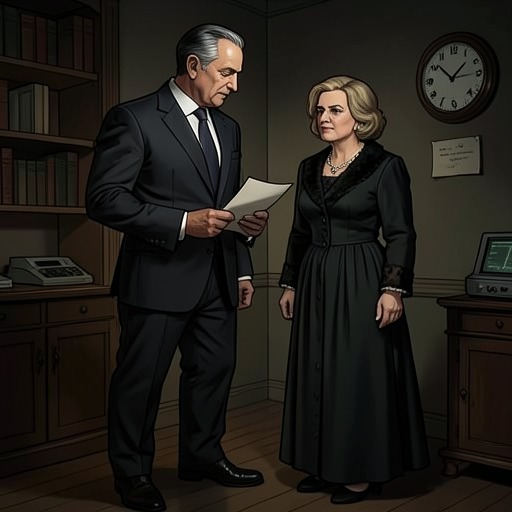
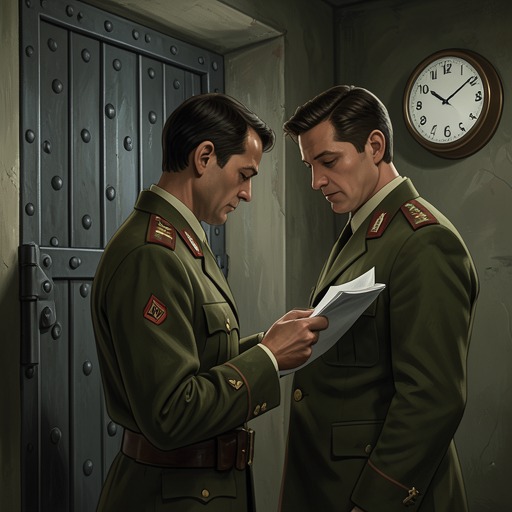
A file of Alfred Dreyfus’s correspondence reached Hubert-Joseph Henry tied with black ribbon and bearing the official seal of the French Ministry of the Colonies. It contained both original letters that a censor had withheld and copies of correspondence that had been allowed through. After reading from the file, Georges Picquart requested that he receive copies of the Dreyfus family’s correspondence as soon as it arrived at the ministry, extending military intelligence oversight into the ministry’s handling of private mail.
The ministry also retained letters written by Alfred Dreyfus during his transportation to Devil’s Island. Censors kept his descriptions of the voyage, including his confinement aboard the Saint-Nazaire and his arrival in the islands, rather than allowing those pages to reach Lucie Dreyfus. The letters thus entered the ministry’s records as evidence of his experience, while remaining unavailable to the person to whom they were addressed.
Restrictions and Delayed Delivery
Lucie Dreyfus’s letters were subject to explicit conditions: she could not mention the case or related events, and she had to deposit each month’s correspondence at the ministry by the 25th. Officials there and at the Ministry of War carefully copied and read the letters. Major Étienne Bazeries, chief of the cipher bureau in the Foreign Ministry, also examined Lucie’s letters for possible encoded messages; he scrutinized Alfred Dreyfus’s letters to her as well.
The process imposed substantial delays. The first batch of Lucie Dreyfus’s letters reached Cayenne at the end of March but was sent back to Paris for another check. Alfred Dreyfus received no word from home for four months; her letter finally reached him on 12 June. Its message described her grief and anxious nights, and her determination to raise their children according to his wishes. The delay was not incidental to the correspondence: it shaped what the couple could know of each other’s lives and when they could know it.
The Ministry as an Archival Gatekeeper
The ministry’s role combined censorship with record-making. A letter might be copied because it had passed inspection, preserved in its original form because it had been withheld, or subjected to renewed review before delivery. The files therefore reflected not simply what Alfred and Lucie Dreyfus wrote, but also what officials chose to retain, duplicate, inspect, and release. Their private appeals survive in a bureaucratic collection whose custody determined whether they could function as communication at all.
That tension gives the ministry’s archival role its significance in the account. The preserved letters document affection and family concern across enforced separation, but the route they took through official hands repeatedly interrupted that connection. The archive made the correspondence legible to state officials while leaving the correspondents themselves waiting for news.