French War Ministry
An Officer and a SpyThe French War Ministry is the institutional center of the book’s account of the Dreyfus affair: a hierarchy that directs military administration and intelligence, controls access to secret evidence, and ultimately orders Georges Picquart to stop investigating. Its offices are not merely a backdrop. Within them, contradictory information is received, filed, selectively disclosed, and subordinated to orders from above; the same command structure that gives Picquart investigative authority later limits what he may do with what he learns.
Structure and Setting
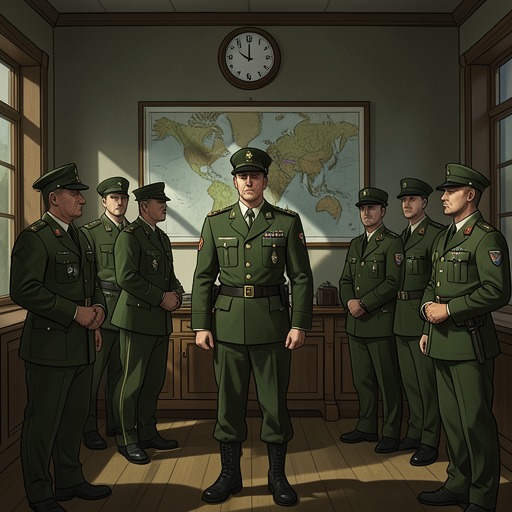
Since Napoleon’s time, the ministry has been divided into four departments: the First for administration, the Second for intelligence, the Third for operations and training, and the Fourth for transport. Picquart works in the Third Department, while the Second Department oversees military intelligence. This division supplies the institutional map for the unfolding inquiry: Picquart initially approaches the Dreyfus case from outside the intelligence department, then gains access to its responsibilities and records.
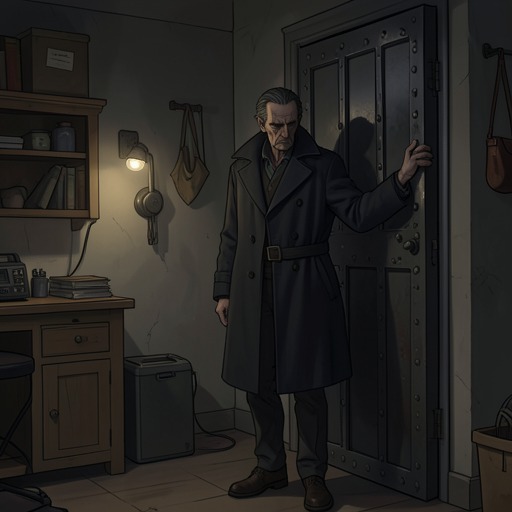
The minister’s official residence at Hôtel de Brienne embodies the ministry’s formal authority. Picquart’s first visit takes him up a curving marble staircase, past silver armour and a grand painting of Napoleon, to an office shared by senior authority in person: Chief of the General Staff Raoul le Mouton de Boisdeffre and Minister of War Auguste Mercier. The richly panelled office, its balcony over a snow-covered lawn, contrasts with Picquart’s own cramped workplace in the ministry. As deputy in the Third Department, he has a desk, filing cabinet, two chairs, and a window facing a dreary courtyard; on a winter morning the heating has failed, and he works in his overcoat. The contrast makes rank and access visible in the building itself.
The residence recurs as Picquart’s fortunes change. Later, carrying the Benefactor file, he crosses the lawn in summer and climbs the same stairs to brief Jean-Baptiste Billot, the new Minister of War. What once awed him has become a place of work. The repeated passage through the building traces his growing institutional authority, but it also brings him repeatedly before the officials whose approval he needs and whose decisions can constrain him.
Appointment and Institutional Responsibilities
After Picquart has spent several months handling intelligence-related matters, Charles-Arthur Gonse tells him that Mercier and Boisdeffre have been impressed by his conduct and intend to recommend him for promotion. They are considering him for command of the Statistical Section, whose existing commander, Jean Sandherr, is gravely ill and has held the post for ten years. Picquart does not welcome the prospect: he considers espionage grubby work and questions why the post should change hands. The appointment nonetheless places him at the heart of the ministry’s intelligence apparatus and gives him responsibility for material that bears directly on the Dreyfus case.
Mercier also uses the ministry’s authority to obtain an account of the military trial from inside the courtroom without appearing there himself. He instructs Picquart to attend each day on his behalf and report the substance of what happens, including how the prosecution presents its case and how the judges and witnesses conduct themselves. The assignment makes Picquart the minister’s observer, not simply a clerk passing along testimony. Mercier wants an interpretive report from an officer whose judgment he values, and Picquart welcomes the personal confidence and proximity to power that the task represents.
The ministry’s decision-making is also revealed in the preparation for Alfred Dreyfus’s arrest. Auguste Mercier has a warrant ready for signature and asks about the handwriting examination. The first expert, from the Banque de France, concluded that the bordereau was not written by Dreyfus; Alphonse Bertillon, consulted by Armand du Paty de Clam, argues that it was and that differences in the writing were deliberate. Mercier acknowledges the disagreement, but the process proceeds toward arrest. The scene shows how an official decision can absorb incompatible expert conclusions without resolving their conflict.
Files, Access, and the Investigation
The ministry’s control of records becomes crucial when Picquart examines the five documents in the secret dossier. He finds circumstance and insinuation rather than direct evidence: no document or witness explicitly identifies Dreyfus as a traitor. The dossier’s allegations about access to fortification plans do not fit the dates or the known procedures of the First Department. Picquart concludes that the supposedly incriminating material cannot withstand competent cross-examination. The significance of the file lies not only in what it contains, but in the fact that it was used in a case where the accused could not test it openly.
When Picquart investigates Esterhazy, he initially withholds the name from Gonse and seeks support from higher authorities before handing over the case. In a later briefing he shows Gonse the petit bleu, surveillance photographs, and the secret dossier, explaining that the file does not establish Dreyfus’s guilt. Gonse’s response is to tell him to forget the bordereau: Picquart may investigate Esterhazy, but must not connect that inquiry to the document used to convict Dreyfus. The instruction divides the available evidence into politically manageable compartments, allowing inquiry to continue only so long as it does not reopen the original case.
The ministry’s information network is porous despite its reliance on secrecy. After learning that the secret file has reached Mathieu Dreyfus, Picquart lists those who have handled or learned of it: senior officers, intelligence staff, the military judges, and others, reaching twenty named people before accounting for further circulation. In his reckoning, photography, telegraphy, railways, and newspapers make a closed circle of knowledge untenable. Yet the leak does not automatically produce correction. Picquart fears that it will instead make Gonse and Boisdeffre more anxious to restrict the investigation.
Command, Suppression, and Transfer of Records
Gonse eventually tells Picquart that the original Dreyfus inquiry was not handled professionally, citing Sandherr’s illness and the shortcomings of du Paty de Clam. He nevertheless argues that the ministry cannot reopen the case because doing so would revive public agitation and tear the country apart. The appeal is framed as practical restraint, but it asks Picquart to accept that the institution’s past decision must stand despite the newly exposed weaknesses in its evidence.
The appeal becomes a formal order. Gonse stands and invokes the chain of command: orders pass from the Minister of War to the Chief of the General Staff, then to him, and from him to Picquart. He directs Picquart not to investigate anything connected with the Dreyfus case and not to disclose information to unauthorized people. Picquart leaves without replying. The exchange makes explicit the ministry’s power over both investigation and speech: Picquart’s access and expertise do not exempt him from a direct order to stop.
Control over intelligence records changes hands as well. When Gonse retrieves the file marked D, he announces that, during Picquart’s impending departure on an inspection tour, Hubert-Joseph Henry will henceforth bring all Agent Auguste material directly to him. Picquart objects that this is their most important source, but Gonse treats the transfer as an administrative matter appropriate to his position as head of intelligence. The reassignment removes a key body of material from Picquart’s immediate control precisely as his inquiry is being curtailed.
Narrative Role and Historical Frame
In the narrative, the French War Ministry operates simultaneously as workplace, chain of command, and archive. Its departmental divisions enable specialized intelligence work; its senior officers can commission an investigation, decide which evidence should be pursued, and redirect the files on which that investigation depends. The ministry’s rooms and procedures give institutional force to a recurring conflict: evidence may be available inside the system while the authority to interpret, disclose, or act on it remains concentrated above the investigator.
The author’s note distinguishes this novelistic framing from the historical record. The book presents the Dreyfus affair as a true story retold with novelistic techniques, while acknowledging that it simplifies events and invents personal details. In particular, Georges Picquart never wrote the secret account that the narrative imagines him placing in a Geneva bank vault. That caveat matters to the ministry’s literary role: its offices and bureaucratic mechanisms shape the story’s presentation, but the device of Picquart’s hidden account is acknowledged as fiction rather than a historical ministry record.