General André
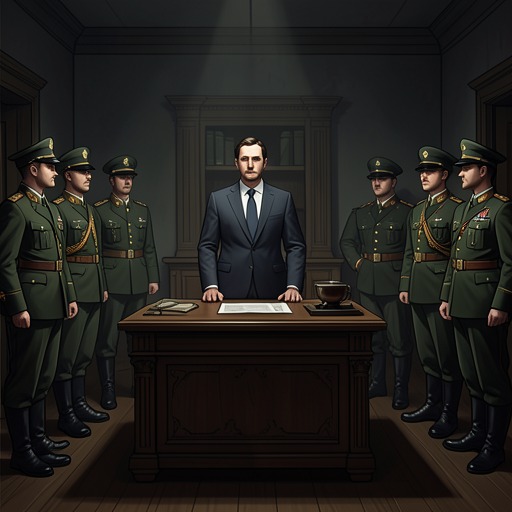
An Officer and a SpyGeneral André was a general serving as Minister of War in 1903 when the Dreyfus affair entered a new phase of official review. After years in which military authority had resisted reopening the case, he agreed to examine the evidence again. His importance in the narrative lies in this institutional decision: it gave renewed scrutiny a government foothold and helped move the affair toward judicial reconsideration.
Identity and Position
The book identifies André as the new Minister of War and as a general, but supplies no personal history or account of his earlier conduct in the affair. His significance is presented through what he did in office rather than through private motives or a developed personal portrait.
The 1903 Inquiry
In 1903, Jean Jaurès, leader of the socialists, delivered a forensic speech in the Chamber of Deputies that lasted a day and a half and set out the affair in full. André agreed to look again at all the evidence. The sequence marks a shift from public argument to an official process of reassessment: the speech made the case before the legislature, and the Minister of War’s decision authorized a fresh inquiry.
Consequences and Significance
The result of André’s inquiry prompted the Criminal Chamber of the Court of Cassation to take up the case and conclude that it should be reviewed by the French Supreme Court of Appeal. That next stage occupied 1904; political turmoil over the separation of Church and State then delayed progress through 1905. On 12 July 1906, the court quashed the Rennes verdict and fully exonerated Alfred Dreyfus. André is not credited with deciding the case or delivering that final judgment. His part was more specific: by agreeing to revisit the evidence, he helped carry the affair from a parliamentary challenge into the chain of official review that made the final exoneration possible.