George-Louis Clemenceau
An Officer and a SpyGeorge-Louis Clemenceau appears as a political and journalistic ally of Georges Picquart at two moments when the Dreyfus affair moves into public view. As editor of L’Aurore and a left-wing politician, he helps make Picquart’s case visible beyond military circles: first by joining the men who welcome the colonel at a private gathering, then by bringing him news of a dramatic parliamentary accusation against Alfred Dreyfus. The evidence distinguishes Clemenceau from Godefroy Cavaignac, the Minister of War whose speech he reports; their functions in these episodes are not interchangeable.
Political and Journalistic Position
Clemenceau is identified at the gathering in Georges Charpentier’s house as a left-wing politician and editor of the radical newspaper L’Aurore. The description gives him a recognisable physical presence: he is bald-headed and has a heavy, drooping moustache. Those details situate him among the public figures Picquart has previously encountered chiefly by reputation or through surveillance photographs, rather than as a member of the military world in which Picquart has served.
His editorial position matters because the dispute is no longer confined to military files and private briefings. Newspapers carry allegations about the secret dossier and the supposed proof of Dreyfus’s guilt to a broad readership; political figures can then act as intermediaries between that printed controversy and Picquart, who has become one of its targets. Clemenceau’s scenes with Picquart make this circulation concrete: he is both a prominent participant in a public-facing political circle and the bearer of news from the press.
Welcome to Picquart
At Charpentier’s house, Clemenceau is among six men gathered around a blazing fire when Louis Leblois introduces Picquart. The assembled men fall silent, and Clemenceau begins applauding. The others join him, turning the colonel’s entrance into a deliberate welcome rather than an ordinary introduction. Another guest, Mathieu Dreyfus, calls out in support of Picquart; the gathering also includes Charpentier, Arthur Ranc, Joseph Reinach, and Émile Zola.
The welcome has particular force because Picquart has just become a figure of public controversy. In an interview in Le Matin, Ferdinand Walsin Esterhazy has blamed him for the affair, alleged that he opened an investigation to destroy Esterhazy, and claimed that Picquart passed secret files to Leblois and was sent to Tunisia in disgrace. Picquart reflects that people who know him may now encounter his name in the newspaper and see him exposed as a supposed spy. Against that hostile publicity, the applause at Charpentier’s house is a visible act of solidarity. It does not resolve the allegations, but it shows Picquart entering a circle of political and literary figures willing to receive him openly.
The meeting remains guarded. Picquart tells the guests that he must make his statement and leave, since every minute they spend together increases the chance that their gathering will be discovered. He specifically notes the danger that servants could inform the Sûreté. Clemenceau’s presence therefore belongs to a scene where support is real but cannot be separated from surveillance: even a private lunch carries the possibility of becoming public through an informant.
The Parliamentary Accusation
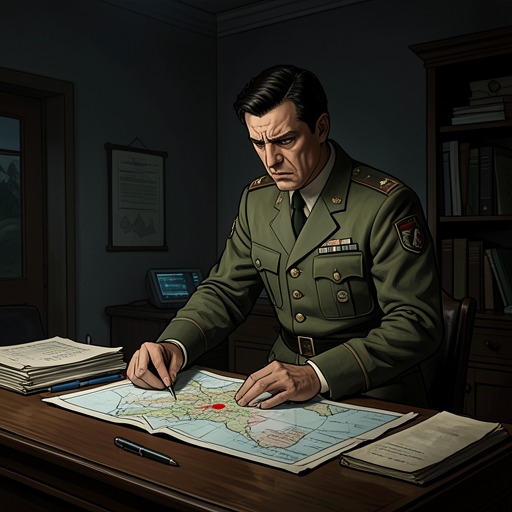
In a later exchange, Clemenceau announces that Cavaignac, newly appointed Minister of War, has made his first speech in the Chamber and claims to have proved Dreyfus a traitor. When Picquart asks how, Clemenceau explains that the minister read aloud three intercepted messages from secret intelligence files, then thrusts the newspaper account into Picquart’s hands. His action is practical as well as political: he gives Picquart the printed record of a claim made in the legislature, allowing him to confront its wording rather than rely on a second-hand summary.
The speech’s contents, as reported, include a message alleging that Dreyfus supplied twelve master plans of the Nice fortifications, another asserting that Dreyfus had brought valuable material, and the document previously presented as absolute proof that the sender and recipient had concealed their dealings with a Jew. Picquart reacts with disbelief and passes the paper to Zola. Clemenceau conveys the news; the evidence does not show him devising the accusation or establishing the authenticity of the messages. His importance in this episode lies in carrying a public claim into Picquart’s immediate view at a moment when the case is being framed as settled by political authority.
Role and Limits
The claim that Cavaignac has ended the affair proves temporary. Subsequent examination establishes that the supposed absolute-proof document was forged: its heading and signature were on paper with different ruling from the central passage, which had been inserted into a genuine letter. Henry is forced to admit the forgery, and three days later Cavaignac resigns while still insisting on Dreyfus’s guilt. These consequences clarify the stakes of the report Clemenceau brings to Picquart, but they belong to the wider course of the affair, not to an action Clemenceau is shown performing.
Across the two scenes, Clemenceau’s narrative function is sharply defined. He helps make Picquart’s isolation less absolute by joining a public gesture of welcome, and he helps connect the colonel to a rapidly changing political record by placing a newspaper in his hands. The contrast is between a military case advanced through secret files and a growing public contest in which newspapers, political gatherings, and parliamentary speeches circulate competing versions of the evidence. Clemenceau is one of the figures through whom that contest reaches Picquart, but the narrative gives him neither the minister’s authority nor the investigator’s evidentiary role.