Georges Clemenceau
An Officer and a SpyGeorges Clemenceau is a politician and newspaper editor whose support places him among the most prominent Dreyfusards. His role in the narrative is not that of an investigator: he enters as a public and political ally, helping make Picquart’s isolated challenge visible, sharing the tense collective wait around Alfred Dreyfus’s fate, and later holding high office when the struggle’s consequences reach the government itself.
Identity and Political Position
The book identifies Clemenceau as a politician and newspaper editor, and associates him with L’Aurore, the radical newspaper. He is named among the Dreyfusards, a group whose members bring different forms of influence to the campaign: political standing, journalism, legal work, and public advocacy. Clemenceau’s significance lies partly in this position at the junction of political and press life. The affair is no longer confined to military files or closed proceedings when figures such as him gather around Picquart and publicly support the demand that the case be reconsidered.
His presence does not make him an investigator or a military insider. Rather, the narrative shows him responding to evidence and events as a political ally, among those pressing for the truth to be faced. This distinction matters: the military hierarchy can issue orders and control access to its records, but the Dreyfusards’ influence grows through public attention and through organized solidarity beyond that hierarchy.
Welcoming Picquart into the Dreyfusard Circle
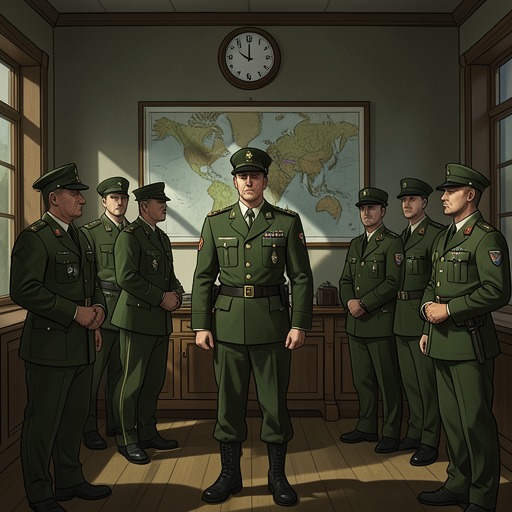
At a gathering in the publisher Georges Charpentier’s house, Georges Clemenceau is among the men waiting to meet Georges Picquart. When Picquart enters, Clemenceau recognizes him and starts the applause that the others join. Mathieu Dreyfus greets him with a cheer, and the gathering includes the journalist and politician Arthur Ranc, the deputy Joseph Reinach, and Émile Zola. The welcome makes Picquart’s arrival more than a private meeting: a room of prominent supporters receives the colonel as someone whose testimony and experience matter to their cause.
Picquart, however, treats the encounter as dangerous rather than ceremonial. He tells the group that he needs to speak and leave, since every additional minute increases the risk that their meeting will be discovered. His warning reflects his experience of surveillance, including the possibility that servants may pass information to the Sûreté. Clemenceau’s applause therefore sits beside the practical caution governing the gathering. Support is being made visible among allies, but visibility can expose those allies and compromise their plans.
Solidarity at Les Trois Marches
During the Rennes proceedings, Edmond Gast learns that Auguste Mercier is living across the road from Les Trois Marches. He responds by arranging to reserve a table for ten at every lunch and dinner for the duration of the trial. The right-wing press calls the resulting daily gathering the Conspiracy of Les Trois Marches. Georges Clemenceau and his brother Albert are among the regulars, alongside the socialists Jean Jaurès and René Viviani, journalists, and intellectuals. The repeated meals give the Dreyfusards a steady meeting place while the trial is under way.
The scene’s political contrast is sharpened by the name attached to the gathering. The press calls it a conspiracy, while the narrative describes ordinary meals at which the supporters assemble. The joke about whether the elderly professor Gabriel Monod might attack Auguste Mercier with a rolled-up journal mocks the suggestion that this group requires a bodyguard. Clemenceau’s inclusion in the circle places him within this collective, sustained form of advocacy—not as its sole leader, but as one of its regular and recognizable members.
Judgment, Delay, and the Question of a Pardon
As the verdict approaches, the people gathered at the house wait through the long minutes before the judges return. Émile Zola hopes that the length of deliberation means the evidence is being weighed carefully and that the decision will favor Dreyfus. Clemenceau rejects that inference: men are being induced to change their minds, he says, and that cannot be good for Dreyfus. His response punctures the attempt to turn waiting into reassurance. In a trial where procedure and public expectation are charged with consequence, delay offers no dependable sign of justice.
Later, when Mathieu Dreyfus asks what the others think, he is told that Clemenceau, Zola, and Fernand Labori oppose the proposed pardon, while Joseph Reinach, Bernard Lazare, Victor Basch, and others support it with varying enthusiasm. Picquart then says that he too is opposed. Clemenceau’s position places him with those unwilling to treat a pardon as an adequate resolution. The disagreement reveals divisions within the Dreyfusard camp over what should be accepted, even among people united in seeking justice for Alfred Dreyfus.
Political Consequence
The narrative presents the ultimate vindication as a gradual institutional process rather than a single dramatic triumph. Jean Jaurès’s long speech in the Chamber of Deputies leads the new Minister of War, General André, to reopen the evidence; the ensuing inquiry and judicial review eventually culminate in the Court of Cassation quashing the Rennes verdict and fully exonerating Dreyfus in July 1906. These steps are attributed to the wider campaign and its institutions, not to Clemenceau alone.
On 25 October 1906, Clemenceau becomes prime minister. Picquart is in Vienna with Pauline when a telegram reaches him at the opera: Clemenceau has appointed him Minister of War and orders him to return to Paris. The appointment gives the earlier scenes a consequential endpoint. The politician who had joined Picquart’s welcome and shared the Dreyfusard circle now has the authority to bring his former ally into the government. Clemenceau’s arc is thus defined less by a private transformation than by the changing political position from which support can be expressed: from public ally during the struggle to head of government capable of appointing Picquart to office.