Georges Picquart’s exile in Tunisia
An Officer and a SpyGeorges Picquart’s exile in Tunisia is presented not as a clean break from military service but as a posting made punitive through distance, surveillance, and official denial. Removed from Paris after discovering that Alfred Dreyfus is innocent, he remains a colonel among soldiers while losing the freedom and standing that his rank appears to promise. The colony is both his assigned workplace and the setting in which the machinery of his exclusion becomes visible.
Posting and Isolation
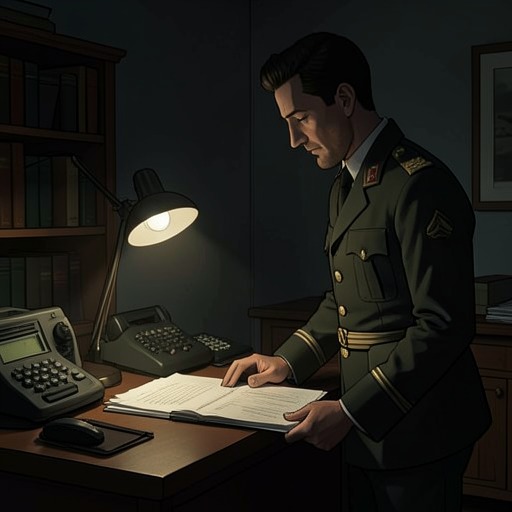
At the Sousse Military Club, Picquart sits alone by a window while officers of the 4th Tunisian Rifles play cards, doze, or read newspapers already four days old. They observe the deference due to his rank but keep their distance. Picquart reads their reserve as evidence that they assume some disgrace must have ruined his career: otherwise, he reasons, why would the army’s youngest colonel have been transferred to what he regards as a dump? His scarlet Legion of Honour ribbon stands out against his new regiment’s sky-blue tunic, attracting fascinated attention without restoring the fellowship his rank might ordinarily secure.
That isolation is not merely social. Picquart describes a sequence of orders that changes the meaning of his presence in the colonies. He had expected to meet the Minister of War in Marseille over Christmas, but the meeting did not happen; instead, he was sent to Algeria to reorganize intelligence. A month after arriving there, he was ordered to Tunisia. In Tunisia he was transferred out of his old regiment and into a native outfit. What had seemed an inspection trip thus became, in his account, a permanent colonial posting. When he complained, General Gonse told him to stop sending so many letters and find satisfaction in serving a regiment in Africa. Picquart understood the reassignment as punishment, not routine career movement.
Surveillance and Control
The Sousse routine gives surveillance a mundane, repeated form. An orderly named Flavian-Uband Savignaud brings the afternoon post, and Picquart suspects that he has been sent by the Statistical Section, on orders from Major Henry or General Gonse, to watch him. Picquart resents not only the intrusion but what he sees as its clumsiness: he believes his belongings are searched and his mail intercepted, and objects that the supposed observer does not even take adequate care to disguise his work. His suspicion is reinforced by the letters themselves. A letter from his sister and another from his cousin Edmond have been opened and resealed with conspicuously heavy glue; agents’ reports sent to him under the fiction that he remains only temporarily seconded have also been opened.
The comparison with Alfred Dreyfus clarifies both the shared method and the limit of the parallel. Like Dreyfus, Picquart has his correspondence monitored, but Picquart distinguishes his treatment from Dreyfus’s: his letters are opened, he says, but not actually censored. The distinction does not make the monitoring benign. Picquart tells Louis Leblois that he is effectively imprisoned: his mail is read, he is followed, and he is not permitted to leave. He also believes that protest will bring discipline on fabricated charges, while desertion would finish his career. A posting that leaves him nominally within the army therefore restricts his movement through the threat of punishment as much as through physical distance.
Surveillance also reaches into the interpretation of Picquart’s private life. He resents the suspicion that he might be tempted to sleep with a man, particularly when the suspected object of that interest is Savignaud. The episode makes clear that he objects not simply to being watched but to being watched through an insinuation that casts him as morally compromised. His distant colleagues, the suspected spy, and the opened letters all contribute to an atmosphere in which other people’s assumptions about him become another instrument of isolation.
The Break with Major Henry
For months, Picquart and Major Henry exchange messages in a tone Picquart remembers as friendly. One letter’s casual description of blue skies and oppressive afternoon heat gives way to a sharper change after Picquart’s assignment to Sidi El Hani. Ordered by the High Command in Tunis to take his regiment there for three weeks of target practice, he leads a day’s march southwest to a desert camp. Teaching the troops is difficult; the stony, featureless landscape, the heat, the boredom, and Savignaud’s constant presence press together until Picquart writes to Major Henry demanding public acknowledgment that he has been relieved of his duties. He says that the concealment, rather than the fact itself, is what embarrasses him.
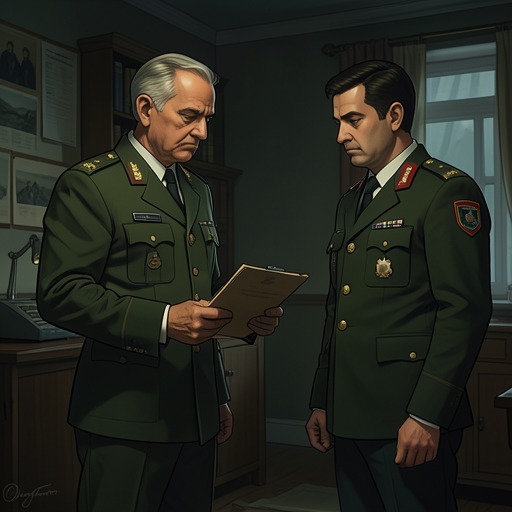
Major Henry’s answer replaces the earlier friendliness with bureaucratic accusation. He reports that an inquiry by the Statistical Section has concluded that Picquart’s reference to mysteries must concern three alleged acts: running an operation unconnected to the service, inducing officers to give false testimony about a classified document seized at a post office, and opening a secret dossier whose examination led to indiscretions. On Picquart’s complaint about lies, Major Henry replies that the investigation could not determine where, how, or to whom the word should apply. The answer converts Picquart’s demand for candour into a set of charges against him, while refusing to identify responsibility for the deception he says has surrounded his removal.
The Meaning of Exile
When Picquart recounts the successive transfers to Louis Leblois, he gives the posting its political meaning plainly: he believes he is being punished for discovering that Captain Dreyfus is innocent. Leblois’s momentary departure from his professional detachment registers the force of the disclosure. Picquart’s claim connects the colonial itinerary to the case: the transfer to Algeria, the later move to Tunisia, and the reassignment to a native regiment are not isolated inconveniences in his account but stages in his removal from the place where he could pursue what he had found.
The exile’s defining contradiction is that Picquart remains in uniform and continues to perform military duties, yet experiences his life as a form of imprisonment. Its instruments are administrative orders, monitored correspondence, observation by a suspected informant, and the threat that any attempt to escape the constraints will be used against him. When he entrusts Leblois with an envelope to be delivered to the President if Picquart dies, the gesture gives the account an additional urgency: the man who says he cannot safely speak openly prepares for his testimony to outlast him. The evidence presented here establishes the confinement and its cause as Picquart understands them; it does not resolve the conditions of his exile.