Institutional loyalty versus justice
An Officer and a SpyInstitutional loyalty versus justice names the conflict that tests Georges Picquart as he discovers that the army’s effort to protect itself threatens the very standards of honor he associates with military service. He does not begin as an uncomplicated defender of Alfred Dreyfus: his own prejudice shapes their early relationship. But once he believes Dreyfus innocent, Picquart must choose between preserving his career and serving an institution by exposing its wrong. The dilemma is not simply whether to obey or rebel; it is whether loyalty to the army means concealing its failures or helping it face them.
An Injustice Shaped by Prejudice
Picquart’s conflict has roots in his earlier judgment of Dreyfus, one of the students he taught at the École Supérieure de Guerre in Paris. He remembers Dreyfus as thin, pale, solemn, and myopic, but also interprets his wealth, marriage, and social habits through antisemitic assumptions. When Dreyfus invites him to dinner and to a shooting outing, Picquart declines. He also resents that Dreyfus’s family remained in occupied Alsace and regards the family’s money as tainted. These judgments affect how Picquart sees a man whose abilities he evaluates as a teacher.
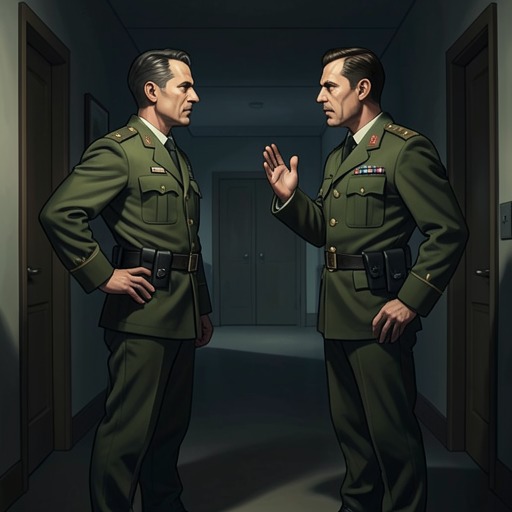
The tension becomes explicit when Dreyfus confronts Picquart about receiving the only low mark among his tutors. Dreyfus asks whether his Jewishness explains the grade. Picquart insists that personal prejudice does not affect his judgment, but Dreyfus notices the guardedness of that assurance and stands his ground. The exchange shows that institutional fairness cannot be separated from the prejudices carried into its ordinary procedures: even before the criminal case, Dreyfus has reason to suspect that evaluation is not impartial.
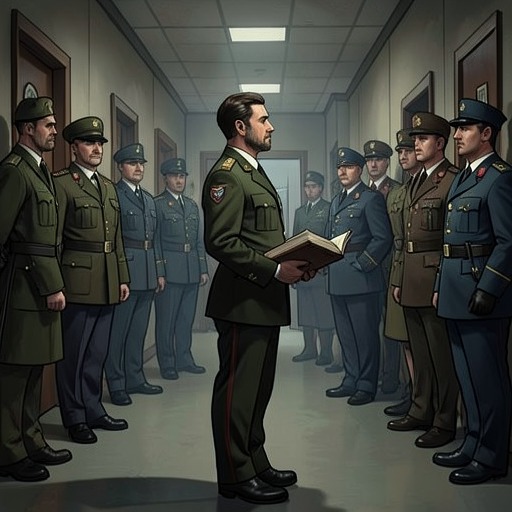
That bias becomes more violent in the public degradation ceremony. As Dreyfus is marched around the courtyard in his torn uniform, a Foreign Ministry official interprets his composure as evidence against his innocence and speculates that his conduct is a Jewish trait. Jean Sandherr answers with a sweeping denunciation of Jews as unpatriotic and dishonorable. He turns his back as Dreyfus passes; Picquart, by contrast, watches him closely and recognizes fear and the struggle to remain composed. The crowd’s cries of treachery and antisemitic abuse make the ceremony a public performance of a verdict already secured in the spectators’ minds. The same identity prejudice that casts doubt on Dreyfus’s character also makes his suffering seem to confirm his guilt.
The Army’s Authority and the Unseen Informer
The imbalance between institutional authority and a defendant’s ability to answer it is stark in the military trial. Hubert-Joseph Henry tells the court that an honorable source had warned of a traitor on the General Staff, then identifies Dreyfus as the traitor. The accusation arrives as a sudden revelation; Dreyfus, who had seemed composed, rises in anger and demands to know the informer’s name. The court orders him to sit. In this moment, the officer’s assertion carries the force of official knowledge, while the accused is restrained from answering on equal terms. The scene connects the demand for institutional trust to a basic problem of justice: authority is asserted, but its source remains inaccessible to the person it condemns.
Picquart’s later discovery that the case against Dreyfus is not sound turns that imbalance into a personal crisis. He recognizes that the evidence in the secret file is weak and argues that the army could recover some credit by cleaning out its own failures. Charles-Arthur Gonse instead warns that reopening the case would invite questions about how the original judges could have erred and would expose senior figures to embarrassment. His appeal joins the army’s reputation to the continued concealment of the file. Picquart sees the danger in adding new falsehoods to old ones; Gonse asks him not to pursue the case, presenting silence as a way to avoid further damage.
Career, Conscience, and the Cost of Silence
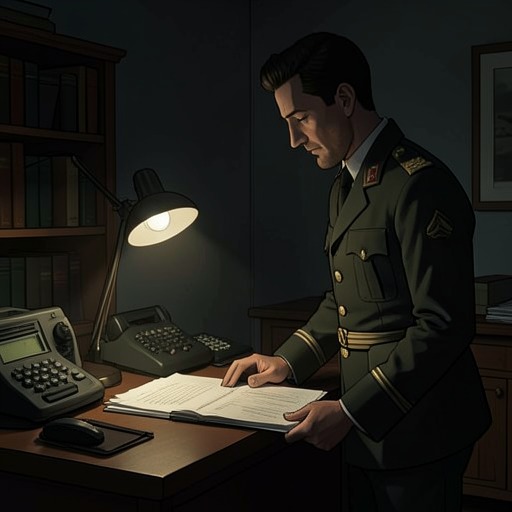
The choice weighs heavily because Picquart has spent twenty-four years building his career and has no wish to destroy it. Yet he understands that retaining his position at the cost of honor and pride would make that career empty. The conflict is therefore not between a self-interested officer and an institution he never valued. Picquart’s attachment to military service is part of what makes concealment intolerable: he cannot preserve the meaning of his career by becoming the kind of officer who puts institutional convenience above truth.
Gonse makes the demand for silence still more explicit when he suggests that no one need ever know whether Picquart’s suspicion about Esterhazy is correct. Picquart rejects the prospect of carrying the secret to his grave. His refusal is a commitment to investigation rather than a claim that every uncertainty has already been resolved. He asks for the whole case to be examined, resisting the conversion of professional secrecy into a permanent shield against scrutiny.
Loyalty Reconsidered
Picquart’s predicament deepens because the same army he wants to protect has become the barrier to justice. He continues to recoil from betraying it, describing it as his heart and soul and as the ideal in which he has placed his faith. At the same time, he recognizes that senior officers and the secret intelligence section are implicated to varying degrees, and that even honorable officers may put the army’s interests first. His loyalty is real, but it cannot guarantee that those who share it will act justly.
When he explains his aims to Louis Leblois, Picquart puts justice first. He also hopes the army will emerge from the scandal with as little damage as possible, because he still loves it, and admits that he would like his career restored. Those aims cannot all be secured together: restoring justice may expose the institution to the very scandal its leaders seek to prevent, while silence might preserve Picquart’s standing at the price of Dreyfus’s continued wrong. The conflict’s moral force lies in that separation. For Picquart, loyalty finally means accepting risk rather than allowing the army’s reputation to decide whether an innocent man receives justice.