Jean Jaurès
An Officer and a SpyJean Jaurès is a socialist leader whose interventions helped carry the Dreyfus case from a contested public cause into renewed official review. The book presents him both among the regulars gathered around the case and as a parliamentary advocate whose sustained argument helped set in motion the process that ultimately overturned the Rennes verdict and fully exonerated Alfred Dreyfus.
Identity and Political Presence
Jaurès is identified as a leader of the French socialists. His significance in the narrative comes not from a private connection to the accused or to Georges Picquart, but from the political and public forums in which he acts: the Dreyfusards’ gathering place during the Rennes trial, a statement prepared for Dreyfus’s release, and the Chamber of Deputies. Together, these appearances show a figure whose influence operates through collective advocacy and public argument.
The account gives his public voice a memorable presence even in a small gathering. At Les Trois Marches, while people are talking in the garden at dusk, Jaurès’s voice carries over the others. Picquart’s narration contrasts the scale of that voice with the intimate setting, observing that it seemed made for an audience of ten thousand rather than a table of ten. The detail connects Jaurès’s personal presence to the larger audience his political speech would eventually reach.
The Daily Gatherings at Les Trois Marches
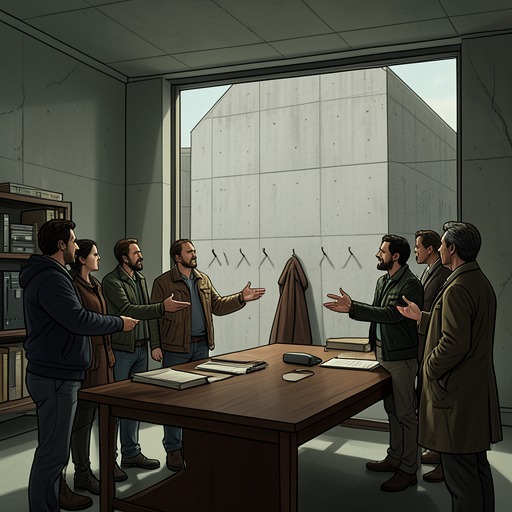
During the Rennes trial, Les Trois Marches became a regular meeting place for leading Dreyfusards. Edmond Gast arranged for a table for ten at lunch and dinner throughout the trial, and Jaurès was among those who gathered there. The regular company also included the Clemenceau brothers, René Viviani, the journalists Lacroix and Séverine, and the intellectuals Octave Mirabeau, Gabriel Monod, and Victor Basch. Mathieu Dreyfus appeared as well, while Alfred Dreyfus’s wife, Lucie, was staying elsewhere in the town.
The gathering was sufficiently visible to acquire a hostile name in right-wing newspapers: the Conspiracy of Les Trois Marches. That label turned ordinary meals into a political spectacle, while the daily recurrence gave the Dreyfusards a place to confer and remain present during the trial. The scene also sits under the pressure of surveillance. Picquart asks for his own police protection to be withdrawn because he considers it unnecessary and suspects that the officers relay information to the authorities. Later, Fernand Labori notices that they are being watched; across the road, Auguste Mercier is visible in an upper window, gazing down at them. Jaurès is part of the gathering, but the account does not say that he initiates or directs these exchanges.
The Release Statement and the Dispute over a Pardon
As Alfred Dreyfus’s release approaches, Jaurès drafts a statement for him to issue upon leaving prison. Mathieu Dreyfus hands the creased sheet to Picquart, who reads enough to see its central insistence: freedom granted by the Republic would not restore Dreyfus’s honor, and he would continue to seek the overturning of the judicial error of which he maintained he was the victim. The proposed statement thus makes release a beginning rather than a resolution; it refuses to let the end of imprisonment stand in for vindication.
The wording mattered because Picquart regarded acceptance of a pardon as an admission of guilt. He says so to Mathieu, who acknowledges the technical force of the objection and explains that Jaurès has prepared the statement. Picquart finds its language noble but fears that the practical bargain will favor the army: he predicts that an amnesty for those who organized the conspiracy against Dreyfus will be demanded, and that such an amnesty would also prevent him from pursuing his legal claim against the General Staff. The scene places Jaurès’s carefully framed declaration beside Picquart’s concern about what a pardon might concede and what political protection it might purchase. It establishes the statement’s purpose, but does not settle Jaurès’s personal position on every aspect of accepting the pardon.
The wider disagreement among Dreyfusards is explicit. Georges Clemenceau, Émile Zola, and Labori oppose the proposed course, while Joseph Reinach, Bernard Lazare, Victor Basch, and others support it with differing degrees of enthusiasm. Picquart tells Mathieu that he is opposed too. Jaurès’s role in drafting Dreyfus’s statement is therefore distinct from the positions specifically assigned to those named in the dispute: his contribution is to provide language in which release can be followed by continued pursuit of legal redress.
Parliamentary Intervention and Renewed Review
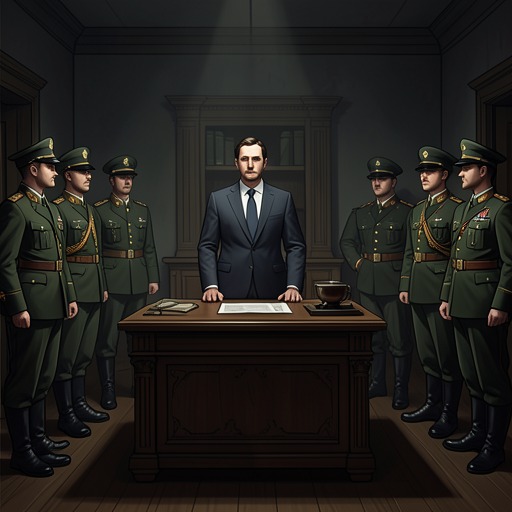
The book places Jaurès’s most consequential intervention in 1903, when he delivers a forensic speech in the Chamber of Deputies lasting a day and a half. He sets out the entire affair with such clarity that General André, the new Minister of War, agrees to examine all the evidence again. Jaurès’s speech does not itself deliver a judgment; its consequence is to open an official route back into a case that had been defended and contained by military authority.
The ensuing sequence unfolds over several years. The result of the André inquiry prompts the Criminal Chamber of the Court of Cassation to take up the case and conclude that it should be reviewed by the French Supreme Court of Appeal. Political turmoil over the separation of Church and State delays progress through 1905. On 12 July 1906, the court quashes the Rennes verdict and exonerates Dreyfus entirely. The narrative presents Jaurès’s speech as a decisive catalyst in this process, while also showing that inquiry, judicial review, and political circumstances all stood between his parliamentary argument and the final result.
Narrative Role and Significance
Jaurès’s appearances trace a movement between distinct forms of advocacy. At Les Trois Marches, he belongs to a recurring collective presence that the hostile press recasts as conspiracy. In the release episode, his draft gives Dreyfus a means to insist that freedom without honor is incomplete and that the fight for reversal must continue. In the Chamber, his sustained public argument helps persuade a new Minister of War to reopen examination of the evidence.
The account ultimately gives Jaurès a consequential but not solitary place in the case’s resolution. His speech helps initiate a chain of administrative and judicial reconsideration; the final exoneration comes only after the inquiry, the courts’ deliberations, and years of delay. His role is therefore neither merely symbolic nor equivalent to the judgment itself: he helps make a renewed hearing politically possible, while the work of overturning the verdict remains a longer institutional process.