L’Aurore
An Officer and a SpyL’Aurore is a radical Paris newspaper edited by Georges Clemenceau and a consequential public forum in the Dreyfus affair. Its publication of Émile Zola’s J’Accuse…! turns a dispute over secret evidence and military authority into a front-page public confrontation; later, the paper also gives voice to support for Georges Picquart during his imprisonment.
Identity and Editorial Role
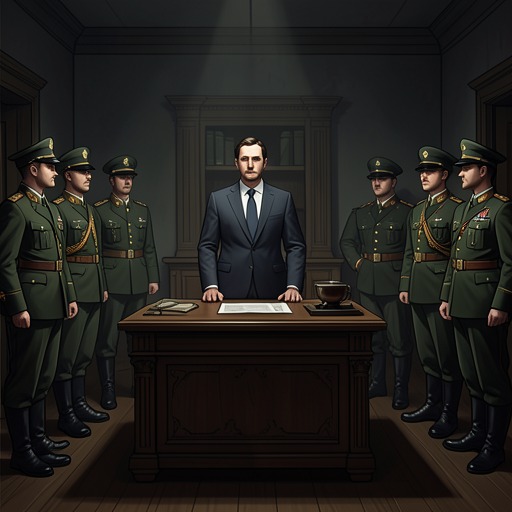
The paper is identified through Clemenceau, who edits it and hosts a gathering at which Georges Picquart meets prominent supporters of the Dreyfus cause. The company includes Mathieu Dreyfus, Arthur Ranc, Joseph Reinach, and Émile Zola. Clemenceau’s clapping as Picquart enters makes the gathering a visible welcome, while Picquart’s warning that servants might inform the Sûreté shows how exposure and surveillance shadow even a private meeting. The newspaper’s importance in this scene lies not only in its editor’s political standing: it is associated with a network seeking to bring the case before the public.
That role becomes unmistakable when L’Aurore publishes J’Accuse…!, a letter by Zola addressed to the President of the Republic. The piece occupies the entire front page, across all six columns, and runs to thousands of words. Its scale and placement make the newspaper itself part of the intervention: the case is no longer confined to military files, closed hearings, and official accounts, but is presented as a public accusation that readers can encounter directly.
J’Accuse…! and Public Disclosure
Picquart encounters the issue while under military escort, on his way into custody. He asks to stop for a newspaper and walks back from the vendor with a copy of L’Aurore. Reading the front-page letter in the dim street light, he is astonished by Zola’s claim that senior military figures knew Dreyfus was innocent and had kept that knowledge from the public. The scene places the printed paper in Picquart’s hands at a moment of personal disgrace, while its contents recast that disgrace within a much larger institutional controversy.
The appearance of J’Accuse…! follows an earlier breach in the control of information. L’Éclair has already reported the existence of a secret file allegedly used at Dreyfus’s court-martial, prompting Picquart to count the people who knew of it and to fear that the disclosure might provoke the General Staff to tighten its efforts to contain his investigation. L’Aurore’s publication of Zola’s letter belongs to the same widening struggle over what can be kept secret, but it gives that struggle a different form: sustained, prominent public accusation rather than a report about the file’s existence. At Émile Zola’s trial, Georges de Pellieux invokes the demand to bring matters into the light as he makes a new claim about evidence against Dreyfus. The exchange shows how quickly public argument and legal proceedings begin to act upon one another.
Picquart’s Imprisonment and the Paper’s Afterlife
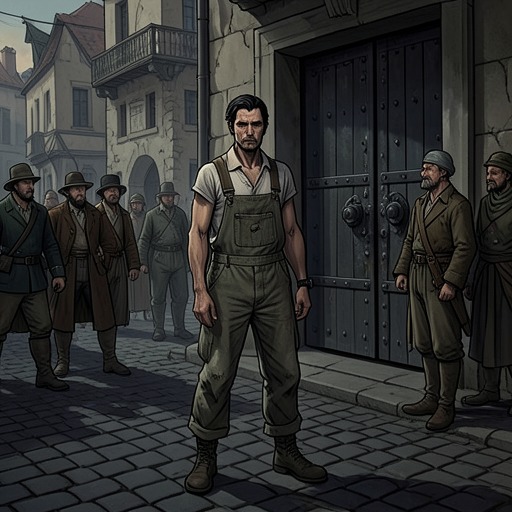
L’Aurore remains present in the affair after the publication of J’Accuse…!. While Picquart is held in the Cherche-Midi Prison without trial, Clemenceau is permitted to visit him and uses the newspaper to propose, ironically, that Picquart be made the new Grand Prisoner of State, replacing the Man in the Iron Mask. The allusion turns Picquart’s prolonged detention into a public image of state secrecy. Meanwhile, demonstrations take place outside the prison, the building is guarded by seven hundred troops, and Picquart receives thousands of letters of support. His detention has become notorious, and the newspaper helps give that notoriety a public language.
Across these episodes, L’Aurore connects political advocacy, mass readership, and the consequences of disclosure. The paper does not itself resolve the case, and the evidence does not establish that every statement or letter in the affair appeared in its pages. Its documented interventions are narrower and more concrete: it publishes Zola’s expansive accusation and carries Clemenceau’s pointed proposal during Picquart’s imprisonment. Together, those acts show the newspaper shifting the case from guarded official knowledge toward public scrutiny, where attempts at concealment could themselves become evidence of a crisis.