Paris Court of Assize
An Officer and a SpyThe Paris Court of Assize is the public forum in which the Dreyfus affair’s suppressed evidence and competing claims become visible during Émile Zola’s criminal-libel trial. Unlike the closed military proceedings surrounding Alfred Dreyfus, this court hears testimony before a jury and a packed public gallery; its openness gives Picquart a platform to describe his investigation and gives military officers an opportunity to try to shape what the public hears.
A public forum for a military scandal
The court enters the affair when the government brings a criminal-libel charge against Zola, two days after Picquart’s arrival at Mont-Valérien. The case is moved to the top of the waiting list so that it can begin quickly. It is to be heard not in a confidential chamber controlled by the army but in public at the Court of Assize inside the Palace of Justice. Picquart is summoned to give evidence on Friday, 11 February, despite being held in the fortress; its commander refuses visits from anyone who is not a serving officer, but cannot prevent Picquart from meeting his lawyer.
The contrast with Alfred Dreyfus’s military trial is pointed. At that earlier hearing, the prosecutor requests a private session on the ground that the evidence concerns national defence, while Dreyfus’s counsel, Edgar Demange, objects that his client should be treated like any other accused person. The Zola trial instead places the affair before ordinary jurors and a public audience. The change of venue does not itself settle the truth of the accusations, but it changes who can hear them and makes control of information part of the public contest.
The courtroom and its participants
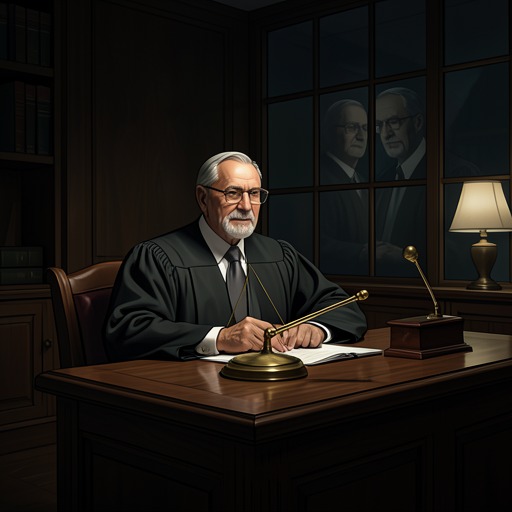
The Palace of Justice is thronged on the day Picquart appears. Its great hall fills with clerks, court messengers, lawyers, litigants, witnesses, gendarmes, reporters, officers, people seeking shelter from the winter cold, and fashionable ticket-holders drawn by the Zola trial. Bells, footsteps, and conversation animate the Salle des Pas-Perdus and the Galerie des Prisonniers. Picquart passes through the crowd to the witness room and is called after half an hour. In the courtroom, the scale of the space, its heavy wood panelling and brass fittings, and the hush as he crosses the floor turn his arrival into a visible public act.
The judicial arrangement places twelve jurors, described as ordinary tradesmen, before the evidence. Delegorgue presides in scarlet robes; government counsel Van Cassel leads the prosecution. Zola sits with his co-defendant, Perrenx, manager of L’Aurore. Fernand Labori represents Zola, Albert Clemenceau represents Perrenx, and Georges Clemenceau is permitted to sit with his brother despite not being a lawyer. Behind Picquart, a conspicuous group of uniformed officers includes Charles-Arthur Gonse, Georges de Pellieux, Henry, Lauth, and Gribelin. The court is thus public, but not politically neutral in its visible composition: the accused and their counsel face both a jury and the officials of the institution whose conduct is under scrutiny.
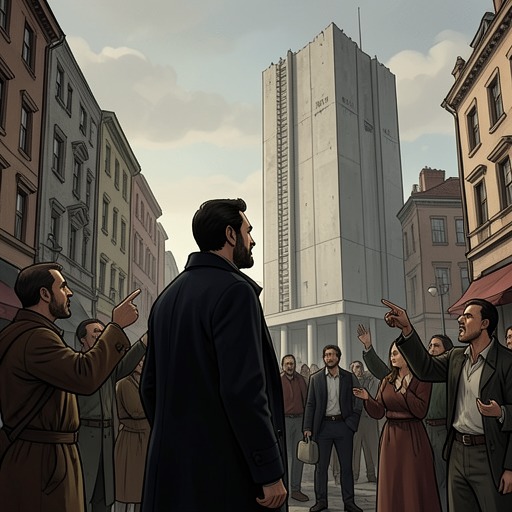
The crowd outside also presses upon the proceedings. An anti-Semitic demonstration gathers on the boulevard du Palais, and some demonstrators recognize Picquart from hostile caricatures and try to follow him into the courthouse before gendarmes stop them. Inside, he is mostly unnoticed as he crosses the crowded halls, but the spectacle around the trial makes clear that the Dreyfus affair is no longer confined to military offices or court files.
Picquart’s testimony
Labori asks Picquart to explain what he knows of the Esterhazy case, his investigation, and the circumstances surrounding his departure from the Ministry of War. Picquart grips the wooden rail to steady his shaking hands, then begins with the spring of 1896, when fragments of a letter-telegram came into his possession. He speaks for more than an hour without notes, drawing on his experience as a lecturer and treating the account with the order of a complicated lesson in topography.
His testimony concentrates on the case against Ferdinand Walsin Esterhazy: the petit bleu, Esterhazy’s character and need for money, his suspicious interest in artillery, and the match between his handwriting and the bordereau. Picquart recounts taking his suspicions to his superiors and being sent to North Africa, followed by the efforts directed against him. He says that he aims to be precise and controlled, to avoid personal attacks and to preserve military secrets while testifying. The packed room listens in silence, while the General Staff officers’ expressions grow grimmer. The court gives his account a hearing that the military hierarchy had tried to contain, without making his testimony identical to a judgment by the court.
Secrecy enters the press and the courtroom
The public hearing is preceded by a widening breakdown in control of the affair’s information. After a newspaper report describes Alfred Dreyfus’s conditions on Devil’s Island, L’Éclair publishes an anonymous article claiming that a secret file proved his guilt and demanding that the army disclose it. Picquart recognizes that this is the first press mention of the file’s existence. Because he has just taken possession of the dossier, the timing makes him suspect that someone is talking.
Picquart lists those who know about the file: senior officers and intelligence staff, the seven judges, President Fauré, the President’s doctor, Gibert, and Mathieu Dreyfus, whose knowledge brings Picquart’s tally to twenty before accounting for how many others Mathieu may have told. The list makes secrecy look less like a secure boundary than an increasingly broad chain of access. Public reporting, legal proceedings, and military handling of evidence are already entangled by the time Picquart takes the stand.
That entanglement is also visible in the political mobilization around the trial. Before giving his evidence, Picquart meets at Georges Charpentier’s house with leading supporters of the Dreyfus cause, including Georges Clemenceau, Arthur Ranc, Joseph Reinach, Mathieu Dreyfus, and Zola. He says he must leave promptly because every minute increases the chance that the gathering will be discovered; Mathieu shares his distrust of informants. The meeting is not a sitting of the court, but it shows the network of advocates and public figures gathering around the legal struggle that will be staged there.
Military intervention in open court
The Court of Assize’s public character does not prevent military officers from trying to direct the meaning of the evidence. During a recess, Georges de Pellieux confers with General Staff officers, including Gonse and Henry. He then addresses the jury, saying that the defence has publicly read a passage from an indictment that should have remained closed and declaring that the army will provide the light the defence has demanded. He asserts that an unchallengeable document received by the Ministry of War in November 1896 proved Dreyfus’s guilt, and appeals to Boisdeffre to support his testimony.
Pellieux’s intervention brings the secret-file controversy into the very forum intended to expose the affair to public scrutiny. Picquart understands Pellieux to be referring to a letter supposedly recovered from the German Embassy, one that appeared just before Picquart was removed from Paris and that Billot had read aloud without showing him. Picquart signals to Labori that the statement offers an opening: he believes Pellieux has made another blunder. Gonse immediately rises to ask for the floor, but Labori moves more quickly. The episode shows the court as both a venue for testimony and a contested stage on which military authority, legal advocacy, and public disclosure collide.