Pauline Monnier—Philippe Monnier
An Officer and a SpyPauline Monnier and Philippe Monnier’s marriage is undone not by the discovery of Pauline’s affair with Georges Picquart, which Philippe had long suspected and privately tolerated, but by its exposure through the army to his superiors. That distinction governs the rupture: what had been bearable while it remained discreet becomes intolerable when it enters the institutional world of Philippe’s military career. The separation leaves Pauline temporarily cut off from her daughters, but by the time Picquart is released from prison, she is divorced, living in her own apartment, and reunited with them.
Marriage and the Affair
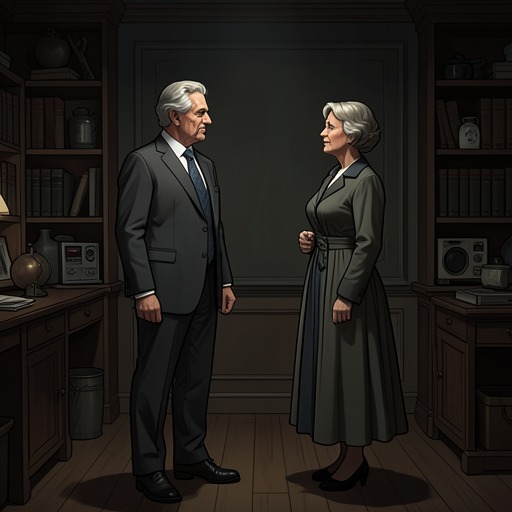
The evidence presents Pauline and Philippe’s marriage through the crisis of its ending rather than through a sustained account of their life together. Pauline had been having an affair with Picquart; Philippe, she explains, had always suspected it. He had been able to tolerate the relationship so long as it remained unknown to others. The marriage therefore rested, at least in part, on a tacit boundary between private knowledge and public exposure.
That boundary is broken when Philippe is called in and told about the affair by his superiors. Pauline identifies the army as the source of the disclosure to the Foreign Ministry, though the account does not establish who within the army conveyed it or precisely how Philippe’s superiors learned the details. The distinction Pauline draws is pointed: Philippe already knew, or had long suspected, the affair, but could not abide being officially confronted with it. The crisis is thus not simply marital jealousy. The affair becomes a public matter inside the hierarchy in which Philippe serves, and the knowledge he had privately contained is made an institutional humiliation.
Expulsion and Separation from the Daughters
The immediate consequences are severe. Philippe throws Pauline out and refuses to let her see their daughters. On the Friday before she seeks help from Picquart, she has gone out to tea with a friend and returned to find Philippe home early and the girls gone. When she asks where they are, he tells her he has sent them away. He says he will not reveal their whereabouts unless she tells him the truth about her affair with Picquart. Pauline describes having no choice but to disclose it.
The girls are staying with Philippe’s sister, Pauline later tells Picquart, but she is still denied access to them. Philippe also says he will not allow her to have custody after the divorce. His threat turns the marital separation into a struggle over motherhood and control of the children: he has already removed the girls from the home, and their location becomes leverage in forcing a confession. The account records Pauline’s fear and distress, but does not say that Philippe’s threatened custody outcome is achieved. Picquart tells her that Philippe cannot simply decide the matter and may calm down, but this is reassurance, not a reported legal resolution.
Exposure and Marital Power
Pauline arrives at Picquart’s lodgings at midnight and waits through the night because she has read in the papers that he has been brought back to Paris and knows nowhere else to go. When she explains what has happened, she has not slept. Picquart gives her cognac and waits until she is sufficiently revived to tell the story. The domestic emergency is conveyed through concrete dependence and dislocation: Pauline has been expelled, separated from her daughters, and left without a place she feels able to turn to besides the man with whom she had the affair.
Her account also shows how Philippe’s response is shaped by a distinction between private tolerance and public reputation. He is not portrayed as learning of the affair for the first time. Rather, the report from his superiors changes its status, making a relationship he had suspected into something officially known. Pauline’s explanation connects the end of the marriage to military authority reaching into private life; at the same time, the immediate actions against her and the children remain Philippe’s. The narrative does not supply his own account or establish every step by which the disclosure was made, so the rupture is seen chiefly through Pauline’s report to Picquart.
Divorce and Aftermath
The later outcome reverses the immediate deprivation. When Picquart is released from prison, Pauline is finally divorced from Philippe, who has been posted abroad at his own request. She has an apartment of her own, and the girls are living with her. The earlier threat that she would not have custody therefore does not describe the lasting arrangement presented at the end of this thread: the children are back with their mother, although the account does not specify the legal terms of custody or the precise timing of the change.
The reunion is placed beside the altered circumstances of Picquart’s return to ordinary life. Pauline stays in the room next to his, holds his hand under the table at dinner, and later comes to his bed after the household has gone to sleep. Those details mark the changed conditions surrounding their relationship: Pauline is no longer Philippe’s wife, and the immediate separation from her daughters has ended. The narrative’s movement from a night of waiting and uncertainty to divorce, independent accommodation, and the girls’ return gives the relationship its clear resolution, while leaving the original exposure by the army as the event that transformed a privately tolerated affair into a marital crisis.