Picquart–Henry duel
An Officer and a SpyThe Picquart–Henry duel turns a public accusation into a formal armed encounter, bringing the conflict between Georges Picquart and Hubert-Joseph Henry out of the courtroom and onto the floor of the École Militaire. Its immediate outcome is Henry’s withdrawal after Picquart wounds his arm, but the scene’s significance extends beyond the contest: it reprises the accusation that had marked the first court-martial of Alfred Dreyfus and shows how the struggle over the affair has become personal, public, and difficult to contain.
From courtroom accusation to challenge
The confrontation takes shape during the Zola trial. Henry insists that he could recognize a document from ten paces, despite Picquart’s objection that its writing was difficult to make out even at close range. When Henry turns to the jury and calls Picquart a liar, the gesture and theatrical force recall his accusation at the Dreyfus court-martial, where he had pointed to Picquart as the traitor. The repetition matters: Henry’s charge does not stand alone as a heated exchange but echoes the earlier proceedings through which Dreyfus was condemned.
Picquart abandons his effort to remain composed and demands satisfaction for the insult. The courtroom responds with a mix of applause and jeers, while the judge tries to restore order. Picquart then addresses the jury, linking Henry’s accusation to the charges made against him by Henry, Major Lauth, and the keeper of the archives, Gribelin. He also protests that Lauth has alleged, without proof, that Picquart invented the petit bleu. The duel therefore emerges from a wider struggle over Picquart’s credibility and the evidence surrounding the Dreyfus affair, not simply from a private quarrel between two officers.
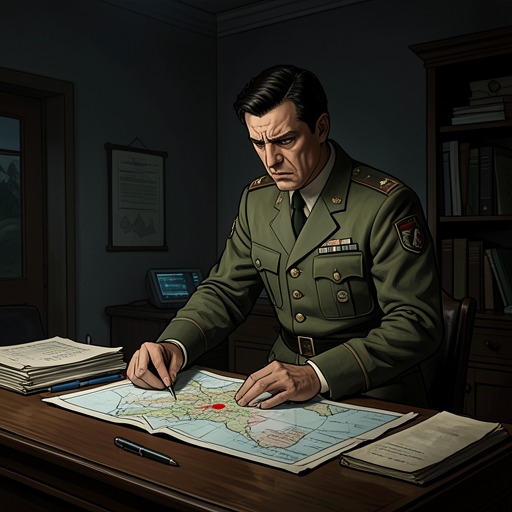
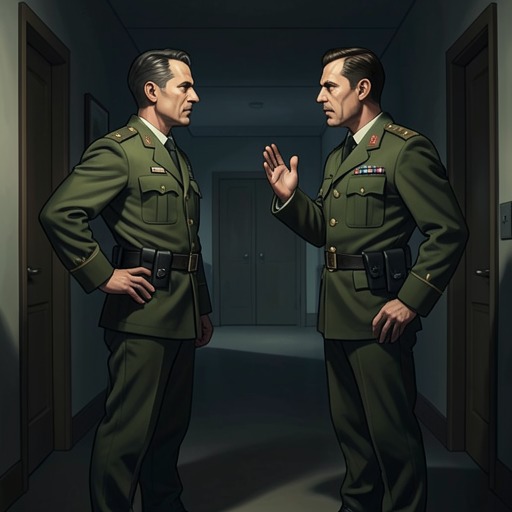
After the trial proceedings, Picquart passes Henry among a group of General Staff officers, where Henry is telling a joke. Picquart renews the challenge and says that his witnesses will contact Henry’s to arrange the duel. The exchange briefly unsettles Henry, but the challenge is not settled immediately. Three days later, Picquart is dismissed from the army for grave misconduct. His pension is reduced to the rate of a major, and he is warned against public comment about his service on the General Staff. These events leave the duel taking place amid Picquart’s loss of rank and career, though the dismissal is presented as a consequence of his public comments, not of the duel itself.
Arrangements and terms
Henry eventually accepts the challenge. The meeting is set for ten-thirty in the morning, two days later, at the indoor riding school of the École Militaire, with swords as the weapons. Edmond helps Picquart prepare and arranges for a doctor to accompany him; Henry has an army surgeon in attendance. The presence of witnesses, doctors, and an adjudicator gives the encounter a regulated form, even as the grievance behind it remains bound to the affairs of the General Staff and the court.
The retired sergeant major of the Republican Guard serving as adjudicator establishes the procedure. The swords are weighed and measured, and the men are told that a wound will stop the fighting unless the wounded man wishes to continue; after examination, the duel may resume if he chooses. This rule makes the contest’s pauses consequential. A cut does not automatically end the encounter, and the decision to continue remains with the injured participant. The formal structure sets boundaries around violence, but it cannot ensure that either man will observe the spirit of those boundaries once the swords are raised.
The two engagements
At the start, Henry attacks immediately and drives Picquart backward. Picquart retreats and parries largely by instinct. When Henry makes a stroke toward his neck, Picquart’s witnesses, Arthur Ranc and Edmond, protest. The adjudicator reminds Henry that the purpose is to settle a dispute between gentlemen, but Henry continues. Picquart feels the blade at the tendon of his neck, a near-fatal moment in his account. Ranc calls for the fighting to stop just as Picquart’s sword catches Henry on the forearm. The first engagement has lasted two minutes.
The wound is a graze rather than a serious injury, so Henry is offered the choice of refusing to continue. He elects to resume. In the second engagement he again presses Picquart back, but his injured arm is weakening. Henry makes a final lunge; Picquart parries and catches him at the elbow. Henry drops his sword, insists that he can continue, and tries to take it up again, but cannot grip it. The adjudicator’s examination establishes that the cubital nerve is damaged and that Henry will be unable to grip for several days. On that basis, Henry must withdraw. The contest ends not with a declared reconciliation but because the injury makes further fighting impossible.
Public aftermath and narrative significance
The customary handshake does not take place. As word of Henry’s wound spreads, Picquart is hurried out through a rear exit to avoid a hostile crowd. Newspaper accounts present a contrasting public scene: supporters cheer Henry as he leaves with his arm in a sling, and he is driven in an open landau to his apartment, where Boisdeffre is waiting to offer the army’s best wishes. The official and popular display of support for Henry stands against Picquart’s discreet departure, even though Picquart has prevailed in the duel.
Picquart goes to lunch with Edmond and Ranc and finds that he has a notably good appetite. For the next three months he wakes with a sense of optimism, although his practical circumstances remain bleak: he has no career, inadequate income, and little capital. The duel thus produces a marked reversal in his mood without repairing the material losses that followed his dismissal. Its immediate victory is personal and limited; it does not resolve the institutional conflict or end the campaign of public hostility around the affair.
The novel’s author’s note frames the episode within a work that uses novelistic techniques to retell a real political scandal. It says that the principal characters are historical and that almost all events occurred in some form, while also acknowledging dramatization and invented personal details. In particular, Georges Picquart never wrote the secret account that the novel imagines. The duel’s first-person presentation should therefore be read as part of that literary reconstruction, not as proof that every narrated detail comes from a surviving account. Within the story, the encounter’s central pattern is unmistakable: the accusation that had once helped define the case against Dreyfus is repeated against Picquart, and the public dispute becomes a physical contest whose ending settles neither the truth of the affair nor the army’s judgment of him.