Publication of J’Accuse…!
An Officer and a SpyÉmile Zola’s publication of J’Accuse…! transformed the Dreyfus case from a dispute managed behind military doors into a public indictment of those who had prosecuted and defended its outcome. In Georges Picquart’s account, the letter breaks into view during a journey under military escort: a colonel allows Picquart to stop for a newspaper, and its front page names the injustice Picquart has struggled to expose. The scene joins two forms of silencing and disclosure—the removal of a dissident officer and the arrival of a text demanding that the case be examined in public.
The secrecy surrounding the case
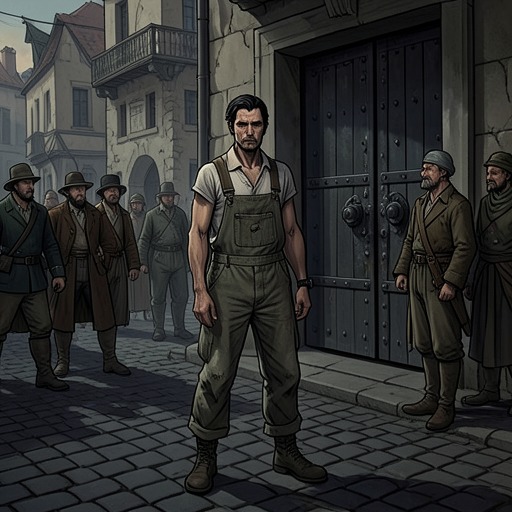
The letter’s force depends on what had been kept from public scrutiny. Alfred Dreyfus had been tried in private after the prosecution argued that the evidence involved matters of national defence. At the hearing, Major Henry pointed to Dreyfus and identified him as the traitor, invoking an unnamed informer rather than presenting a source the accused could confront. The proceeding made a grave accusation while limiting the accused’s ability to test its basis.
The secret file later became a subject of public discussion. An anonymous article in L’Éclair alleged that a secret file had proved Dreyfus’s guilt and called for its publication. Picquart, who had just taken possession of the dossier, counted the people who knew of it: senior officers, intelligence staff, judges, the President, his doctor, and Mathieu Dreyfus, with the possibility of further disclosures beyond that circle. The episode gives the letter’s public challenge a practical urgency. Secrecy was not simply a rule of the trial; it was an unstable system whose contents were already entering newspapers while the defence had been denied access to them.
The background also includes Picquart’s discovery that the bordereau—the document used against Dreyfus—matched the handwriting of Esterhazy, and the resistance his investigation encountered. General Gonse’s instruction was to investigate Esterhazy if Picquart wished, but to keep the bordereau out of the inquiry. When Picquart later raised the handwriting match before Georges de Pellieux, the point was declared outside the inquiry’s scope. J’Accuse…! would make the contrast between what could be investigated and what was being excluded part of the public controversy.
The newspaper on the road
The publication reaches Picquart while he is being transported in a military carriage. It is still dark after a hard frost, and the carriage passes early newspaper buyers as the sky begins to lighten. Picquart glimpses a large headline and asks to stop for a copy. The colonel agrees. This small permission interrupts the orderly movement of an escorted prisoner: Picquart leaves the carriage, walks back to the vendor with a private soldier following at a discreet distance, and joins the queue.
The paper is Georges Clemenceau’s L’Aurore. J’Accuse…! stretches across all six columns of the front page, and the letter to President Fauré occupies the page in thousands of words. Picquart reads it on the way back to the carriage, with only the street lamps to light the paper. The public text arrives as an object in his hands at the very moment the army is removing him from the scene. He returns to the carriage after reading; the colonel asks whether anything in the paper is interesting, then orders the driver onward without waiting for an answer.
Zola’s indictment
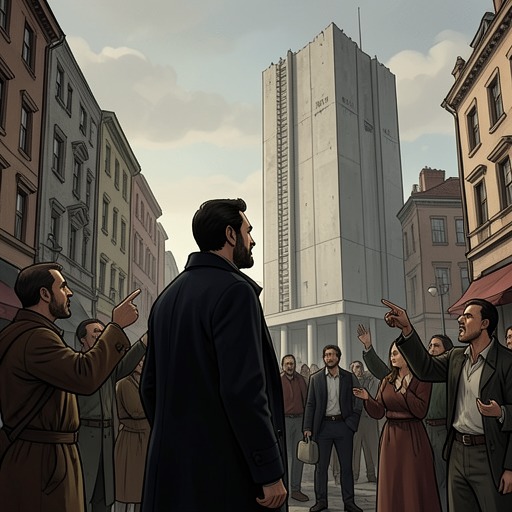
Zola’s letter does not confine itself to declaring Dreyfus innocent. It assigns responsibility across the institutions and officers involved in the case. It accuses Armand du Paty de Clam of creating the miscarriage of justice, Auguste Mercier of complicity through weakness, and Jean-Baptiste Billot of concealing proof of Dreyfus’s innocence. It also indicts the Ministry of War and the court-martial process itself.
The letter distinguishes between two military judgments. It accuses the first court martial of violating the law by convicting Dreyfus on evidence withheld from him, and the second court martial of knowingly acquitting a guilty man under orders. These are Zola’s stated accusations, not findings delivered by a court in the scene. Their significance lies in how directly they challenge the legitimacy of the proceedings: the question is no longer only whether Dreyfus committed treason, but whether the institutions that judged him could be trusted to disclose, examine, and act on evidence.
Zola explicitly recognizes the legal danger of his course. He acknowledges that making the accusations exposes him to a punishable libel charge, then invites the authorities to bring him before a court and investigate the matter openly. The close of the letter, signed by Émile Zola, makes public legal scrutiny the proposed answer to the secrecy that had shaped the original conviction. The publication therefore challenges both the verdict and the conditions under which the verdict was reached.
Picquart’s position and the public turn
The scene is sharpened by Picquart’s own history with Dreyfus. As a professor of topography at the École Supérieure de Guerre, he taught Dreyfus, initially distinguished him only gradually among eighty students, and refused his invitations to social functions. When Picquart gave him a low mark, Dreyfus asked directly whether his Jewish identity was the reason. Picquart claimed to be scrupulous about personal prejudice, but his account also records the suspicion with which he had regarded Dreyfus and his family. At Dreyfus’s degradation ceremony, Picquart heard senior men explain the prisoner’s apparent passivity through antisemitic stereotypes. The letter’s challenge to the case thus bears on a judgment formed not in a neutral atmosphere, but amid assumptions about Jewish loyalty and character.
Picquart’s reading also anticipates his own later recourse to public disclosure. After the Minister of War cited secret documents in the Chamber of Deputies, Picquart, with Fernand Labori’s help, drafted an open letter to Prime Minister Henri Brisson. He stated that the two documents dated 1894 could not be applied to Dreyfus and that the 1896 document showed signs of forgery. This later act is distinct from Zola’s publication, but it continues the same conflict over who may inspect the evidence and where it may be challenged.
The carriage scene gives J’Accuse…! its particular narrative force: Picquart is being taken away just as a public document exposes the case he had been ordered not to pursue through its central evidence. The newspaper does not itself settle Dreyfus’s guilt or establish every allegation it prints. It changes the terms of the dispute by naming responsible actors, identifying secret procedure as a central grievance, and demanding an open inquiry. In the book’s telling, the front page is not an abstract symbol of publicity; it is a physical interruption, read under street lamps before the carriage moves on.