Secret-Evidence Procedure at Dreyfus's Trial
An Officer and a SpyThe Secret-Evidence Procedure at Dreyfus’s Trial was the use of undisclosed material in a military prosecution: the judges were reportedly shown evidence that Alfred Dreyfus and his lawyer never saw. Its justification was the protection of national defence, but its consequence was a decisive imbalance between what the court could consider and what the accused could answer. The procedure therefore made secrecy more than a condition of the case; it became a disputed part of the case’s legitimacy.
Background and competing justifications
The procedural problem is introduced through Louis Leblois, a lawyer who objects to secret trials in principle. At a dinner attended by Georges Picquart, he questions whether a Christian officer would have been denied the ordinary judicial process in the same way, and notes that Le Figaro has described the evidence against Alfred Dreyfus as thin. His intervention joins two concerns: unequal treatment and the possibility that the public account of the evidence does not justify the conviction.
Picquart answers with certainty. He argues that national-security information could not be aired in open court regardless of who stood accused, and assures the gathering that there was ample evidence against Dreyfus. The scene gives the security argument its strongest form while also exposing Picquart’s confidence in the case before he understands the full reach of the secrecy. Pauline Monnier’s frown and the silence that follows his raised voice leave the defence socially uncomfortable, rather than resolving Leblois’s objection.
The exchange takes place against an explicitly antisemitic atmosphere. At another gathering, people of Alsatian background generalize about Jewish loyalties, and only Leblois voices doubt about the fairness of Dreyfus’s treatment. Elsewhere, Picquart recalls having regarded Dreyfus through stereotypes about money, ambition, and social display. When Dreyfus directly asks whether a low mark in topography is because he is Jewish, Picquart insists that personal prejudice does not affect his judgment. These episodes do not establish that prejudice dictated a particular ruling, but they show how easily assertions about loyalty and character could be framed by identity rather than tested evidence.
How secrecy entered the trial
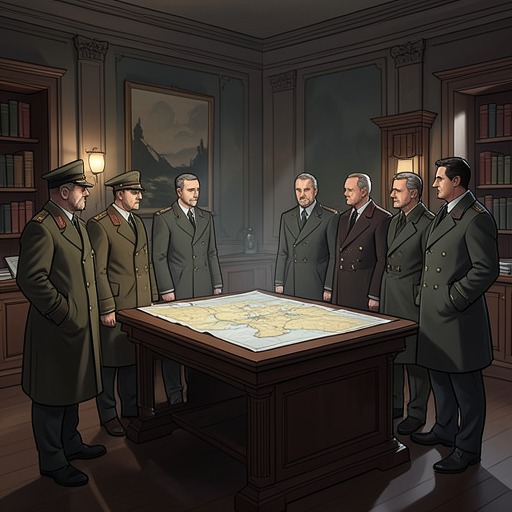
At the trial, prosecutor Brisset asks that the hearing be held in private because of the case’s sensitive nature. Edgar Demange immediately objects, insisting that his client has the right to be treated like anyone else accused. Brisset replies that, in an ordinary case, that principle would be uncontested, but that the evidence against Dreyfus necessarily includes matters of national defence. The conflict is therefore stated in procedural terms: the prosecution invokes the subject matter of the evidence to justify restricting public access, while the defence argues for equal treatment.
The distinction between a closed hearing and a public verdict is made explicit in the formal announcement. The First Permanent Court-Martial of the Military Government of Paris had met in camera, but its finding was read in public session. The announcement framed the charge as the delivery, in 1894, of confidential or secret documents concerning national defence to a foreign power or its agents in Paris. Public proclamation made the result visible; it did not make the evidentiary basis equally accessible to the accused.
The trial’s dramatic confrontation also reveals the unequal position of accusation and answer. Major Henry tells the court that an unnamed, honourable informant had warned of a traitor on the General Staff, then points to Dreyfus as the traitor. Dreyfus, who had been calm, jumps up and demands to know the informer’s name. The scene presents a serious allegation backed by authority but not, in that moment, by an identifiable source the accused can challenge. It illustrates the vulnerability of a process in which the court can receive claims that the defence cannot fully investigate.
Disclosure and the fairness dispute
The secrecy does not remain contained within the courtroom. An intelligence report records a conversation at the Hôtel de l’Athénée between Dr Gibert and Mathieu Dreyfus, whom an agent had followed from his apartment. According to the report, Gibert told Mathieu that the President had said the judges’ conviction rested on secret evidence, not evidence presented in court; the report says the point was repeated, and that Mathieu was visibly emotional after Gibert left. The episode turns a hidden procedural fact into information moving beyond the court.
When Picquart confronts Henry with the report, Henry dismisses the disclosure as ordinary legal procedure and says it changes nothing. Picquart is less sure. He maintains that the secret material does not alter Dreyfus’s guilt, yet recognizes that public knowledge of a conviction based on evidence unseen by both defendant and lawyer would lead some to argue that Dreyfus had not received a fair trial. His response separates his continued belief in guilt from his recognition that the method of conviction could discredit the process. It also explains why senior officers feared political consequences once secrecy began to fail.
Limits on inquiry and later correction
Secrecy also operates beyond the formal hearing as a means of limiting what investigators may connect. When Picquart discusses the possibility of investigating Ferdinand Walsin Esterhazy, Charles-Arthur Gonse permits the inquiry only on condition that Picquart forget the bordereau. The instruction does not itself describe the courtroom procedure, but it shows a related institutional boundary: investigation may proceed so long as it does not reopen the document central to Dreyfus’s conviction. The case’s protected evidence and its protected interpretation thus reinforce one another.
The later outcome makes the procedural dispute consequential without reducing it to a single cause. After Jean Jaurès’s speech in the Chamber of Deputies, General André agrees to review the evidence; the inquiry leads the Criminal Chamber to support review by the Supreme Court of Appeal. On 12 July 1906, that court quashes the Rennes verdict and fully exonerates Dreyfus. The next day, the Chamber of Deputies restores Dreyfus to the army as a major and awards him the Legion of Honour by 432 votes to 32. A separate motion restores Picquart by 449 to 26. These reversals contrast with the earlier closed deliberation and public condemnation: correction comes only after evidence is examined again through further judicial and political processes.
The procedure’s enduring significance in the narrative lies in that contrast. National security is presented as a real reason for withholding material, not merely as an excuse invented in the courtroom; yet the same secrecy deprives the accused of a meaningful chance to answer what judges have seen. The eventual review does not erase the years in which conviction was announced publicly while its evidentiary foundation remained hidden. It shows how a process designed to protect state secrets could also protect a judgment from effective challenge.