The corrupting effects of secrecy
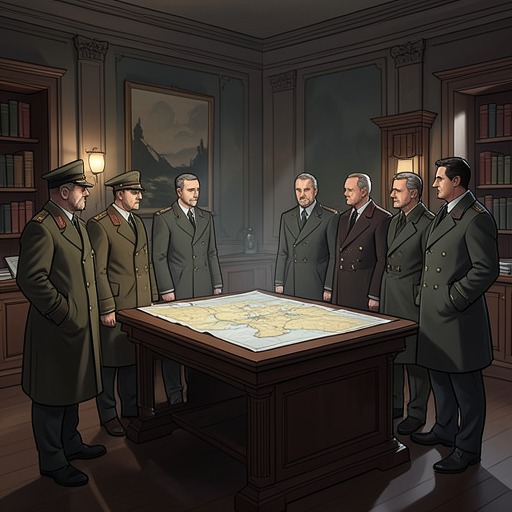
An Officer and a SpyThe corrupting effects of secrecy are shown through the machinery built to protect military information and the damage that machinery does to judgment, procedure, and public trust. In the Dreyfus affair, secrecy begins as an intelligence method but becomes a way to control who may see evidence, silence communication, and preserve an official conclusion even when new facts threaten it. The narrative’s central irony is that an institution determined to keep its secrets eventually gives them greater power over its conduct—and cannot keep them secret at all.
Secrecy as an institutional method
The Statistical Section’s work is organized around restricted access and private routines. Its personnel distrust secretaries; files are requested through Gribelin, while officers and captains handle copying. Documents discarded by an agent inside the German Embassy are recovered before they reach the furnace, often in torn pieces, and Lauth reconstructs them. The work depends on concealment, fragments, and specialized knowledge. Picquart describes the section’s customs as those of a religious sect, an image that makes its secrecy feel not merely practical but enclosed and self-perpetuating.
The information produced by this system does not automatically become reliable knowledge. Picquart’s first weekly report draws on local German newspapers and an agent’s letter about troop activity near Metz. He cannot tell whether the report is important or even true, yet its circulation prompts additional drills and forced marches for fifty thousand troops on the eastern frontier. He recognizes the episode as a lesson in the power of “secret intelligence”: the label itself can make otherwise sane men abandon reason. Secrecy thus magnifies uncertain information by placing it beyond ordinary scrutiny, while the consequences of acting on it fall on people who cannot assess its basis.
The same structure reaches into private life. Guénée, an agent of the Sûreté, reports on surveillance of the Dreyfus family, and Picquart orders that he receive copies of the family’s correspondence as soon as it reaches the Colonial Ministry. The file contains both original letters withheld by the censor and copies of letters allowed through. Reading Dreyfus’s intimate words unsettles the image of him as a cold, stiff figure, but Picquart still instructs Guénée to continue watching the family and to search for a further motive for treason. Surveillance turns private grief into material for an intelligence inquiry; the correspondence is treated less as communication than as a possible source of incriminating signs.
Control, command, and the temptation to conceal
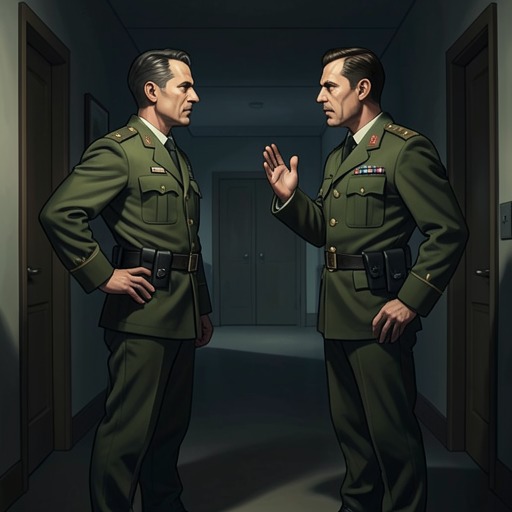
Picquart’s own exercise of secrecy is more complicated than simple obedience. When Henry works on Auguste’s material at home, Picquart insists that sensitive material come directly to the office, where it can be kept in his safe and handled under his authority. He tells Henry that personal custody is not the point: the procedure itself is sloppy and risks discovery by the Germans. When Henry invokes Sandherr’s absence and Picquart’s inexperience, Picquart insists that the Statistical Section is a military unit and that Henry must obey orders. He also seeks to restrict the presence of informers, introduce passes, and move the section into the main ministry building or have its offices redecorated.
These changes are presented both as administrative discipline and as an attempt to end a culture of furtiveness. Picquart leaves Henry’s door open, finds other doors locked, and writes a memorandum setting out new rules. Yet centralizing the material in his safe also gives Picquart control over what is seen and who may pursue it. The narrative does not equate every secret with corruption: Picquart keeps the evidence linking Esterhazy close because he fears that alerting the General Staff could compromise the investigation or warn a well-connected suspect. In this instance, withholding information from superiors is meant to protect inquiry from interference. The same instrument that enables institutional concealment can therefore serve as a temporary safeguard against it.
The conflict becomes sharper when Picquart argues that the Dreyfus case cannot simply be treated as closed. Gonse insists that the verdict ends the matter and orders him to leave Dreyfus out of it. Picquart warns that the army’s reputation would be damaged if it emerged that officials knew the conviction was unsafe and did nothing; Gonse replies that it must not emerge. Secrecy has shifted from protecting sensitive evidence to protecting the institution from the consequences of what it knows. The distinction between keeping information confidential and suppressing a challenge to an official verdict becomes the affair’s central moral and procedural fault line.
The secret that escapes
The attempted containment of the Dreyfus secret dossier exposes the limits of the system. After an anonymous article in L’Éclair claims that a secret file proved Dreyfus’s guilt and calls on the army to publish it, Picquart lists those who know of it: named officials and intelligence personnel, seven judges, the President and his doctor, and Mathieu Dreyfus. The count reaches twenty before Picquart considers how many more people Mathieu may have told. His conclusion is stark: “There is no such thing as a secret.” Photography, telegraphy, railways, and newspaper presses have made information travel beyond the control of any supposed inner circle.
The public leak does not immediately produce openness. Picquart fears that exposure will make Gonse and Boisdeffre panic and further restrict the investigation. Esterhazy’s accusation against Picquart in Le Matin then turns the concealed conflict into a public contest over who has seen what, who passed information to whom, and whose conduct deserves suspicion. Picquart, once a man meant to work in the shadows, finds his name and alleged motives displayed in print. Secrecy has not shielded the institution from scandal; it has helped produce a scandal in which the circulation of claims becomes a weapon.
At Zola’s trial, the logic reaches a public reversal. After the defense reads material from the indictment, Pellieux announces that the army will no longer remain within the bounds of silence: “they want the light; they shall have it!” He then invokes what he calls absolute proof of Dreyfus’s guilt, a document he says cannot be contested in origin. But the assertion offers the court a claim of authority rather than open access to the underlying evidence. The language of disclosure becomes another means of controlling the account: the military chooses what to reveal and presents its own assurance as proof.
Consequences and significance
The narrative links secrecy’s failures to both personal and political consequences. Dreyfus is subjected to correspondence censorship and isolation, while senior officials discuss placing him somewhere he cannot communicate with anyone or receive messages. In the wider crisis, a report that an officer had claimed a document was stolen from the German Embassy prompts a diplomatic emergency: the President demands that the officer be found and silenced as the German ambassador prepares to present a protest. A system built to manage secrets creates new risks through uncontrolled talk, then responds by trying to silence the speaker.
The concept’s significance lies in this cycle. Restricted access can protect a legitimate investigation, as Picquart believes when he keeps the Esterhazy evidence from potentially compromised superiors. But institutional secrecy also prevents scrutiny, lends authority to uncertain intelligence, and encourages officials to treat reputational danger as a reason to preserve a verdict. Once information begins to escape, concealment does not restore confidence; it multiplies suspicion and public exposure. The affair presents secrecy not as a stable wall around truth, but as a fragile arrangement that can corrupt both the handling of evidence and the judgment of those who control it.