The true decryption of Panizzardi’s telegram
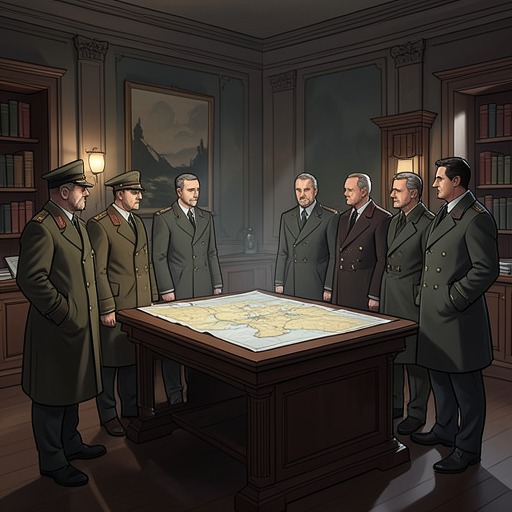
An Officer and a SpyThe true decryption of Alessandro Panizzardi’s telegram turns an alleged confirmation of Alfred Dreyfus’s treason into evidence that the Italian military attaché may not even have known of him. When Georges Picquart brings the military’s accepted translation to Major Étienne Bazeries, Bazeries identifies it as false and supplies the actual text. His account establishes not only what the telegram said, but how the authorities obtained it, tested its decipherment, and received the accurate version before Dreyfus stood trial.
The inquiry into the telegram
Picquart seeks out Bazeries, the presiding expert of a seven-man code-breaking team housed in the French Ministry of Foreign Affairs rather than the Statistical Section or the Ministry of War. The visit takes persistence: Picquart goes twice to the ministry on the pretext of other business, but staff cannot tell him where Bazeries is. Later that month he finally finds him at work in his office, in shirtsleeves and bent over a cylindrical enciphering device taken apart across the desk. The contrast between the officer’s rank and Bazeries’s indifference to it establishes the terms of their meeting: this is an inquiry in which technical knowledge, not command, will decide the matter.
Picquart names the message precisely: the telegram sent by Alessandro Panizzardi to the General Staff in Rome on 2 November 1894. Bazeries says that he broke the cipher, a task that took nine days. Picquart then opens his notebook to show two versions side by side: the encoded text he copied from the archive and the solution attributed to Charles-Arthur Gonse. That solution says that Dreyfus has been arrested, that the Ministry of War has evidence of his dealings with Germany, and that necessary precautions have been taken. Bazeries recognizes the account and reacts with anger. He rejects it as an inaccurate transcription, not a defensible alternative reading, and insists that wanting the telegram to say something cannot make it say so.
How the cipher was broken
Bazeries reconstructs the message’s route through the surveillance system. Panizzardi took the telegram to the telegraph office on Avenue Montaigne at three in the morning; an arrangement with the telegraph service brought it to the code-breaking team by ten. At eleven, Colonel Sandherr arrived in person, demanding an urgent decipherment. The cipher was exceptionally complex and had not previously been broken by the team. Bazeries initially told him that solving it was impossible without some way into the text.
Sandherr supplied that opening by offering a known word. The day before, he had arranged for Dreyfus’s name to be leaked to the newspapers as the identity of the man arrested for espionage. He reasoned that Dreyfus’s employer would panic and contact its superiors. When Panizzardi was followed to the telegraph office in the night, Sandherr concluded that the tactic had worked and gave Bazeries the name Dreyfus as a likely word in the message. The maneuver helped unlock the cipher, but it did not establish that Sandherr’s expectation about its contents was correct. Instead, it placed a prior assumption inside the deciphering process—and the decoded text contradicted that assumption.
The message and its verification
Bazeries shows Picquart the solution written beneath the encoded numerals. It says that if Dreyfus had had no dealings with Panizzardi, it would be appropriate to instruct the ambassador to publish an official denial to forestall press comment. The message therefore does not report that Dreyfus had been dealing with the Italian attaché or that Panizzardi possessed evidence against him. Its conditional wording suggests the opposite: Panizzardi may have been in the dark about Dreyfus and was asking how the ambassador should respond if there was no connection.
Sandherr refused to accept the first solution. He maintained that the team must have misread a word and took the matter to higher levels. To test the decipherment, an agent supplied Panizzardi with fresh information about an unrelated matter, prompting him to send another cipher telegram to Rome containing specific technical terms. The team broke that message as well. In Bazeries’s account, the second decipherment confirmed the first; the process from the original telegram to verification took nine days. He makes clear that this was not an untested guess that could be discarded because it was inconvenient. He asks Picquart not to force the team to repeat an investigation whose result had already been checked.
What the timing establishes
Picquart calculates the significance of the dates. Nine days from 2 November brings the decipherment to 11 November; Dreyfus’s court-martial began on 19 December. Thus, for more than a month before the trial, the Statistical Section had access to a verified translation indicating that Panizzardi might not know Dreyfus at all. Picquart connects this finding to the phrase that lowlife D, which the military had treated as referring to Dreyfus: the telegram could not support that identification if Panizzardi had never heard of him. The inference is not that the message independently identifies another person, but that it undermines a central interpretation used against Dreyfus.
Picquart asks whether the Ministry of War received Bazeries’s correct version. Bazeries says there is no doubt: he gave it to Billecocq for hand delivery. Billecocq, asked to identify the recipient, remembers giving it to Auguste Mercier himself. The exchange makes the episode more than a dispute over a cipher’s technical wording. It traces the accurate reading from the code-breaker through its delivery to the minister, while placing its completion weeks before the trial. The telegram’s correction consequently exposes a divide between what the code-breaking team established and what the military authorities continued to maintain.