
Paid Holidays and Temporary Belonging
And Their Children After ThemThis flow traces the novel’s contrast between work-bound lives and the brief freedom of vacation, including the national identity built around travel and leisure.
increasing Bearing strength in each event
 decreasing
Bearing strength in each eventdecreasingWork Structures the Year
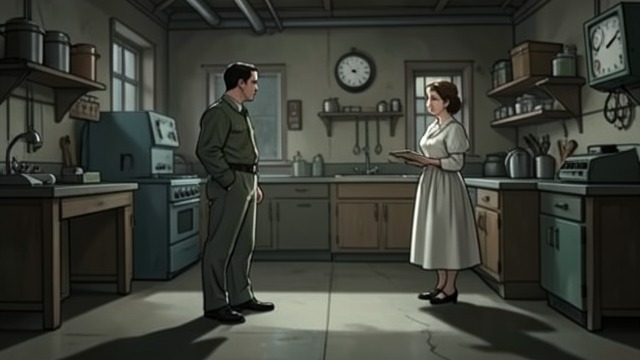
Time Divided by Labor
Ordinary schedules
The adults’ lives are organized around shifts, wages, and the wait for annual leave. When industrial employment declines, the structure remains even as dependable work disappears.
Rest as compensation
Vacation promises a temporary release from routine. Its importance reveals how much daily life is experienced as something to endure rather than freely choose.
Hacine’s Seaside Holiday
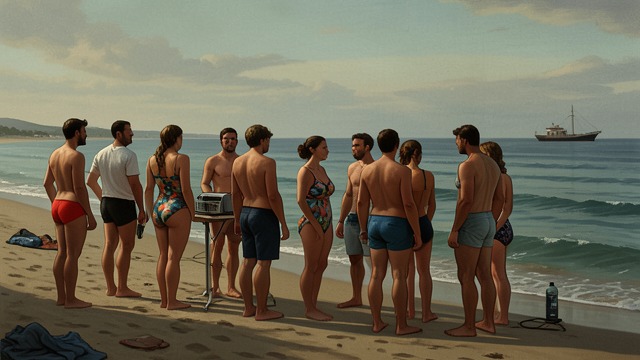
A Different Kind of Ease
A shared vacation
Hacine and Coralie spend time at Six-Fours, eating, swimming, and resting with other families. Hacine is surprised that he can enjoy the ordinary rituals of French holiday life.
Freedom with a return date
The holiday feels welcoming but carries the certainty of returning to work. Its comfort is real, yet bounded by the labor routine waiting at home.
The Nation on the Road
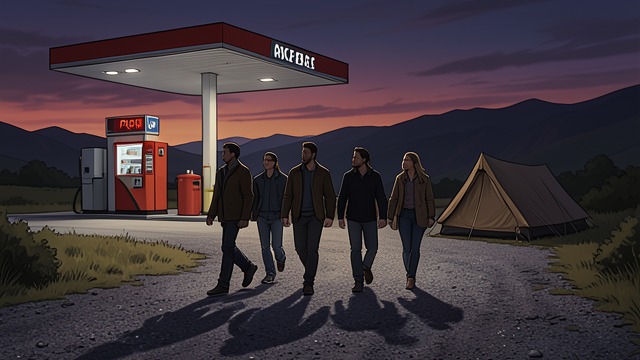
Belonging in Transit
Shared movement
Families cross roads, petrol stations, and campsites in seasonal migrations. Hacine recognizes that this synchronized holiday travel makes people feel part of a larger French community.
A temporary identity
The feeling of belonging is created through common leisure rather than through agreement about history or politics. It remains fragile because everyone must eventually return to work.
The Bastille Day Crowd
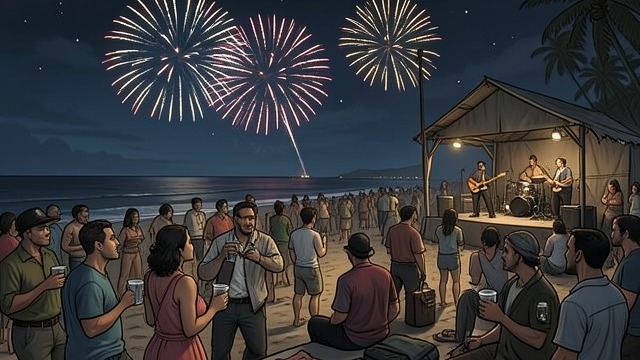
Leisure as Public Life
A town at play
The American Beach fills with residents who come for fireworks, food, drinking, and music. Official speeches try to present the gathering as evidence of Heillange’s renewal.
Unity and disorder
The crowd offers genuine shared pleasure but also produces danger, drunkenness, and exclusion. The celebration shows how leisure can temporarily bind a community without repairing its economic divisions.
Back to Work
The Holiday Ends
Routine resumes
Hacine returns to work after the holiday, while Anthony prepares to report for military service. The contrast between the night’s freedom and the next day’s obligations is immediate.
No permanent escape
The celebration cannot undo economic pressure or family trouble. The return to ordinary time reveals vacation as a pause inside the same unresolved lives.
Before and during the 1990s
Summer 1996
The summer holiday season of 1996
July 14, 1996
July 15, 1996
