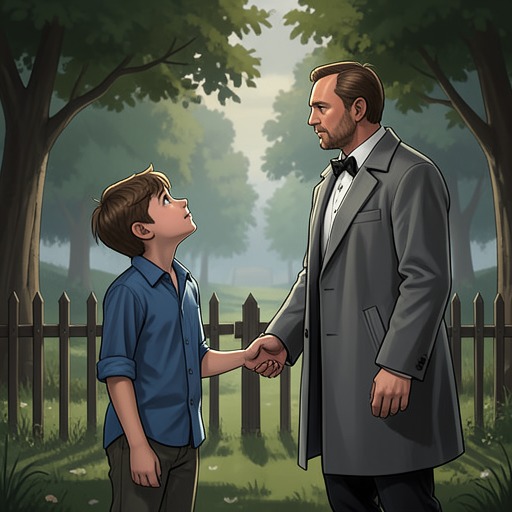
Anthony and Patrick's Father-Son Bond Shaped by Divorce, Alcohol, and Violence
And Their Children After ThemAnthony Casati and Patrick Casati’s father-son bond is marked by separation, conflict, and a persistent, practical form of care. Patrick’s drinking and violence damage the family and leave him increasingly isolated; Anthony, meanwhile, tries to escape the life his father represents. Yet distance never becomes complete severance: even as Anthony prepares to leave Heillange, he continues to check on Patrick and help him manage daily life.
A father awaited at the funeral
At Luc Grandemange’s funeral, Anthony worries about whether Patrick will come. When the service ends, he is relieved to find his father standing near the back door, hands in his pockets. Patrick has had a haircut and is wearing a blue suit; he has also lost a noticeable amount of weight. He watches Anthony and Hélène Casati from a distance with a slight smile. The scene does not repair their strained relationship, but it gives Anthony the presence he had hoped for: Patrick has shown up at an important moment, and his appearance offers a brief image of composure after a period of family upheaval.
That moment of recognition sits against a history in which father and son have been caught between competing accounts of the family’s troubles. During the wrenching period around the divorce, Anthony is pressured to take sides. Hélène interprets his reluctance as insufficient love for her; Patrick believes she has spoiled him and made him weak. Anthony resists both judgments, understanding that each parent has reasons of their own and that he has his own perspective. His refusal to become an instrument in their dispute is not indifference. It is an effort to remain connected to both parents without accepting either parent’s version as the whole truth.
Divorce, property, and the loss of a home
The separation is not only emotional. The Casatis’ house is liquidated quickly, and the proceeds go to settling debts. Furniture, keepsakes, and clothes are discarded; the family has to sell in haste and for very little. The notaire also overturns Patrick’s assumptions about the home: he had believed that he brought in the money and that the house, his wife, and his child were his. In the formal division of property, he learns that he does not own the house. Legal arrangements replace the authority and security he thought he possessed.
The loss reaches back across the couple’s twenty years of sacrifices and efforts to make ends meet. Patrick nearly comes to blows during the division of possessions, and the legal dispute continues to burden him afterward. Anthony sees how the divorce leaves his father with little work, few friends, and a diminished sense of control. He can picture himself in Patrick’s position even while living with his mother and refusing to blame her. That imaginative sympathy does not excuse Patrick’s conduct, but it complicates any simple division of the family into a guilty parent and an innocent one.
Violence and its consequences
The conflict between father and son becomes stark when Patrick enters a room and finds Anthony facing Hacine Bouali. Hélène has explained what happened, and Patrick immediately connects Hacine with the motorcycle, its theft, and the divorce. His understanding of the scene is shaped by accumulated grievance: to him, the separate injuries have become one chain of evidence. The confrontation shows how the family rupture has altered the way Patrick reads events around his son, turning a present dispute into a continuation of the losses he associates with the marriage’s end.
Patrick’s trial for the violent fight brings lasting material consequences. He does not go to jail, but the family has feared that outcome until the trial is over. The fight, legal fees, fine, and loss of his job leave Patrick deeply in debt. Anthony recognizes the severity of what has happened and also the limits of sympathy: Patrick has a long history of drinking, stubbornness, and brutality, and the consequences do not make him blameless. The trial thus changes the terms of their relationship. Patrick is not only the father whose choices have helped fracture the family; he is also a man left exposed to the financial and social penalties that follow those choices.
Distance and everyday care
After the trial, Patrick moves again, into a roughly two-hundred-square-foot ground-floor studio in a converted barracks on the highway out of Heillange toward Mondevaux. From its window are a health-services office, a roundabout, railway tracks, and a billboard advertising E.Leclerc or Darty. The view is a sharp contrast with the home he once assumed was his. On one visit, Anthony sees Patrick returning from a grocery store with a case of inexpensive beer. Patrick puts it down while searching for his key, opens the door, and forgets the beer outside until he comes back for it.
Over the next two years, Anthony finds his father asleep in bed, still dressed and barely responsive. He checks that Patrick is breathing, then cleans the studio: he fills large bags with empty bottles, vacuums, changes the sheets, and runs the washing machine. He has a key and locks the door when he leaves. At other times he brings food cooked by Hélène. Patrick does not drink while Anthony is there; Anthony heats lasagna and watches him eat. These visits are not presented as a reconciliation or as a cure for Patrick’s drinking. They are concrete acts of maintenance, performed by a son who cannot make his father well but will not simply leave him unattended.
Anthony’s presence also reveals the awkwardness of their closeness. He does not stay long after the meal, and Patrick’s condition remains precarious. The son’s care is quiet and practical rather than openly intimate: checking, cleaning, feeding, and leaving the key. The tasks reverse the ordinary direction of dependence, but they do not erase the imbalance or history that made the reversal necessary. Anthony can look after Patrick while still wanting a life beyond him.
Leaving Heillange without severing the bond
As Anthony prepares to leave, he packs for the army, which he sees as a way to get out of Heillange and put hundreds of miles between himself and his father. The approaching end of childhood sharpens his sense that his earlier behavior will no longer be shielded by his age. Military life offers an ordered alternative in which he can follow instructions, but its immediate appeal is escape. On the eve of departure, he plans one last ride on his 125 and a night at a party; the train is scheduled for 10:15 the next morning.
The departure does not cancel the relationship. Anthony’s visits to Patrick’s studio show that distance is something he seeks, not proof that he has stopped caring. Their bond remains unresolved: Patrick’s drinking and past violence have helped drive Anthony away, while Anthony’s continued acts of care keep a connection alive. The relationship’s force lies in that contradiction. A son can recognize the damage his father has done, refuse to live inside his father’s failures, and still return with food, a key, and the effort to make the small apartment habitable.