Anthony–Patrick father-son relationship
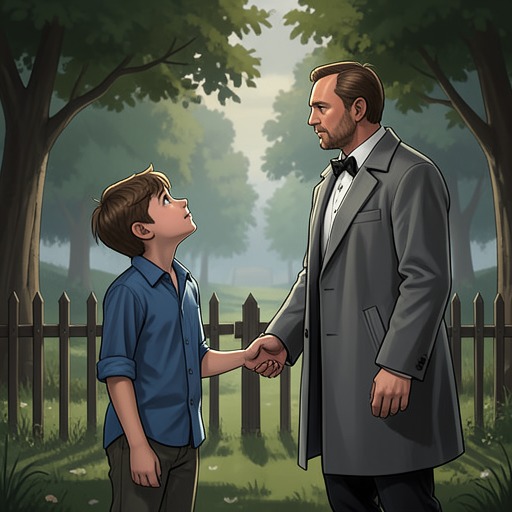
And Their Children After ThemAnthony–Patrick father-son relationship is shaped by care that arrives late, awkwardly, and often without a reply. Patrick wants to do right by his son as Anthony prepares to leave for military service in Germany, but their hoped-for fishing outing becomes a day of waiting, drinking, and an unfinished gift. Their last observed encounter leaves Patrick watching Anthony dance with a girl, unable to enter the son’s world; after Patrick’s drowning, the silence between father and son persists in the family’s difficulty discussing his death.
A belated attempt at closeness
Patrick’s plan to take Anthony fishing begins in a small, vivid remnant of their shared past: an old Nesquik tin, half full of weevil grubs. The larvae disgusted Anthony when he was little, and Patrick remembers the boy holding a bowl of hot chocolate in both hands, with a cowlick on his head. The bait tins are nearly fifteen years old, relics of a childhood Patrick had not often taken the time to share. Now he thinks fishing is a good idea before Anthony leaves. The plan carries affection, but also an awareness that their opportunity is running out.
Patrick prepares carefully, buying fresh bait from Lamboley’s and getting the fishing poles ready. The care he takes contrasts with how little fishing they had done together before. His wish to make this outing count is not expressed through a conversation with Anthony; it is embodied in an old can, the poles, and a decision made at a moment when the son is about to go away.
The departure gives Patrick a source of pride as well as unease. He is pleased that Anthony will soon be in uniform in Germany, but thinks of the future through the reassuring word military rather than by dwelling on his son becoming a soldier. To Patrick, the word suggests moderate heroism, order, discipline, and the steadiness of a civil-service job. His pride is therefore real, but framed in terms of stability and routine—the very security that has been difficult to sustain in the family’s life.
Waiting, the gift, and the missed connection
On the day he expects Anthony, Patrick has little to do but wait. He rolls cigarettes for the week and falls asleep in front of the television, waking to the Bastille Day parade: tanks moving down the Champs-Élysées, bands and troops marching, planes overhead, and President Chirac standing in a Jeep. The public ceremony of military order unfolds while Patrick waits privately for his son, whose impending uniform has given the day its personal significance.
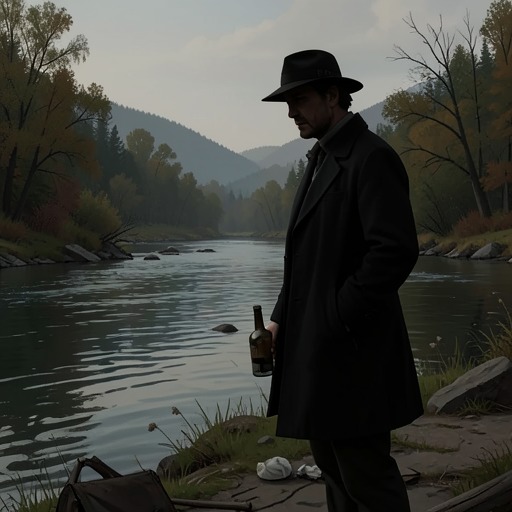
By mid-afternoon Anthony has not come. Patrick stares at a shiny, ribboned present he has fetched from under the sink and mutters that the boy does not care about anyone. He tries to stay awake in an uncomfortable chair, then drinks beer and falls asleep. When he wakes after eight, the fishing grubs are still crawling in their tin, but the day has been lost. He unwraps the gift: a beautiful hunting knife with a wide, nearly black blade, sharp enough that he has tested it on his forearm. Patrick places it in its sheath and tucks it into his belt. Since Anthony has not come, he will find him and give him the present anyway. He takes beers for the road, gets into his 205 hatchback, and heads for the lake.
The knife is a forceful, practical gift, in keeping with Patrick’s sense of himself as a man whose hands were made to use tools and shape things. Yet the scene does not show him handing it to Anthony. Instead, the anticipated exchange remains unresolved: Patrick sets out determined to give the present, but the relationship’s most important gestures keep meeting absence, delay, or distance.
Watching Anthony from the edge
Later, Patrick reaches the dance floor, tired and physically spent. The blue lighting and slow music turn the room toward an intimacy he can only observe. He sees Anthony holding a girl close as they move together, their hair and sweat mingling. Patrick notices his son’s hand slide up the girl’s back and sees him speak in her ear; when the song ends, the two disappear without even holding hands.
The song by Eros Ramazzotti makes Patrick think of lives worn down by work, divorce, death, loneliness, and efforts that cannot control their outcomes. Its melancholy gathers the disappointments of his generation into a moment of reflection. Anthony, by contrast, is absorbed in the girl and does not share his father’s vision of diminished lives. The contrast is not simply between an older man and a young couple: Patrick is close enough to see his son, but not close enough to take part in what the son is experiencing. He stands panting and unable to move, no longer thirsty, with one clear resolve: he does not want to go to sleep. The scene offers no reconciliation or exchange between them, only Patrick’s continued wakefulness after Anthony has vanished from view.
Death, memory, and what remains unsaid
Two years after Patrick’s death, Anthony tells Hacine that his father died exactly two years earlier. Asked what happened, he answers that Patrick drowned, and Hacine asks whether it was in the lake. The spare exchange confirms Patrick’s death without turning it into a resolved account of their relationship. Anthony’s observation that the past is finished suggests a boundary he wants to draw, even as the conversation makes the loss present again.
Anthony and Hélène later sit beside the lake and finally approach the subject of Patrick. Hélène had sent the news in a letter while Anthony was serving in Germany; he came home for the funeral, but formalities, paperwork, and clearing out the apartment took up their time. When Anthony asked what they would do with Patrick’s belongings, Hélène answered that there was very little. Patrick had lived in a tiny apartment and owned only two pairs of jeans, three shirts, a television, and a few pots and pans. His death appears as the conclusion of a long process of diminishing possessions and presence, rather than as a sudden rupture that the family knew how to mourn together.
Hélène now remembers her marriage without speaking either well or ill of Patrick. She arranges scattered episodes into a story that accepts their life as it was: there had been good times, and she does not regret the part of her life they shared. When Anthony is stubborn, she sometimes says he is just like his father. It is not a compliment, though Anthony is proud of the likeness. In this late family conversation, the resemblance becomes one of the few inheritances Anthony can openly claim. Their relationship is thus carried forward less through a final reconciliation than through objects, remembered gestures, the fact of Patrick’s death, and qualities Anthony recognizes in himself.