Basque Country
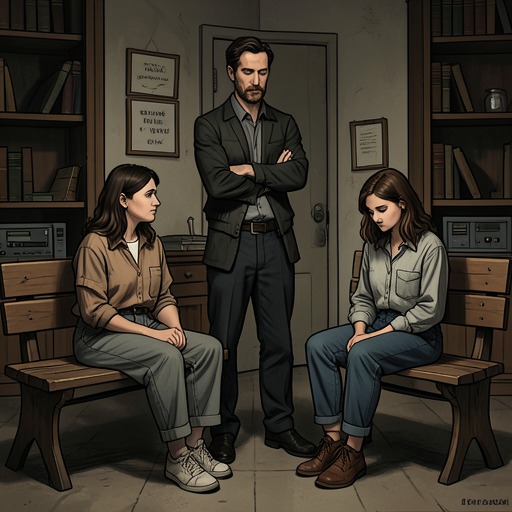
And Their Children After ThemThe Basque Country is the anticipated destination of a summer holiday that matters to Stéphanie and Clémence as both a rare invitation and a promise of freedom. Their plans center on a Rotier-owned former sheepfold near Biarritz, facing the ocean. They never reach it: Simon Rotier’s departure for California leads to the cancellation of the trip. The place is therefore defined less by events there than by the elaborate future the girls imagine around it, and by the abrupt loss of that future.
Setting and Access
The house belongs to the Rotier family and stands in the Basque Country near Biarritz, with the ocean directly before it. The family invites a select group there each August. For Stéphanie and Clémence, receiving invitations for the first time is a distinction in itself: access to the holiday marks a new social opportunity, not simply a convenient place to stay. Its importance comes partly from being chosen, and partly from the setting’s distance from their ordinary routines.
The evidence presents the house as an anticipated base for a holiday, rather than describing its rooms, its exact location, or the surrounding town in detail. What is established is the combination of a family-owned sheepfold, an ocean-facing position, and a yearly August gathering. Those details give the destination a sharply defined appeal without making it a place the narrative actually explores. The Basque Country enters the plot as a destination toward which the characters orient their plans, not as a visited landscape.
The Holiday Stéphanie and Clémence Imagine
The girls have been dreaming constantly about what they will do there. Stéphanie pictures swimming every day, surfing, barbecues, and parties that continue through the holiday. She also imagines being alone with Simon beneath the pine trees, with the sea close by. Her fantasy joins the place’s outdoor pleasures to her expectation of intimacy with him; the Basque Country is at once a coastal setting and the imagined stage for a relationship she wants to deepen.
Their anticipation sits beside other immediate ambitions. Stéphanie is working toward honors, a car, and the vacation, while trying to keep up with schoolwork and prepare for her driver’s test. A red convertible Peugeot 205 with 140,000 miles on its odometer has given the prospect of getting around a concrete form. The car and the holiday are distinct hopes, but both promise mobility: one would help her move around locally, while the other would take her and Clémence to an eagerly anticipated summer elsewhere. The destination’s value is thus tied not only to its ocean-facing setting but also to the possibility of getting away from the pressures organizing Stéphanie’s spring.
Clémence punctures the idealized holiday with a joke about uncomfortable sand, briefly bringing the imagined beach back to the body. The exchange does not dissolve their excitement. Instead, it shows the friends sharing a plan closely enough to tease its details while continuing to treat the trip as a real prospect. For Stéphanie, the imagined holiday also includes Simon, whom she considers her boyfriend despite their repeated breakups and reconciliations. The setting gathers several expectations into one plan: time with Clémence, time by the sea, and time with Simon.
Cancellation and Reversal
The plan ends when Simon tells Stéphanie and Clémence that the Biarritz trip is off. He explains that his oldest cousin, Julien, had been due to spend a month on the West Coast of the United States but broke his leg while roller skating. Simon is taking his place. The arrangement had been made well in advance, his bags are already packed, and he is due to leave in three days for Carmel, California, where he will stay with a family of psychologists. He describes it as an opportunity he will not pass up and says he is sorry.
The change is immediate and consequential for the girls: the Basque Country holiday they had planned together will not happen. Stéphanie asks whether Simon is simply abandoning them, while Clémence turns around in the car and Stéphanie nearly stalls it. Simon’s account explains his choice but does not restore the shared plan. The destination’s collapse is therefore bound to a personal disappointment as well as a change of travel arrangements: Stéphanie had been imagining the holiday with Simon, and he is now leaving without her and Clémence.
Narrative Significance
The Basque Country functions as a carefully imagined counterpoint to Stéphanie’s increasingly sedentary spring. From April onward, her father’s academic demands have pushed her into extensive studying, and she is also practicing for her driver’s license. She is only beginning to understand how educational choices shape future opportunities; the holiday, by contrast, promises pleasures she can picture immediately. Its daily swims, surfing, parties, and imagined intimacy offer a vivid alternative to the work through which she is trying to secure a future.
Because the trip is anticipated and then cancelled rather than narrated as an actual visit, the place remains inseparable from expectation. The ocean-facing house, pine trees, and planned activities acquire significance through what Stéphanie and Clémence hope will happen there—and through Simon’s decision to go elsewhere. The Basque Country is not a setting for their holiday scenes; it is the destination whose sudden unavailability exposes how much emotional weight they had placed on the journey.