Lake near Heillange
And Their Children After ThemLake near Heillange is a recreational landscape threaded with beaches, a campground, a boathouse, and routes across the water, but it is also the place where the Colin boy disappeared after a crowded night of fighting. The lake’s two roles remain inseparable: people return to swim, watch, and travel along its shore, even as its water and surrounding woods hold an unanswered question. For Anthony and his cousin, it belongs to the ordinary geography of boredom and summer; for the town, it is the setting of a disappearance that was never resolved.
Setting and Shoreline
The lake is bordered by several distinct places used for swimming and recreation. Anthony and his cousin habitually went to Déchetterie Beach, a relatively accessible stretch known by a name associated with a dump. It was said to be near a sewer outlet, which kept its midseason crowds small. The narrative sets this quieter spot among alternatives: the beach at the Léo-Lagrange recreation center, the campground beach, and American Beach. Across Pointu Spit, which divides the lake, lies the Sailing Club beach, distinguished by pine trees, sand, cabanas, and a bar. The shoreline is therefore not a single uniform setting but a sequence of places with different degrees of access, use, and social character.
The water is also part of the infrastructure of local leisure. A boathouse at the Léo-Lagrange recreation center sits below an old railway embankment; when Anthony and his cousin approach, it is open and apparently unattended. They use that opportunity to take a canoe out onto the lake. After paddling for a while, the cousin turns toward the shore and aims for Pointu Spit, hoping the pair can pass around it out of sight for a few minutes. The route makes the lake feel navigable and familiar, a place whose coves and landmarks can be used to move between public view and temporary concealment.
The Disappearance and Search
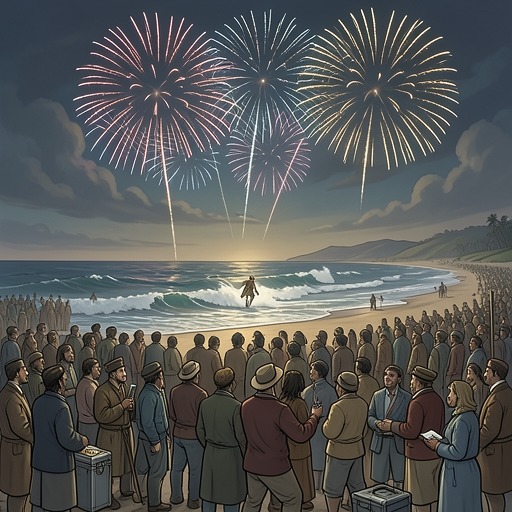
A year before the opening summer scene, a large crowd gathered by the lake and in the surrounding woods on July 14 to watch fireworks. Campfires and barbecues accompanied the gathering. Fighting broke out after midnight, drawing in several groups, including soldiers on leave, residents of the projects, local youths, and older campers. By dawn, the aftermath was scattered along the shore: rubbish, broken objects, and a sailing-club dinghy lodged in a tree. The Colin boy, who had come with friends to watch the familiar fights, was missing.
Accounts of what happened to him remained uncertain. His friends later testified that he had been at the lakeshore, and witnesses spoke of a boy who appeared injured, but the sequence of events was unclear and no one had helped him during the confusion. The contrast between the visible disorder at daybreak and the absent boy became central to the lake’s meaning in the town: there was evidence of a violent night, but no settled account of how it had ended for him.
In the days that followed, the préfet ordered searches of the nearby woods while divers searched the lake. Onlookers watched firefighters’ orange Zodiac boats cross the water and waited in silence as divers entered and returned. The search gave the lake a second, more anxious rhythm: the same water that served for boating and swimming was repeatedly examined for an answer. The Colin boy’s father, a town police officer and hunter, remained aboard the firefighters’ boat in the sun. People on shore watched his stillness and judged it against their expectation that he should act. The body was never found, and the search did not resolve the disappearance.
Everyday Use and Narrative Significance
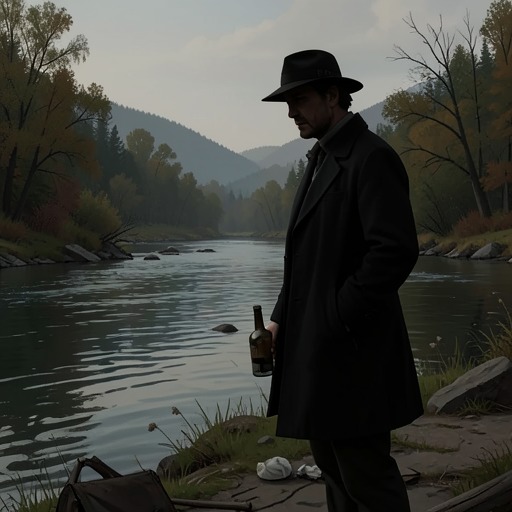
The lake’s past does not remove it from everyday life. In the present summer scene, Anthony refuses his cousin’s suggestion that they swim. He sits looking toward the water, smokes, and measures the slow afternoon against the approaching start of classes. His cousin’s frustration and their shared sense of having nothing to do turn the lake into a backdrop for adolescent restlessness as well as a place for recreation. The water is near at hand, but Anthony’s refusal keeps him apart from it; later, the two boys set out by canoe, shifting from idle observation to movement across the lake.
That movement brings the lake’s contrasting uses together. Other beachgoers stand to watch and call encouragement as the boys paddle, while the cousin chooses a route along the shore toward Pointu Spit. The same crowded, socially divided shoreline that once framed the Colin boy’s disappearance is now a public space where ordinary summer activity attracts an audience. The narrative does not present these later outings as a resolution of the earlier event. Instead, the geography persists across both: beaches, woods, and water remain available for routine use, while the missing boy’s fate remains unknown. Lake near Heillange is thus defined not by a single incident but by the coexistence of familiar leisure and unresolved loss.