Patrick’s final attempt to find Anthony
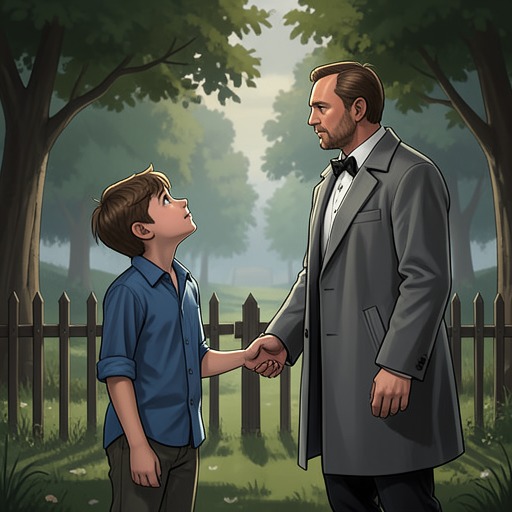
And Their Children After ThemPatrick Casati’s final attempt to find Anthony Casati begins as a small act of fatherly repair: he prepares bait and fishing poles, intending to take his son fishing before Anthony leaves, and buys him a hunting knife as a present. When Anthony fails to arrive, Patrick drinks, falls asleep, and eventually drives to the lake and searches for him in a crowd. The effort ends not with a reunion but with the discovery that Anthony had been nearby only moments earlier. Its force lies in that narrow interval between presence and absence, and in the care Patrick can still offer but cannot make his son accept.
A plan for time together
Patrick starts the day trying to do things properly. He gets up early to buy fresh bait from Lamboley’s, then returns with weevil grubs in an old Nesquik can, its pierced cover preserving a routine from Anthony’s childhood. The sight of the larvae brings back the memory of how much they revolted Anthony when he was little: a boy holding a hot-chocolate bowl in both hands, with a cowlick on his head. The battered bait tin has lasted almost fifteen years, making the proposed fishing trip an encounter with the distance between that remembered child and the son Patrick hopes to see now.
Patrick admits to himself that he had not taken Anthony fishing often. That history gives the outing its urgency: it is a good idea to do it now, before Anthony leaves. The preparation is practical, but its timing makes it an attempt to recover something the father-son relationship has not been given often. The old can, the fresh bait, and the readied poles all belong to a modest scene of care; none can guarantee that Anthony will come.
Waiting, drinking, and the unopened present
With the preparations made, Patrick has little to do but wait. He rolls cigarettes for the week and stores them in an airtight metal box, then dozes in front of the television with the tobacco and roller in his lap. A towel beneath him keeps the loose material from spilling. The domestic details set the pace of the day: preparation gives way to idleness, and the promised meeting remains suspended while Patrick waits.
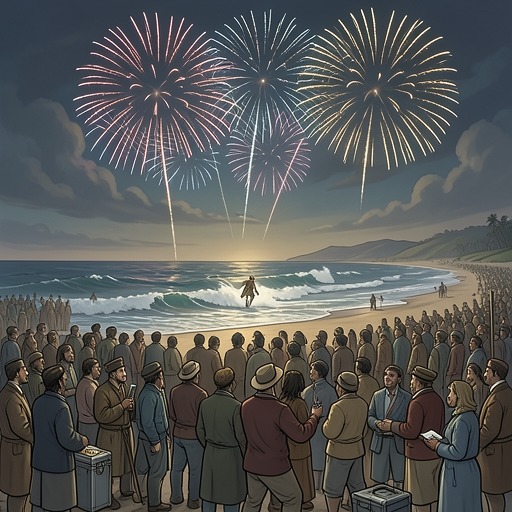
The televised parade wakes him. Tanks roll down the Champs-Élysées; bands march, planes fly overhead, and troops advance in what the narration presents as a moving geometry. Patrick laughs at Chirac standing stiffly in his Jeep. The public spectacle briefly breaks into his private waiting, but it does not change its outcome. By almost three o’clock, he is still alone with the gift, wrapped in shiny paper and tied with curly ribbon. He mutters that Anthony does not care about anyone, then drinks three beers from the pack intended for a men’s outing and falls asleep in his chair.
He wakes after eight, stiff and aware that the day has been lost. The grubs are still crawling in the can, but the sky that had seemed pleasant now promises emptiness. Patrick closes the window, breathes heavily, and looks again at the present. He tears off the wrapping, opens the rectangular box, and examines the hunting knife: a wide, nearly black blade, shaped like a Judas-tree leaf and sharp enough that he has tested its edge on his forearm. He slides it into its sheath and puts the sheath in his belt. Anthony’s absence has changed the gift from a planned offering into the reason Patrick goes looking for him.
The search in the crowd
Patrick takes a couple of beers for the road, gets into his 205 hatchback, and drives toward the lake. His decision has both tenderness and force in it: he is determined to give Anthony the present whether the son wants it or not. The hunting knife is concealed under his polo shirt, while alcohol accompanies him on the journey. The combination makes the search uneasy; Patrick is not approaching the meeting in a state of calm, but as a drunk, bitter man who experiences himself as all-powerful even while doubting that he will find his son in the flood of faces and light.
Rudi points out a figure who could be Anthony, and Patrick follows the direction of his gaze. Rather than ask how Rudi recognized him, Patrick accepts the lead and makes his way through people moving the other way. He checks that the knife remains in his belt. At a table he finds Anthony’s cousin, Carine, and several young people. Patrick knows these children from when they were small: they had played at his house, ridden carousels with him, and gone swimming with him at the pool. His question about Anthony is addressed not to strangers but to young people connected to a much earlier version of his family life.
Another missed meeting
The table’s occupants exchange glances and hesitate before Anthony’s cousin answers. Anthony had been there five minutes earlier; he had gone to urinate. The detail makes the failure painfully precise. Patrick has not been searching a wholly separate world from his son: Anthony was in the same gathering, close enough that the cousin can account for his departure in minutes. But by the time Patrick reaches the table, the brief overlap has already passed.
Patrick explains that Anthony was supposed to come see him. The young people do not respond, and he recognizes that they have little reason to take responsibility for the missed appointment. He feels weary, stubs out his cigarette, smiles, and leaves them to their evening. His retreat contrasts with the insistence that brought him there: he had set out to find Anthony and deliver the knife, yet at the table he does not press the cousin to help him pursue his son or force an encounter. The search thus ends with knowledge of how close Anthony had been, but without contact between father and son.
The failed meeting gathers the episode’s ordinary objects into a single pattern of belatedness. The childhood bait tin recalls time Patrick and Anthony shared; the wrapped present waits through the afternoon; the knife is finally carried into the crowd; and the crowd yields only news that Anthony has just left. Patrick’s effort is genuine, but the scene does not turn it into reconciliation. It leaves him with a gift still undelivered and a relationship in which care, resentment, and missed timing remain entangled.