France
And Then There Were NoneFrance is a recurring geographical and psychological reference point in Agatha Christie's And Then There Were None, appearing not as a direct setting of the novel's present action but as the location of pivotal past events that define the characters' guilt and shape their fates. It is the place where the First World War was fought, where General Macarthur committed his act of murderous betrayal, and where Vera Claythorne's traumatic memory of drowning Cyril Hamilton is inextricably linked to the sea. The country also serves as a destination for escape and a source of the moral corruption that the novel's avenger, U. N. Owen, seeks to punish. Through these associations, France becomes a symbol of the past that cannot be outrun, a landscape of memory where the seeds of the characters' destruction were sown.
France as the Site of Wartime Crime and Memory
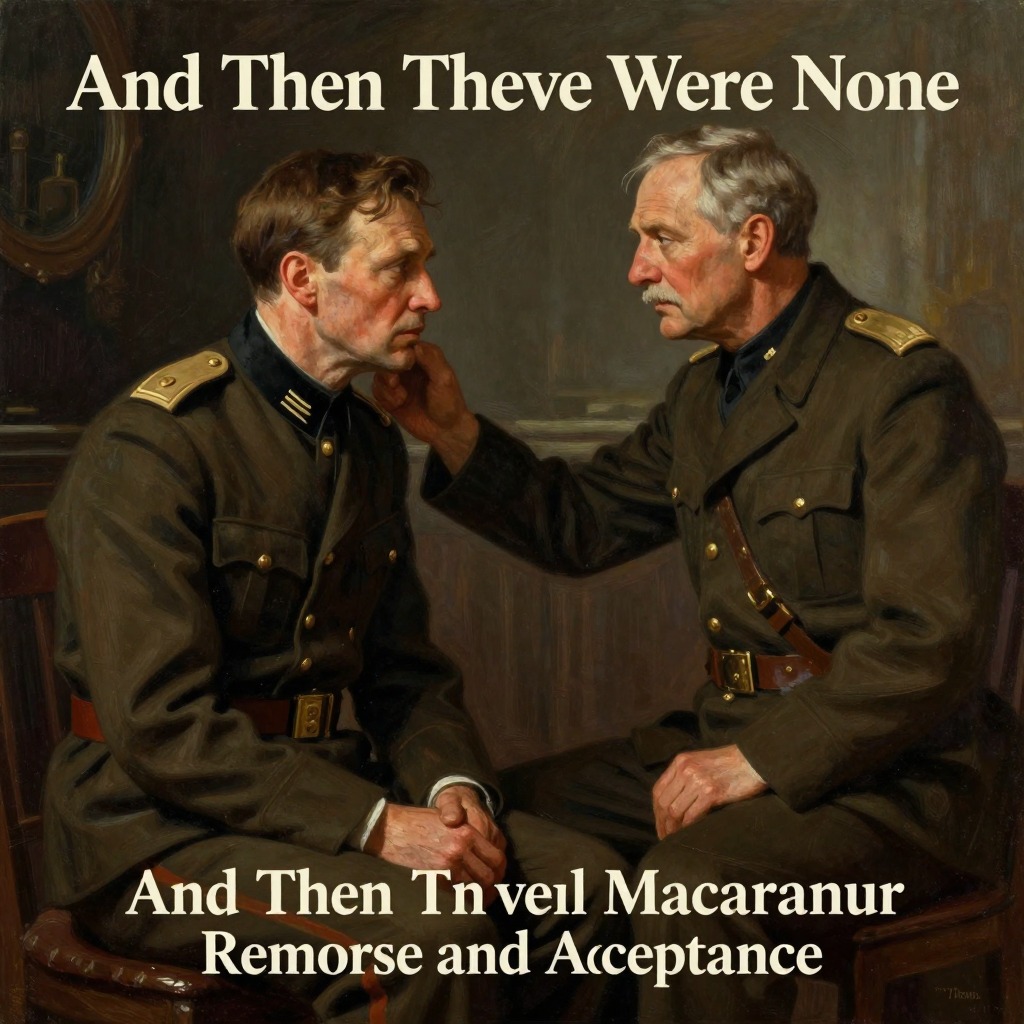
The most significant association with France in the novel is the First World War, which provides the setting for General Macarthur's crime. It was in France, during the war, that Macarthur deliberately sent his wife's lover, Arthur Richmond, to his death on a reconnaissance mission. The memory of this act haunts him, and the novel's narrative repeatedly returns to the French battlefield where his jealousy and rage culminated in murder. The war in France is not merely a historical backdrop but the crucible in which Macarthur's guilt was forged. The chaos and confusion of the front lines allowed him to disguise his act as a tactical blunder, a fact that underscores the novel's theme of crimes that escape legal punishment. The French setting of this crime is also where Macarthur's fellow officer, Armitage, may have witnessed the truth, a suspicion that later isolates Macarthur in his Devon retirement. The war in France thus represents a time of moral breakdown, where the normal rules of law and humanity were suspended, enabling a crime that the civilian justice system could never touch.
France as a Destination of Escape and Moral Corruption
France also appears as a destination for characters seeking escape or pursuing morally dubious activities. Philip Lombard, whose past includes abandoning twenty-one men of an East African tribe to die, is described as having a reputation for being a good man in a tight place, a reputation built in part through his exploits in various dangerous locations, including France. The country is also mentioned in the context of Anthony Marston's reckless driving; he reflects that driving in England is hopeless compared to France, where one could "really let out." This casual remark reveals his callous disregard for the lives of others, a trait that makes him a target for U. N. Owen. Furthermore, the novel's epilogue reveals that the investigation into the deaths on Indian Island uncovered that Arthur Richmond, the man Macarthur murdered, was serving under the General in France and was killed in action. The official record showed no friction between them, highlighting how the war in France provided a perfect cover for murder. France, in these instances, is a place where the constraints of civilized society are loosened, allowing for both physical and moral recklessness.
France as a Symbol of Inescapable Justice
Beyond its specific narrative functions, France operates as a symbol of the inescapable reach of the justice that U. N. Owen represents. The crimes committed in France—Macarthur's murder of Richmond, and the broader context of wartime violence—are precisely the kind of offenses that the law cannot touch. Yet, they are not forgotten. The novel's structure, in which the past relentlessly catches up with the characters, suggests that no geographical distance, not even the channel between England and France, can provide sanctuary from moral accountability. The sea that separates the island from the mainland, and which also separates England from France, becomes a metaphor for the barrier between the characters and their pasts. Just as the stormy sea traps them on Indian Island, the memory of their actions in France traps them in a cycle of guilt and fear. The country thus serves as a reminder that the past is not a foreign country but a living presence that shapes and ultimately destroys the present.
France in the Confession and the Final Reckoning
In the manuscript confession that concludes the novel, Lawrence Wargrave reveals that his plan was conceived and executed with a meticulousness that mirrors the legal system he once served. While France is not directly mentioned in the confession, the crimes that Wargrave selected for punishment—including those committed in France—are the raw material of his grand design. The confession itself, cast into the sea in a bottle, is a final act of communication that transcends national boundaries, much like the moral judgment Wargrave sought to impose. The discovery of the confession by a fishing trawler, the Emma Jane, brings the story full circle, ensuring that the truth, like the crimes committed in France, will eventually come to light. France, therefore, is not merely a location but a thematic element that reinforces the novel's central argument: that no crime, however well-concealed by time or distance, can escape the ultimate reckoning.