Vera Elizabeth Claythorne
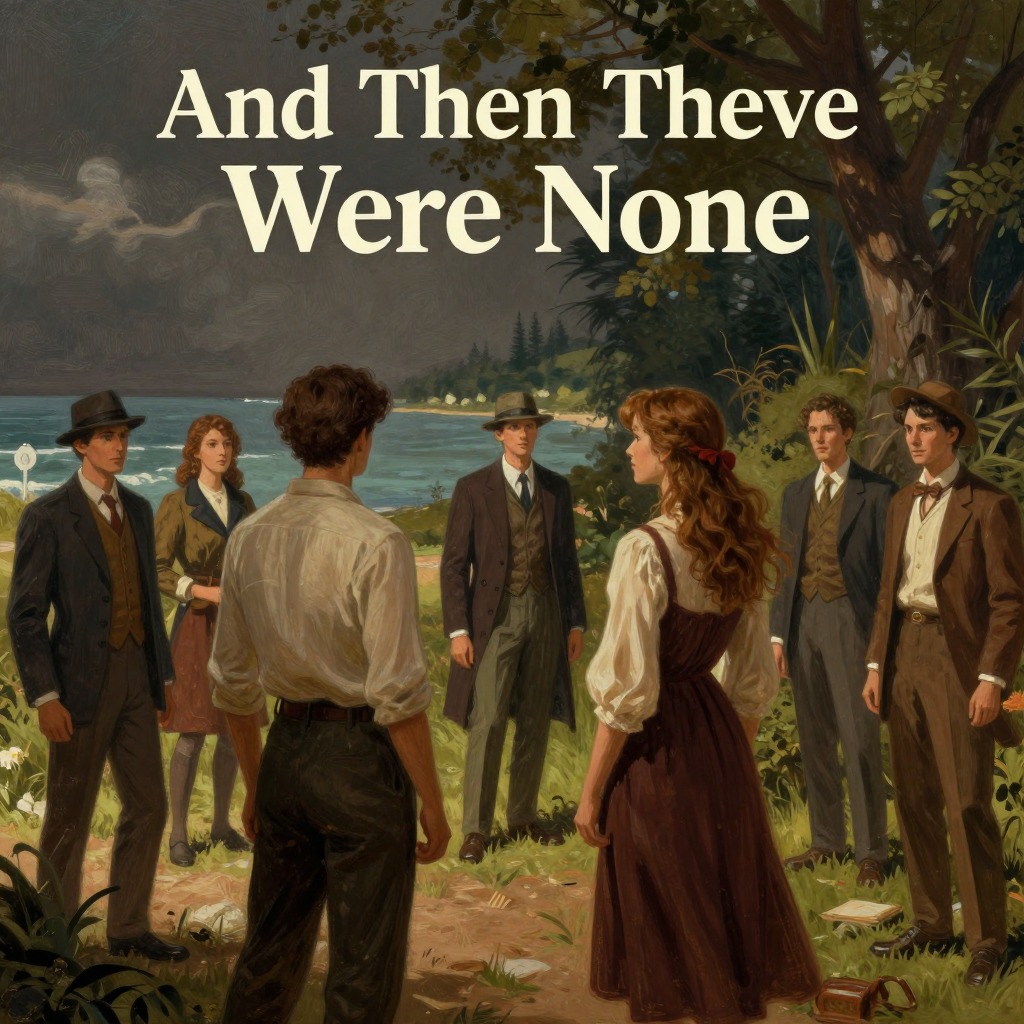
And Then There Were NoneVera Elizabeth Claythorne is a young, competent, and initially self-possessed woman who arrives on Indian Island as a temporary secretary, but her past as a governess conceals a murder that the island's unseen host, U. N. Owen, will ruthlessly expose. She is the last of the ten guests to die, and her death—a suicide by hanging in her own bedroom—completes the nursery rhyme that has governed the entire sequence of killings. Her trajectory from cool-headed professional to terrified, guilt-ridden survivor is one of the novel's most psychologically detailed arcs.
Identity and Background
Vera Claythorne is a games mistress at a third-class school, tired after a strenuous term, who has taken a holiday post as a secretary to Mrs. Owen on Indian Island. She is described as "quite attractive—a bit schoolmistressy perhaps" by Philip Lombard, who also judges her "a cool customer" who could "hold her own—in love or war." She is efficient and authoritative: at Oakbridge station, she immediately takes charge, directing the other guests into taxis with the same tone she might use to assign tennis sets. But beneath this capable exterior lies a traumatic memory. She had been a nursery governess to Cyril Ogilvie Hamilton, a child who drowned while swimming. Though a coroner's inquest acquitted her of all blame, and the child's mother, Mrs. Hamilton, was kind to her, Vera is haunted by the event. She remembers Cyril's head "bobbing up and down, swimming to the rock" and herself swimming after him "knowing, only too surely, that she wouldn't be in time." The memory is inextricably linked to Hugo Hamilton, Cyril's uncle, with whom Vera was in love. Hugo had told her he loved her, but after the drowning he went away, and she never heard from him again.
Life and Plot Trajectory
Vera travels to Indian Island by train, reading the framed nursery rhyme "Ten Little Indian Boys" in her bedroom and smiling at the conceit. On the first evening, during dinner, she notices the ten china figures on the table and connects them to the rhyme. After the gramophone accusation—which charges her with killing Cyril Ogilvie Hamilton on August 11, 1935—she breaks down, weeping, and insists it was an accident. She tells the other guests that Cyril was forbidden to swim out far, that her attention was distracted, and that she swam after him but could not get there in time. She is the first to notice that the china figures are disappearing in step with the deaths: after Anthony Marston chokes and Mrs. Rogers dies in her sleep, she finds only eight figures on the table. As the murders continue, her composure erodes. She becomes hysterical after discovering Rogers' body, laughing wildly and asking about bees, and Dr. Armstrong has to slap her to restore her senses. She is terrified of the dark and keeps a candle burning beside her bed.
Key Actions and Objectives
Vera's primary objective is survival. She is the most alert to the pattern of the nursery rhyme, and it is she who first interprets Dr. Armstrong's disappearance as a "red herring" from the verse. She also acts decisively in the final confrontation: after she and Philip Lombard find Armstrong's drowned body, she feigns womanly pity to pick Lombard's pocket, stealing his revolver. When Lombard springs at her, she shoots him through the heart. This act of self-preservation leaves her alone on the island, the last survivor. She feels "enormous exquisite relief" and believes the nightmare is over.
Relationships and Conflict
Vera's central relationship is with Hugo Hamilton, whom she loved and who she believes knew the truth about Cyril's death. She recalls his words: "I can't ask you to marry me. I've not got a penny." She also remembers that Hugo would have inherited if Cyril had been a girl, and that Cyril was a puny child who "perhaps wouldn't live to grow up." Throughout the novel, she feels Hugo's presence: she thinks he is "somewhere quite close" and, on the night of her death, she is convinced he is waiting for her in her bedroom. Her relationship with the other guests is marked by suspicion. She suspects Dr. Armstrong of being the murderer, and later, after Armstrong's disappearance, she turns her suspicion to Lombard, whom she recognizes as a "wolf." She is also disturbed by Emily Brent, whose self-righteousness she finds terrifying.
Change and Ending
Vera's transformation is the most dramatic of any character. She begins as a calm, efficient professional and ends as a murderer and a suicide. After shooting Lombard, she experiences a brief period of peace, but when she enters her bedroom she finds a rope with a noose hanging from a hook in the ceiling, with a chair placed beneath it. She understands that this is the final line of the nursery rhyme: "He went and hanged himself and then there were none." In a trance-like state, she climbs onto the chair, adjusts the noose around her neck, and kicks the chair away. The police later find her body, and the Scotland Yard investigation notes that the chair was found neatly placed against the wall, not kicked over—suggesting that someone else, later revealed to be Justice Wargrave, set the scene after her death.
Narrative Role and Evaluation
Vera Claythorne is the novel's final victim and its most psychologically complex character. Her guilt is the most ambiguous: she did not physically drown Cyril, but she deliberately encouraged him to swim out to the rock, knowing he would likely drown, so that Hugo would inherit. The confession of Justice Wargrave confirms that Hugo Hamilton, drunk and maudlin, told him the story on an Atlantic crossing, saying, "I've known a murderess—known her, I tell you. And what's more I was crazy about her." Vera's death is the culmination of the novel's theme of inescapable guilt: she is the "one little Indian boy left all alone," and she completes the rhyme by hanging herself. Her story also serves as the novel's most powerful illustration of how the law can fail to punish the guilty, since she was acquitted at the inquest and praised for her courage.