
The Religious Life of the Ship
AniaraThis flow traces the growth of shipboard ritual and competing forms of worship after the passengers lose their earthly social order.
increasing Bearing strength in each event
 decreasing
Bearing strength in each eventdecreasingMima Worship
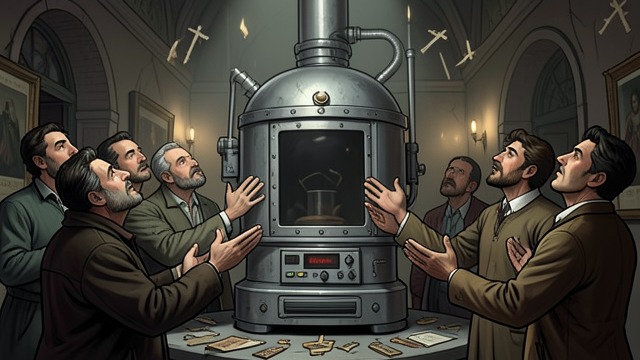
Mima Worship
Consolation around a machine
Passengers gather before Mima as though before an altar. They seek images that can soothe them and restore a sense of contact with life.
Faith built from need
Mima’s reliability encourages reverence, while the passengers’ distress turns its functions into sacred acts. Their worship offers community but also makes denial easier.
The Cult’s Rites
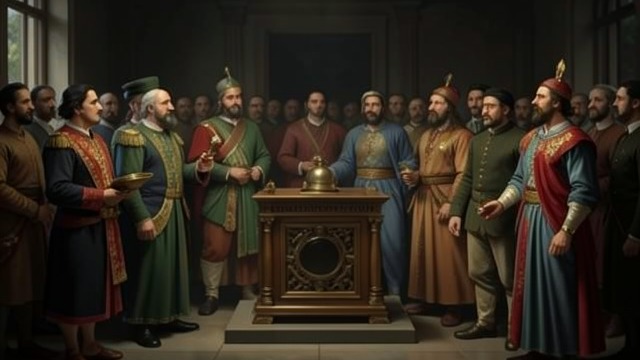
The Cult’s Rites
Desire made ceremonial
The Cult aboard Aniara organizes sexuality into public ritual, with roles, attendants, and repeated performances. The rites fill social space left vacant by ordinary life on Earth.
Pleasure and exhaustion
The rituals can create belonging and excitement, but they also reveal how limited the passengers’ available forms of meaning have become. Their recurrence does not resolve grief or fear.
Light Worship
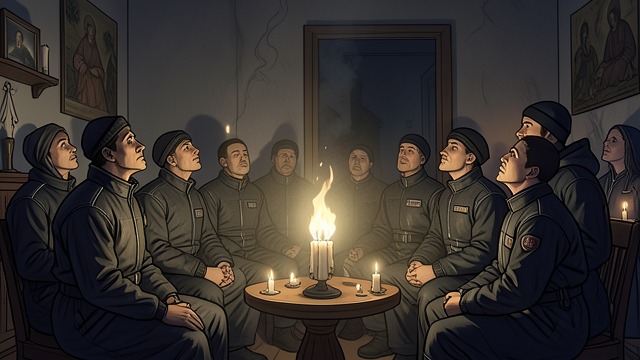
Light Worship
A competing devotion
A new sect worships light and chooses the Blind Poetess as its priestess. Her story of surviving a catastrophe without sight gives the group a powerful image of exposure to divine force.
Ecstasy and danger
The ritual’s candles and fireproof clothing turn spiritual longing into a dramatic physical spectacle. The sect seeks transcendence but remains vulnerable to the same destructive powers it worships.
The Failed Festival
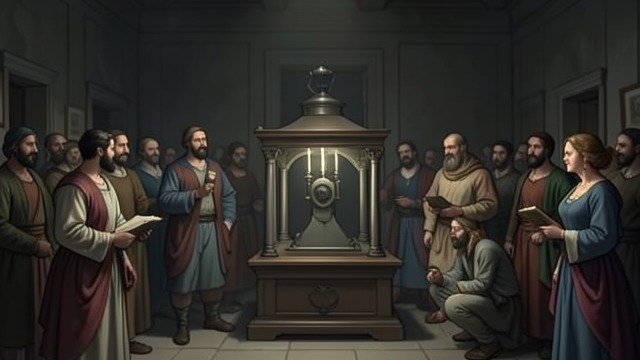
The Failed Festival
The Cosmic Way celebrated
Chefone’s ceremony attempts to unite the ship around a shared ritual of journey and destiny. Songs and speeches briefly give the passengers a common public occasion.
Faith falters
The recognition that a light-year is a grave turns celebration into grief. The ceremony demonstrates that ritual cannot make a meaningless distance into a promised destination.
Ritual Without Hope
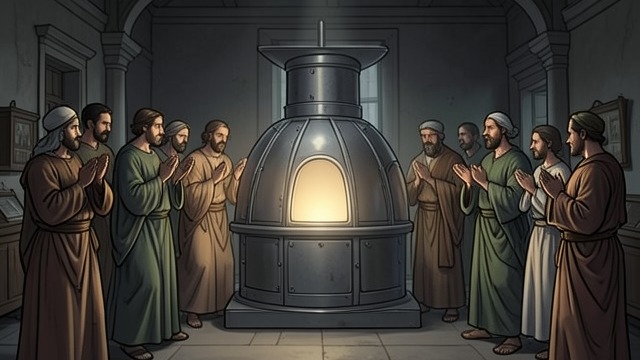
Ritual Without Hope
The last gathering
The remaining passengers gather at Mima’s Tomb as death approaches. Their gestures preserve fragments of shared belief even after the machine that supported their earlier worship is gone.
A final human practice
The gathering cannot change their fate, but it creates a place for facing it together. Ritual persists as companionship when it no longer promises rescue.
During the first years aboard
After the social routines begin to change
After the Blind Poetess arrives
At the ship’s twentieth anniversary
Near the ending
