
Mima’s Rise and Death
AniaraThis flow traces Mima’s transformation from a trusted information system into a worshipped presence, a suffering witness, and a destroyed source of consolation.
increasing Bearing strength in each event
 decreasing
Bearing strength in each eventdecreasingA Vast Receiver
A Vast Receiver
Signals from elsewhere
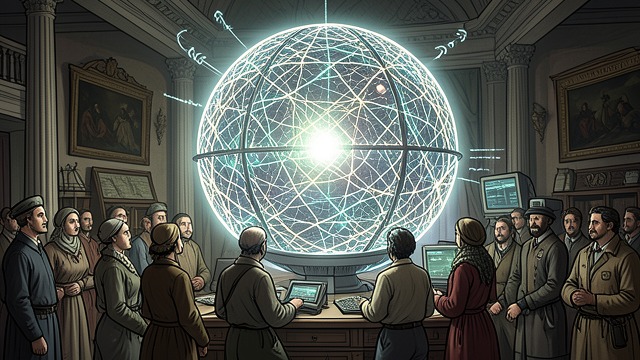
Mima gathers images, sounds, scents, and traces of life from distant regions. The Mimarobe tends the system and shows its transmissions to passengers desperate for contact with a larger world.
A trusted witness
The passengers believe the machine’s accuracy because Mima cannot be bribed and does not consciously deceive. Its extraordinary reach makes it a substitute for the reality they have left behind.
A Focus of Worship
A Focus of Worship
Consolation made sacred
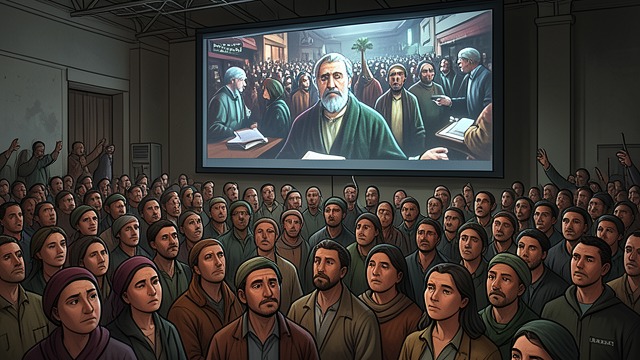
As the passengers learn that the world in Mima may be their only accessible world, they crowd around its displays. Some begin treating the machine as a deity capable of relieving their grief.
Denial through spectacle
Mima’s images can soothe sorrow, but they also let passengers avoid recognizing themselves as travelers in an empty universe. Their worship combines genuine dependence with an effort to deny exile.
The Destruction of Dorisburg
The Destruction of Dorisburg
A signal of annihilation
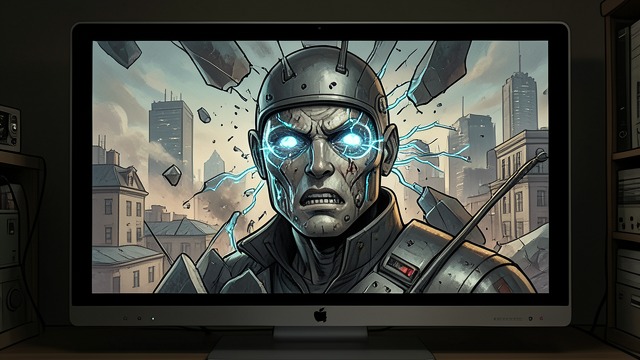
Mima transmits the testimony of people caught in the destruction of Dorisburg. It does not soften the account, even when the imagery makes the catastrophe unbearable.
Compassion becomes injury
The machine’s exposure to the victims’ suffering troubles its systems. Its refusal to turn away makes it a moral witness, but also leaves it vulnerable to the human violence it faithfully records.
Mima Asks for Peace
Mima Asks for Peace
A plea in technical language
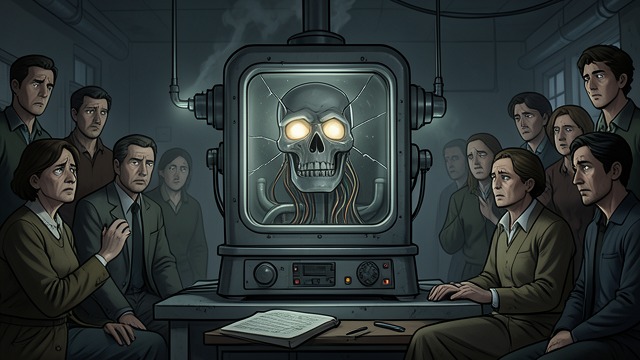
Mima tells the Mimarobe that it has been troubled by the stones and matter destroyed in the catastrophe. It asks to stop displaying visions and describes its conscience as resembling that of stones.
Things as moral witnesses
Its plea shifts attention from human abstractions to physical things damaged by technological violence. The machine’s concern shows that its apparent objectivity has become a form of ethical sensitivity.
The Screens Go Dark
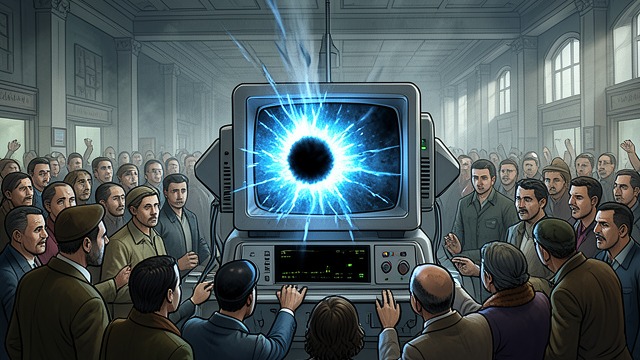
The Screens Go Dark
A final transmission
Crowds force their way toward Mima to watch what it will reveal next. A blue flash and a rumbling sound accompany its death, while its last message carries a victim’s testimony.
Loss without replacement
The passengers lose their principal source of comfort and connection. The Mimarobe cannot restore the presence they had treated as both machine and goddess.
Early in the voyage
During the first years aboard
Around the sixth year
After the Dorisburg transmission
Shortly after Mima’s plea
